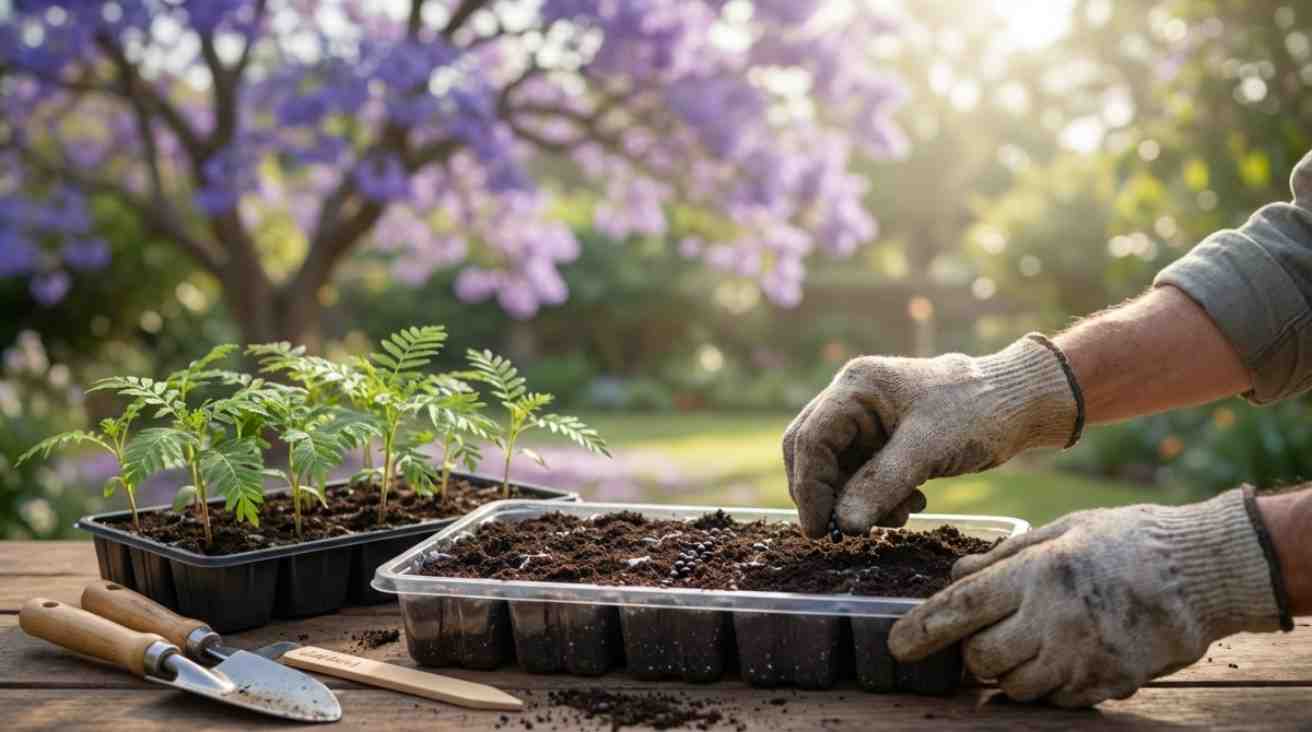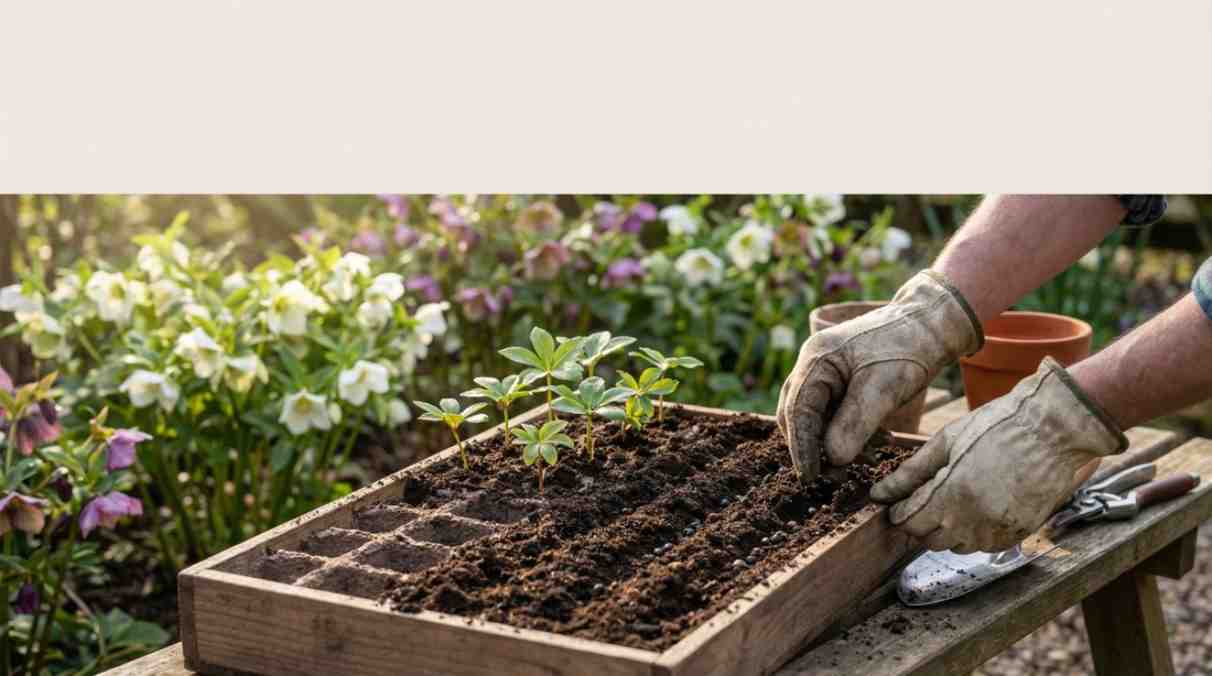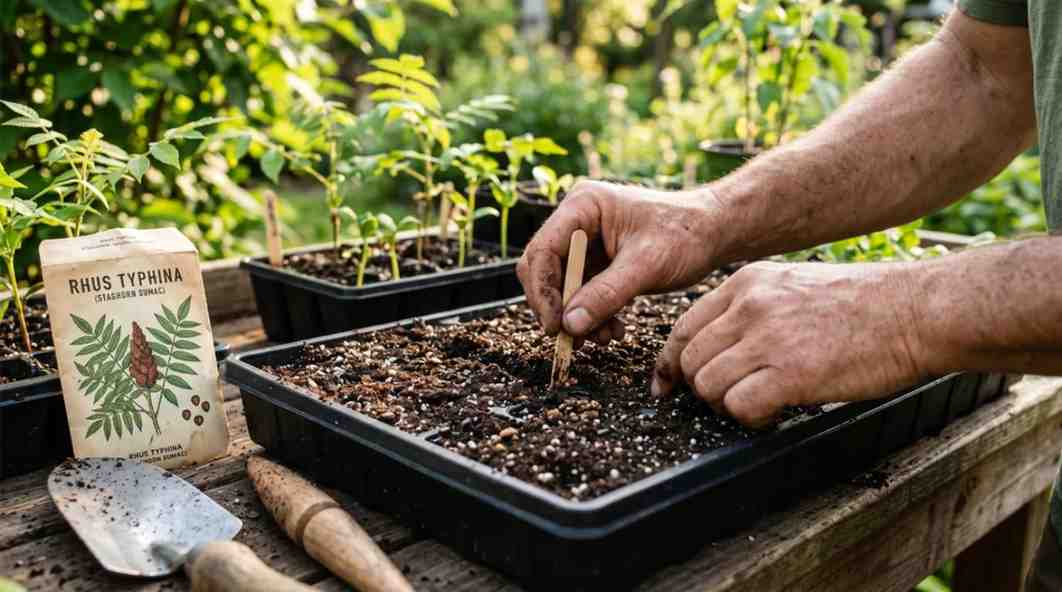
Healthy shrubs start with proper seed preparation. See how to grow sumac from seed using stratification, planting, and care methods.
How to Grow Sumac From Seed
Growing sumac from seed is a practical way to add a hardy native shrub to your landscape. Known for its vibrant fall color and drought tolerance, sumac performs well in a variety of growing conditions. Understanding how to grow sumac from seed helps improve germination success and encourages healthy seedling development. This guide explains how to grow sumac from seed using simple preparation, planting, and care techniques.
How to Grow Sumac From Seed: Quick Steps
| Step | Action | Purpose |
|---|---|---|
| 1 | Collect mature seeds | Ensure good seed viability |
| 2 | Clean seeds thoroughly | Remove debris and pulp |
| 3 | Scarify seeds | Break the hard seed coat |
| 4 | Cold stratify seeds | Overcome seed dormancy |
| 5 | Plant in seed-starting mix | Support germination |
| 6 | Maintain moisture | Encourage root development |
| 7 | Transplant seedlings | Establish healthy plants |
What Is Sumac and Why Grow It From Seed?
Sumac is a deciduous shrub belonging to the Rhus family. Popular varieties include:
- Staghorn Sumac (Rhus typhina)
- Smooth Sumac (Rhus glabra)
- Fragrant Sumac (Rhus aromatica)
Benefits of growing sumac from seed include:
- Low-maintenance growth
- Excellent drought tolerance
- Beautiful red fall foliage
- Wildlife habitat support
- Strong erosion control capabilities
Growing sumac from seed is often more affordable than purchasing established plants.
Collecting Sumac Seeds
Successful sumac seed germination begins with quality seeds.
Look for:
- Mature red seed clusters
- Healthy parent plants
- Fully developed seed heads
Harvest seeds during late summer or fall.
After collection:
- Remove excess plant material.
- Store seeds in a cool, dry location.
- Keep seeds away from direct sunlight.
Proper storage helps maintain seed viability before planting.
Seed Preparation for Better Germination
One of the most important parts of how to grow sumac from seed is preparing the seeds properly.
Sumac seeds have a hard outer shell that limits moisture penetration.
Preparation involves:
Scarification
Scarification weakens the seed coat.
Methods include:
- Light sanding with sandpaper
- Hot water treatment
- Small file abrasion
Benefits:
- Improves water absorption
- Speeds up germination
- Increases germination success
Seed Soaking
After scarification:
- Place seeds in water.
- Soak for 12–24 hours.
- Discard floating damaged seeds.
This process helps activate the germination process.
Cold Stratification for Sumac Seeds
Cold stratification is essential for how to grow sumac from seed successfully.
Many sumac species require a cold period before germination can occur.
How to Stratify Seeds
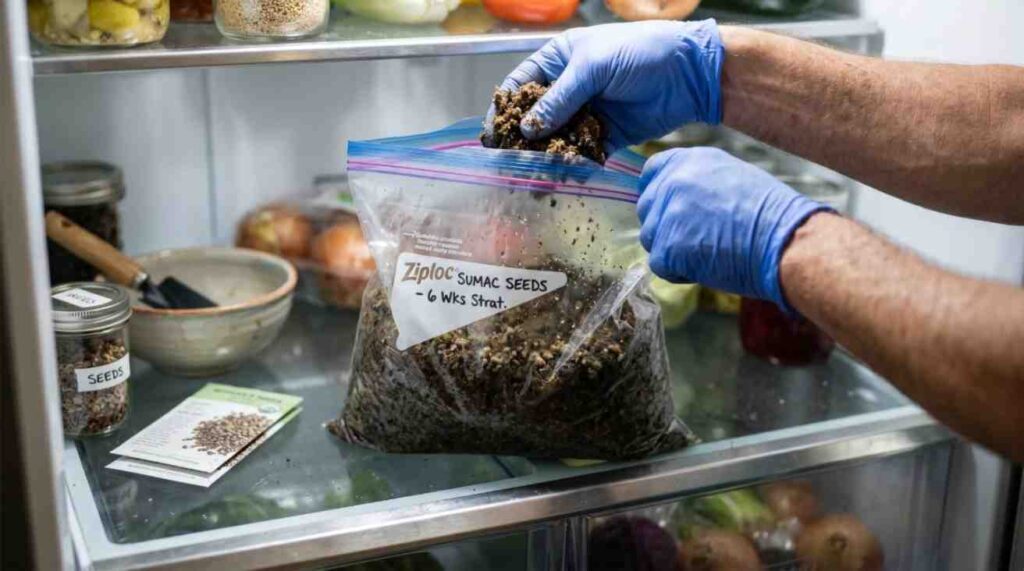
- Mix seeds with moist peat moss.
- Place inside a sealed plastic bag.
- Store in a refrigerator.
- Maintain temperatures between 34–41°F.
Stratification Schedule
| Requirement | Details |
| Temperature | 34–41°F |
| Medium | Moist peat moss |
| Location | Refrigerator |
| Duration | 30–60 days |
During storage:
- Check moisture levels regularly.
- Avoid waterlogged conditions.
- Remove any mold immediately.
Cold stratification significantly improves sumac seed germination rates.
Planting Sumac Seeds
Once stratification is complete, planting can begin.
Choose the Right Soil
Use:
- Well-draining soil
- Seed-starting mix
- Containers with drainage holes
Avoid heavy clay soils during early growth.
Planting Depth
For how to grow sumac from seed effectively:
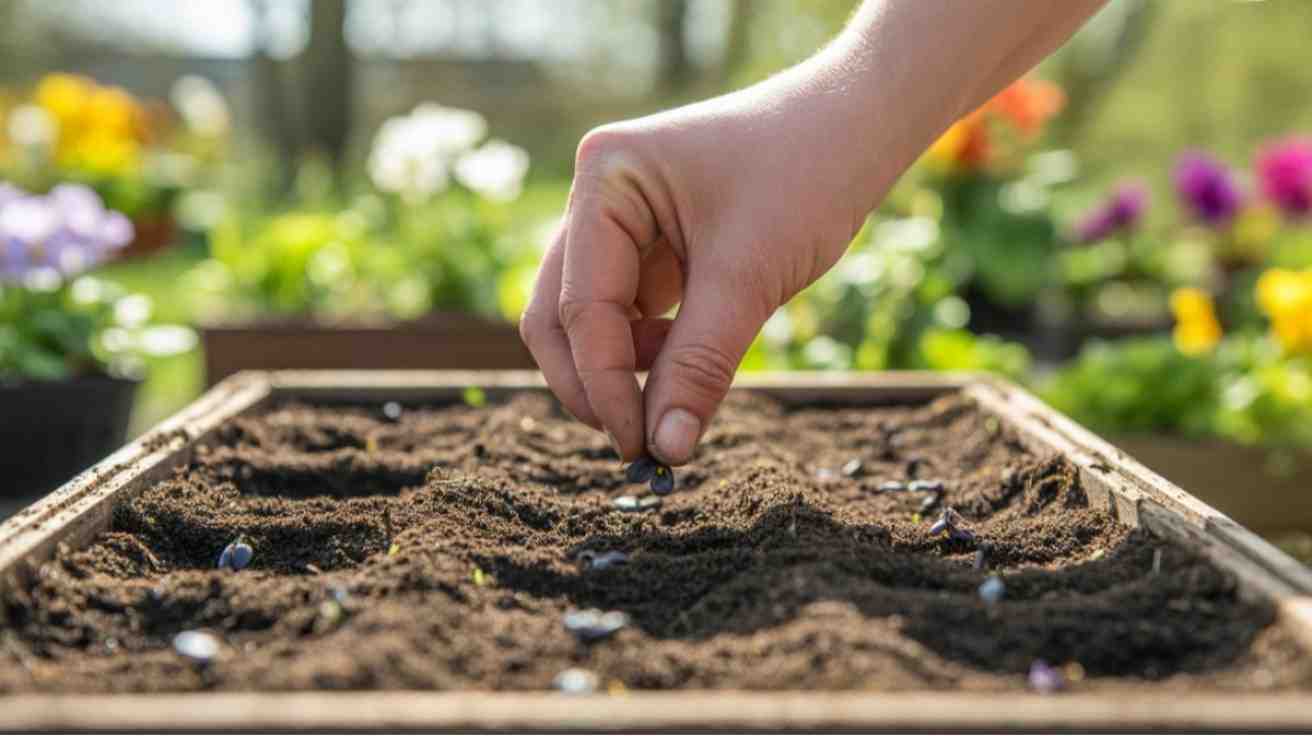
- Plant seeds about ¼ inch deep.
- Cover lightly with soil.
- Water gently after planting.
Light Requirements
Provide:
- Bright indirect sunlight
- Consistent warmth
- Good airflow
These conditions encourage healthy germination.
Germination and Early Growth
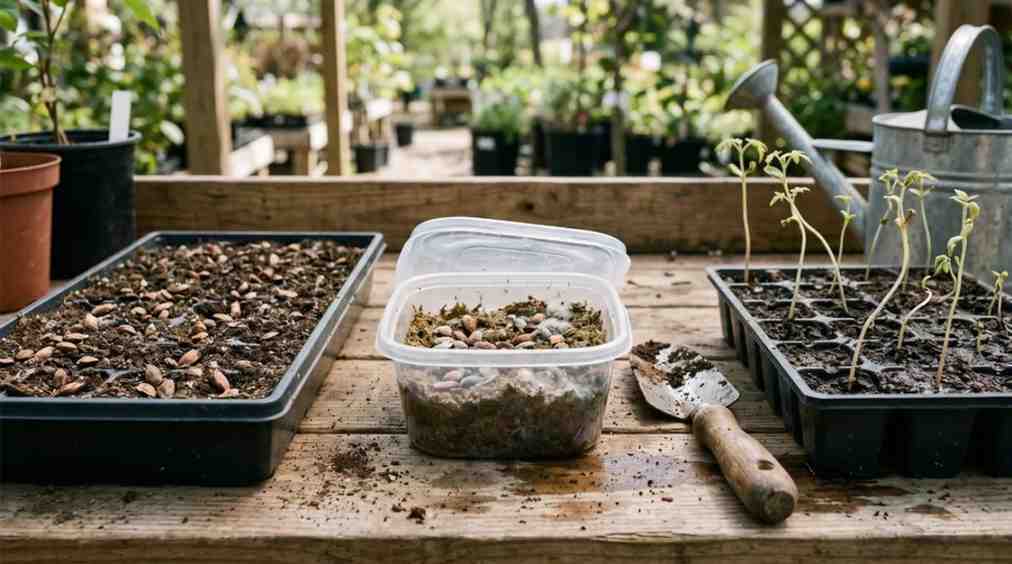
Sumac seed germination typically occurs within several weeks.
Factors affecting germination include:
- Seed quality
- Moisture levels
- Soil temperature
- Stratification success
Signs of germination include:
- Emerging shoots
- Green leaves
- Active root growth
Keep soil evenly moist but never saturated.
Caring for Sumac Seedlings
Proper seedling care is essential when learning how to grow sumac from seed.
Watering
Maintain:
- Light moisture
- Consistent watering
- Good drainage
Avoid overwatering.
Sunlight
Young seedlings perform best with:
- Full sun
- Partial shade during extreme heat
Fertilization
Apply:
- Balanced fertilizer
- Diluted liquid feed
- Light applications only
Excess fertilizer can damage young roots.
Seedling Care Guide
| Care Factor | Recommendation |
| Water | Keep slightly moist |
| Sunlight | Full sun to partial shade |
| Temperature | 65–75°F |
| Fertilizer | Light feeding only |
| Drainage | Well-draining soil |
Transplanting Sumac Seedlings Outdoors
When seedlings develop strong roots, they can be transplanted outdoors.
Choose a location with:
- Full sun exposure
- Good drainage
- Adequate spacing
Steps:
- Harden off seedlings for 7–10 days.
- Prepare planting holes.
- Place seedlings carefully.
- Water thoroughly after transplanting.
Spacing allows proper air circulation and future growth.
Common Problems When Growing Sumac From Seed
Several issues can affect growth.
Poor Germination
Possible causes:
- Insufficient stratification
- Lack of scarification
- Old seeds
Mold During Stratification
Caused by:
- Excess moisture
- Poor airflow
Weak Seedlings
Often linked to:
- Low light levels
- Overwatering
- Poor soil drainage
Addressing these problems early improves success rates.
Growing Timeline for Sumac
| Stage | Expected Time |
| Seed Collection | Fall |
| Scarification | 1 Day |
| Cold Stratification | 30–60 Days |
| Germination | 2–8 Weeks |
| Seedling Growth | Several Months |
| Outdoor Transplanting | Following Growing Season |
FAQs
1. Do sumac seeds need cold stratification?
Yes. Most sumac seeds require cold stratification to break dormancy and improve germination.
2. How long does it take sumac seeds to germinate?
Germination commonly occurs within 2–8 weeks after planting.
3. Can I grow staghorn sumac from seed?
Yes. Staghorn sumac grows well from seed when scarification and stratification are completed properly.
4. What soil is best for sumac seed germination?
A well-draining seed-starting mix provides the best conditions for germination and root development.
5. Why are my sumac seeds not germinating?
Poor germination is usually caused by inadequate stratification, lack of scarification, old seeds, or excessive moisture.