Proper drying, cleaning, and storage explain how to preserve dill seeds safely for long-term flavor and germination without spoilage or loss.
How to Preserve Dill Seeds
Dill seeds are valuable for both gardening and cooking, but improper handling quickly reduces their quality. Moisture, heat, and poor storage shorten seed lifespan and weaken flavor. Learning how to preserve dill seeds correctly protects viability, aroma, and usability. When preservation steps are followed carefully, dill seeds remain effective for months or even years. This guide explains each stage clearly, using practical methods that prevent common mistakes.
Quick Overview of Dill Seed Preservation Stages
| Stage | Purpose | Key Risk if Ignored |
|---|---|---|
| Harvesting | Collect mature seeds | Weak or empty seeds |
| Drying | Remove moisture safely | Mold growth |
| Cleaning | Remove debris | Contamination |
| Storage | Maintain viability | Short shelf life |
Understanding Dill Seed Maturity
Dill seeds must reach full maturity before preservation begins. Immature seeds contain excess moisture and undeveloped interiors, which reduces storage success.
- Mature dill seeds turn light brown to tan
- Seeds feel firm, not soft
- Umbel heads dry naturally on the plant
- Seeds detach easily when rubbed
How to preserve dill seeds successfully depends heavily on waiting for full maturity. Harvesting early increases spoilage risk even if drying is attempted later.
Environmental conditions also influence maturity. Warm, dry weather allows seeds to finish developing naturally, while high humidity delays drying and increases mold risk.
When to Harvest Dill Seeds
Correct harvest timing improves both flavor retention and seed viability.
- Harvest when 50–70% of seed heads are brown
- Cut seed heads during dry morning hours
- Avoid harvesting after rainfall
- Select healthy, disease-free plants
Harvesting too late causes seed loss due to shattering. Harvesting too early traps internal moisture. Balanced timing is essential when learning how to preserve dill seeds properly.
Harvesting Dill Seeds Safely
Use gentle handling to protect seed structure.
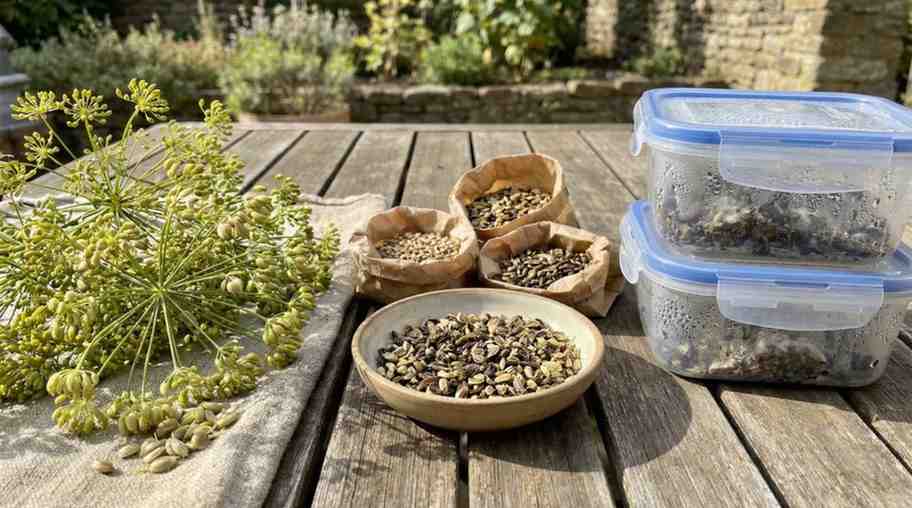
- Cut entire seed heads with clean scissors
- Place heads upside down in paper bags
- Label bags immediately
- Keep bags in a dry, shaded area
Plastic containers should not be used during harvest because they trap moisture and accelerate spoilage.
Drying Dill Seeds Correctly
Drying is the most critical stage in how to preserve dill seeds.
- Hang seed heads upside down
- Use a cool, well-ventilated room
- Avoid direct sunlight
- Allow 7–14 days for drying
Seeds must feel completely dry before storage. Even slight moisture reduces shelf life significantly.
Signs Dill Seeds Are Fully Dried
- Seeds break cleanly when pressed
- No flexibility remains
- Seed heads feel brittle
- No condensation appears in containers
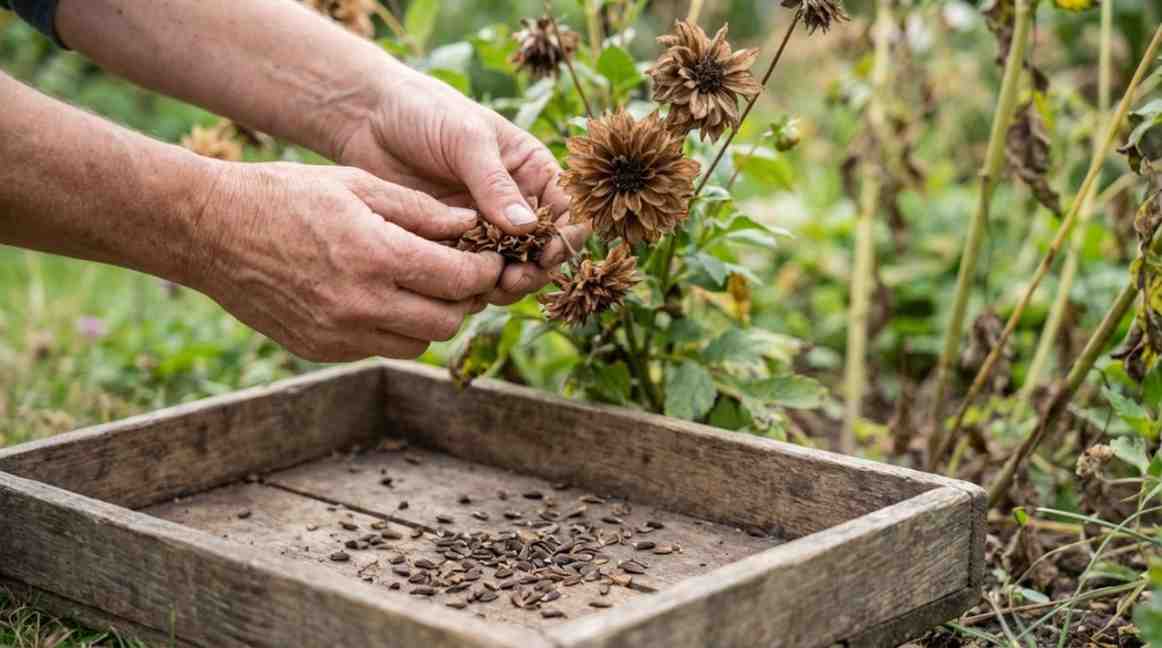
Cleaning Dill Seeds After Drying
Cleaning removes chaff and plant debris that can trap moisture.
- Rub dried heads gently by hand
- Use a shallow tray to collect seeds
- Remove stems and husks manually
- Discard damaged or discolored seeds
Clean seeds store longer and resist fungal growth.
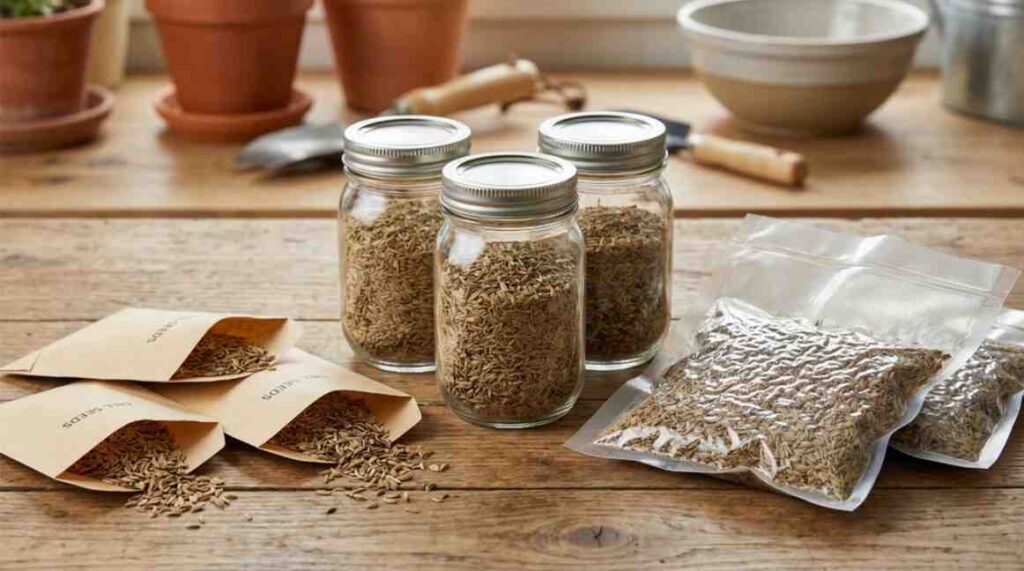
Storage Options for Dill Seeds
| Storage Method | Shelf Life | Moisture Risk |
|---|---|---|
| Paper envelopes | 6–12 months | Low |
| Glass jars | 1–2 years | Medium |
| Vacuum containers | 2+ years | Very low |
| Plastic bags | Short | High |
Choosing the right container directly affects how to preserve dill seeds for long-term use.
Ideal Storage Conditions
- Temperature below 15°C
- Low humidity
- Dark environment
- Stable airflow
Avoid kitchens and greenhouses where heat fluctuates.
Labeling Dill Seeds Properly
Clear labeling prevents confusion and misuse.
- Plant name
- Harvest date
- Location or variety
- Intended use (planting or cooking)
Unlabeled seeds often lose value due to uncertainty.
How Long Dill Seeds Remain Viable
| Use Type | Average Viability |
|---|---|
| Planting | 1–3 years |
| Culinary | 2–4 years |
Proper preservation significantly extends usability.
Common Errors When Preserving Dill Seeds
Mistakes reduce storage success even when other steps are correct.
- Harvesting before full maturity
- Drying seeds in sunlight
- Storing seeds while damp
- Using sealed plastic containers
Each error shortens shelf life and weakens quality.
Environmental Factors Affecting Preservation
- High humidity increases mold risk
- Heat reduces germination strength
- Light degrades essential oils
- Temperature fluctuations weaken seeds
Stable conditions are central to how to preserve dill seeds effectively.
Preserving Dill Seeds for Planting vs Cooking
| Purpose | Key Focus |
|---|---|
| Planting | Viability, dryness |
| Cooking | Flavor, aroma |
Both require dryness, but culinary seeds benefit from airtight containers after full drying.
Checking Stored Dill Seeds Periodically
- Inspect every 2–3 months
- Check for condensation
- Smell for mustiness
- Remove compromised seeds
Early detection prevents complete loss.
Shelf-Life Extension Techniques
- Use silica gel packets
- Rotate older seeds first
- Avoid frequent opening
- Store in small batches
These steps strengthen preservation outcomes.
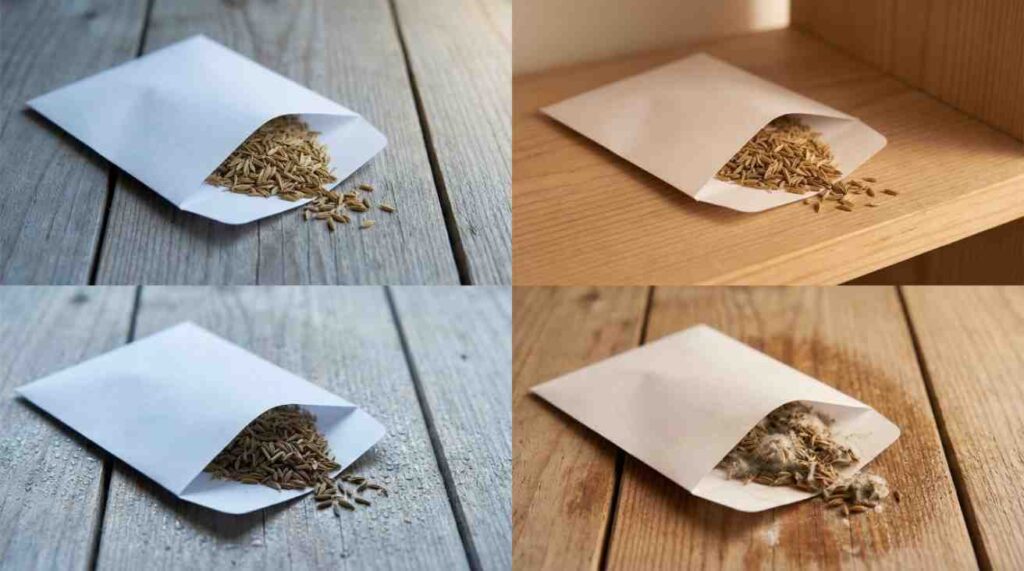
Storage Comparison Table
| Condition | Result |
|---|---|
| Cool + dry | Maximum lifespan |
| Warm + dry | Moderate loss |
| Cool + damp | Mold risk |
| Warm + damp | Rapid spoilage |
Why Moisture Control Matters Most
Moisture activates enzymes inside seeds, leading to decay. Even sealed containers fail if seeds were not fully dried beforehand. Moisture control remains the most important factor in how to preserve dill seeds long term.
FAQs
1. How to preserve dill seeds after harvesting?
Dry seed heads fully, clean seeds carefully, and store them in a cool, dry, dark environment using breathable or airtight containers depending on dryness.
2. How long do preserved dill seeds last?
Properly preserved dill seeds last 1–3 years for planting and up to 4 years for culinary use.
3. Can dill seeds be stored in plastic containers?
Plastic containers increase moisture retention unless seeds are fully dried and humidity is controlled.
4. How to preserve dill seeds for cooking?
After full drying, store seeds in airtight glass containers away from heat and light.
5. Why do preserved dill seeds lose germination power?
Excess moisture, heat exposure, and improper storage conditions weaken seed viability over time.