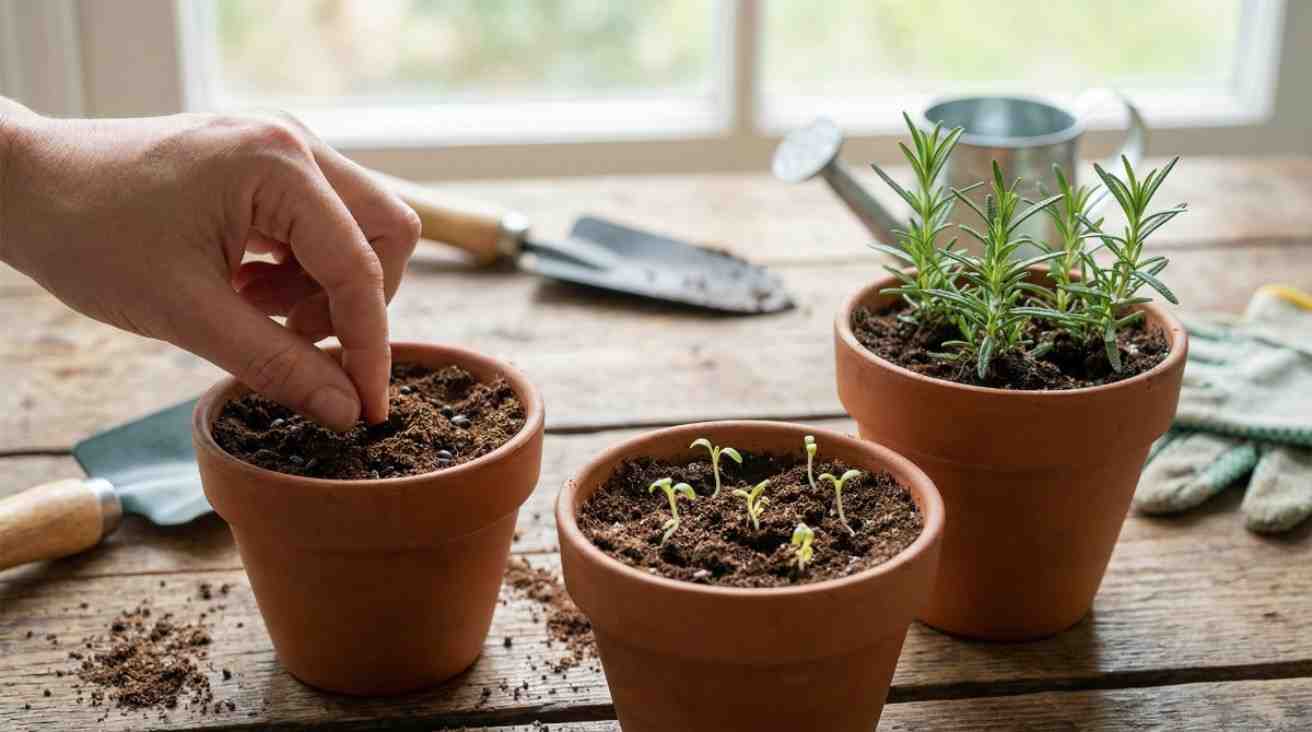
Healthy herb growth requires the right process. This guide explains how to germinate rosemary seeds using correct temperature, moisture, and soil conditions.
How to Germinate Rosemary Seeds
Growing rosemary from seed can be slow but rewarding when done correctly. Many growers fail because they do not understand the proper germination process or environmental requirements. Understanding how to germinate rosemary seeds helps improve success rate, prevent seed failure, and support healthy plant growth. Proper moisture, temperature, and soil conditions play a major role in rosemary seed sprouting. This guide explains the complete rosemary seed germination process, growth conditions, care methods, and common mistakes to avoid.
Rosemary Seed Germination Steps
Understanding the correct method improves germination success and prevents seed damage.
| Step | Process | Purpose |
|---|---|---|
| Seed selection | Use fresh rosemary seeds | Improves germination rate |
| Soil preparation | Use light well-draining soil | Prevents root rot |
| Sowing seeds | Place seeds on surface | Supports light exposure |
| Moisture control | Keep soil slightly moist | Supports sprouting |
| Temperature management | Maintain 20–25°C | Encourages germination |
| Light exposure | Provide indirect light | Supports early growth |
| Monitoring | Check moisture daily | Prevents drying |
This process explains how to germinate rosemary seeds successfully at home.
Understanding Rosemary Seed Germination
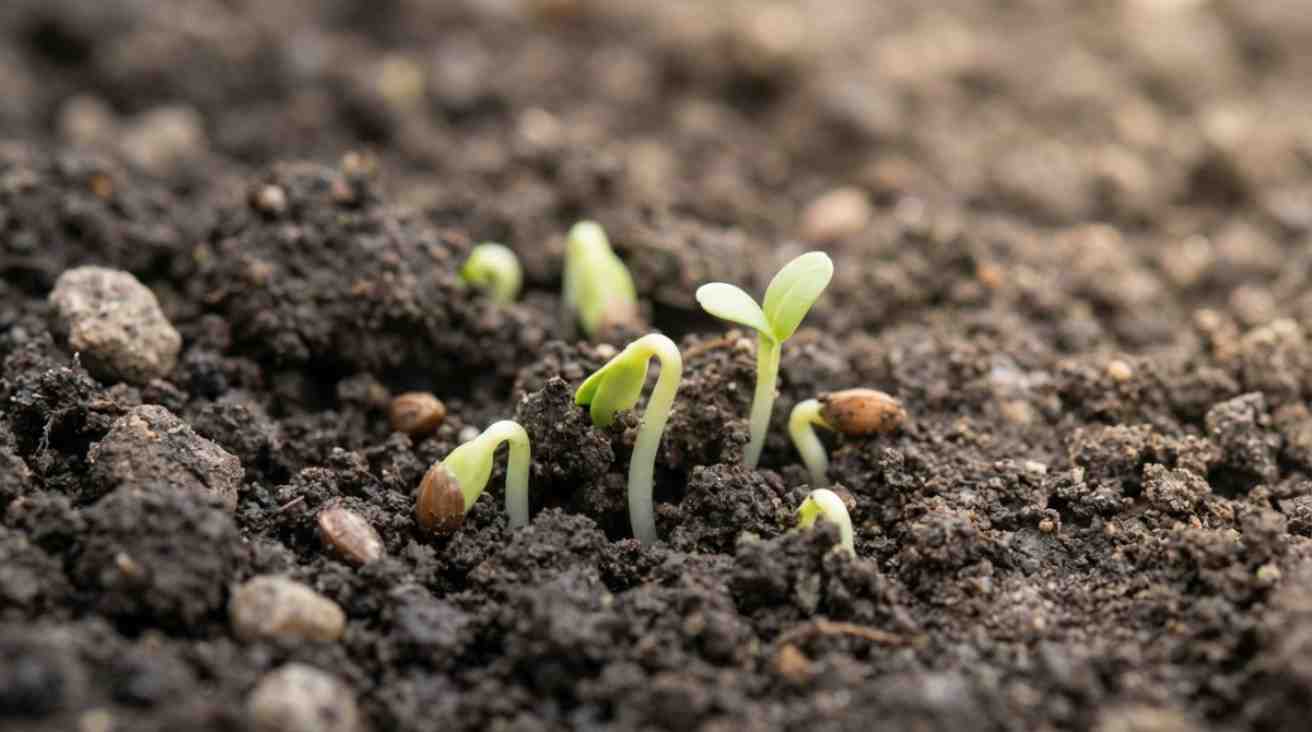
Rosemary seeds germinate slowly compared to most herbs. The germination rate is naturally low, which makes proper conditions necessary.
Germination Characteristics
- Germination time ranges from 14–28 days
- Seeds require consistent warmth
- Moisture must remain stable
- Seeds need light exposure
Why Germination Takes Time
- Hard seed coating slows sprouting
- Sensitivity to overwatering
- Temperature fluctuations reduce success
- Low natural viability of seeds
Correct conditions increase rosemary seed sprouting success significantly.
Ideal Conditions for Rosemary Seed Sprouting
Growing conditions directly affect seed performance and plant health.
Temperature Requirements
- Maintain 20–25°C soil temperature
- Avoid cold environments
- Stable warmth improves sprouting speed
Soil Requirements
- Use well-draining potting mix
- Avoid heavy garden soil
- Maintain loose soil structure
Moisture Level
- Keep soil lightly moist
- Avoid water pooling
- Prevent soil dryness
Light Conditions
- Provide bright indirect sunlight
- Avoid strong direct heat initially
- Gradual exposure improves growth
Balanced environmental conditions support healthy rosemary seed germination.
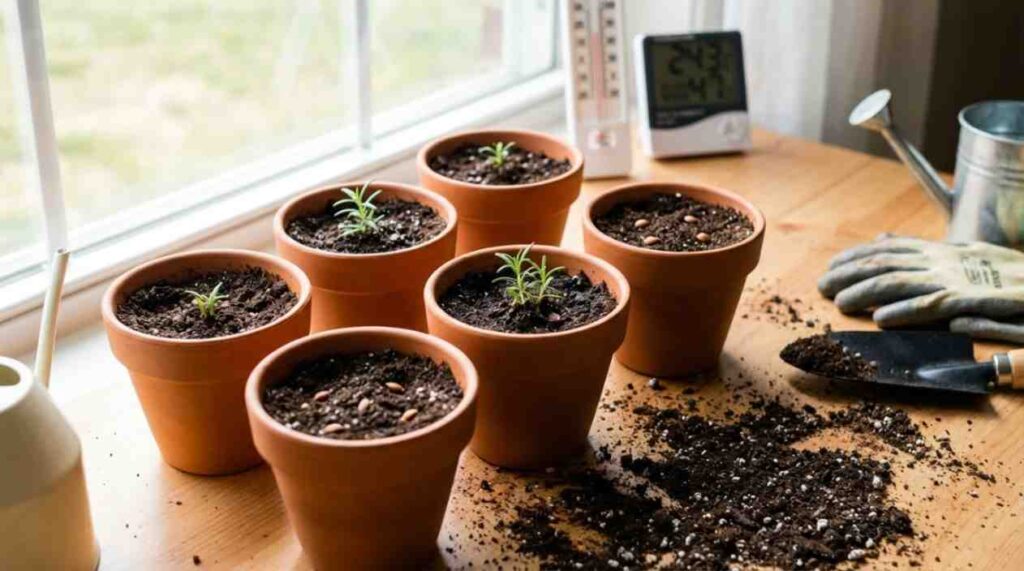
Indoor vs Outdoor Rosemary Seed Germination
Growing environment affects moisture control and germination speed.
| Method | Advantages | Limitations |
|---|---|---|
| Indoor germination | Stable temperature and moisture | Transplant adjustment required |
| Outdoor germination | Natural growing environment | Weather dependency |
| Controlled containers | Better monitoring | Requires attention |
| Garden soil planting | Low maintenance | Lower germination rate |
Indoor sowing improves control over how to germinate rosemary seeds successfully.
Rosemary Seedling Care After Germination
Seedling care determines plant strength and survival.
Watering Guidelines
- Keep soil slightly moist
- Avoid overwatering
- Reduce watering after establishment
Light Requirements
- Provide bright light daily
- Increase sunlight gradually
- Avoid sudden exposure changes
Transplant Timing
Seedlings should be moved when:
- True leaves appear
- Roots develop fully
- Plant growth becomes stable
Proper seedling care ensures strong rosemary plant development.
Common Problems During Germination
Many growers face germination failure due to avoidable mistakes.
Slow Germination
- Caused by low temperature
- Poor seed quality
- Inconsistent moisture
Seed Rot
- Excess water
- Poor drainage
- Heavy soil
No Sprouting
- Old seeds
- Incorrect planting depth
- Dry soil conditions
Avoiding these issues improves rosemary seed germination success.
Factors Affecting Germination Speed
Different environmental and biological factors influence growth.
- Seed freshness
- Temperature stability
- Soil drainage quality
- Moisture balance
- Light exposure
- Growing environment
These factors determine overall success in how to germinate rosemary seeds.
Rosemary Growth Timeline
Understanding growth stages helps monitor plant development.
| Growth Stage | Time Frame | Plant Activity |
|---|---|---|
| Germination stage | 2–4 weeks | Root and shoot emergence |
| Seedling stage | 4–8 weeks | Leaf development |
| Early plant growth | 2–3 months | Strong root formation |
| Mature growth | 6–12 months | Full herb production |
This timeline explains rosemary plant development after germination.
Tools and Materials Required
Using proper materials improves success rate.
- Seed trays or containers
- Well-draining soil mix
- Spray bottle for watering
- Plastic cover for humidity
- Fresh rosemary seeds
- Warm growing location
Correct tools support successful rosemary seed starting.
Rosemary Germination Success
| Condition | Recommended Range |
|---|---|
| Temperature | 20–25°C |
| Germination time | 14–28 days |
| Soil type | Light and well-draining |
| Moisture level | Lightly moist soil |
| Light requirement | Bright indirect light |
Maintaining these values improves rosemary seed sprouting results.
FAQs
1. How long do rosemary seeds take to germinate?
Rosemary seeds usually germinate within 14–28 days under proper temperature and moisture conditions.
2. Why are rosemary seeds difficult to germinate?
They have low natural germination rates and require stable warmth and moisture.
3. Should rosemary seeds be covered with soil?
Seeds should remain on the soil surface because they need light for germination.
4. Can rosemary grow indoors from seeds?
Yes, indoor growing provides better control over temperature and moisture.
5. How often should rosemary seeds be watered?
Soil should remain slightly moist but never waterlogged.