Ideal soil and air ranges explained so you know how warm should it be to plant grass seed for fast germination and strong lawn growth.
How Warm Should It Be to Plant Grass Seed
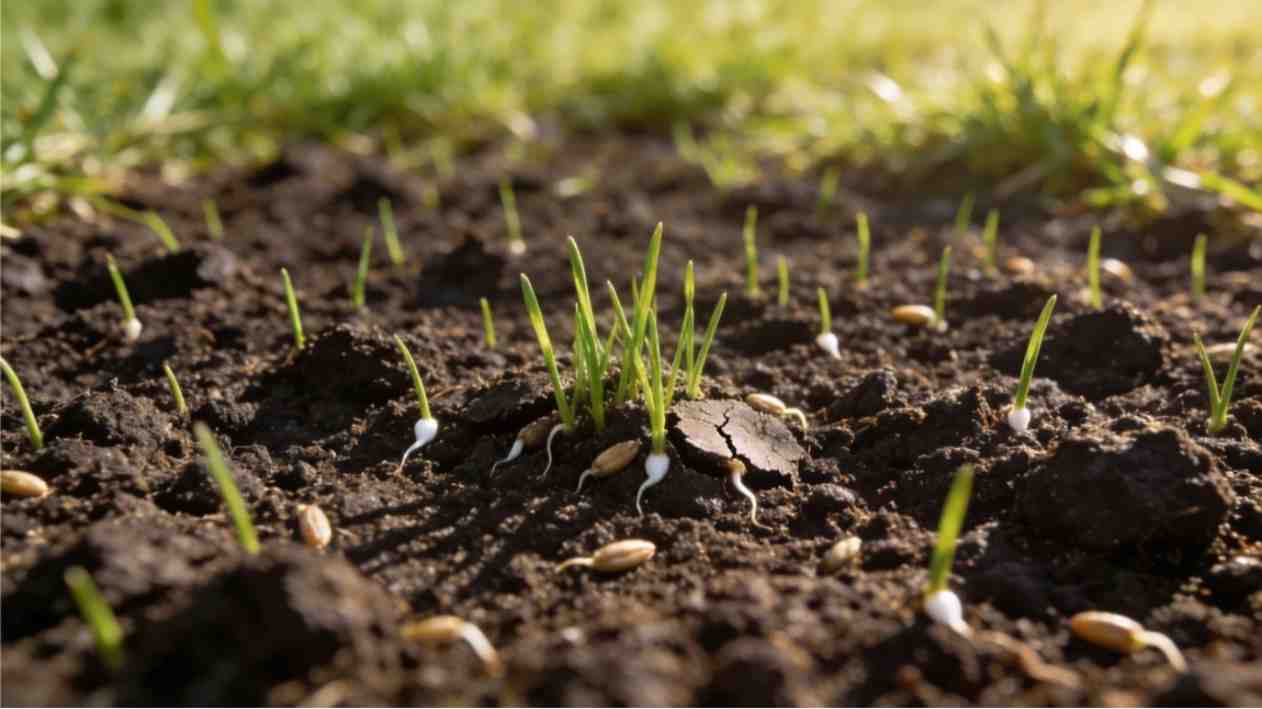
Grass seed success depends more on soil warmth than calendar dates. Many lawns fail because the temperature window is missed. how warm should it be to plant grass seed depends on grass type and consistent soil readings. Correct timing improves germination speed and root strength. Understanding exactly how warm should it be to plant grass seed helps prevent patchy growth, delayed germination, and wasted seed.
Grass Seed Temperature & Timing
| Grass Type | Ideal Soil Temperature | Minimum Soil Temperature | Air Temperature Range | Germination Time |
|---|---|---|---|---|
| Cool-Season Grass | 50–65°F | 40–45°F | 60–75°F | 5–10 days |
| Warm-Season Grass | 65–75°F | 55–60°F | 80–95°F | 10–21 days |
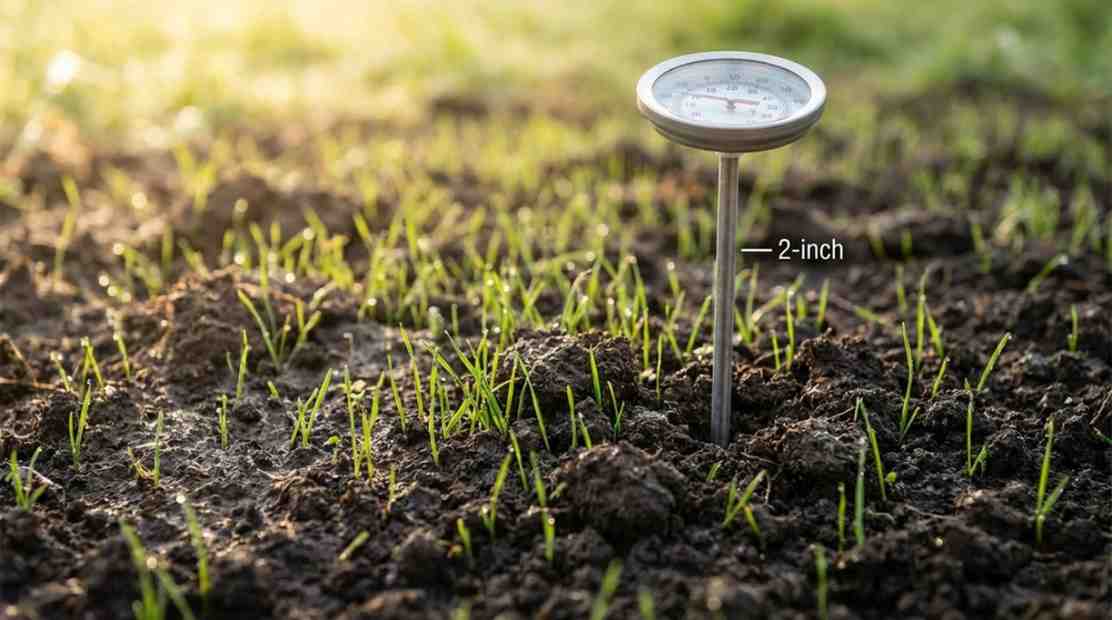
Soil temperature at 2 inches depth controls seed activation.
Air temperature alone is not reliable.
Why Soil Temperature Matters More Than Air Temperature
When asking how warm should it be to plant grass seed, the real focus is soil warmth.
- Seeds respond to soil temperature, not afternoon highs.
- Cold soil delays germination even if days feel warm.
- Extreme heat dries surface moisture and weakens seedlings.
- Consistent soil warmth improves root development.
How to Measure Soil Temperature
- Insert a soil thermometer 2 inches deep.
- Check temperature in the morning.
- Record readings for 3–5 consecutive days.
- Plant only when readings stay within the ideal range.
Stable soil warmth prevents uneven sprouting.
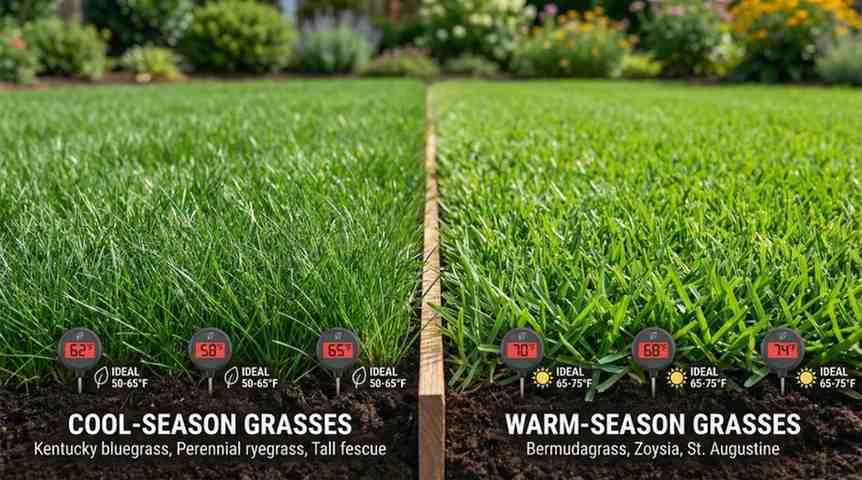
Cool-Season vs Warm-Season Grass Temperature Differences
Understanding grass type is essential when deciding how warm should it be to plant grass seed.
Cool-Season Grasses
- Kentucky bluegrass
- Perennial ryegrass
- Tall fescue
These grasses grow best in mild conditions.
- Ideal soil temperature: 50–65°F
- Best planting seasons: early fall or spring
- Germination slows below 50°F
Warm-Season Grasses
- Bermudagrass
- Zoysia
- St. Augustine
These varieties prefer heat.
- Ideal soil temperature: 65–75°F
- Best planting season: late spring
- Poor growth below 60°F soil
Matching grass type to soil warmth prevents thin lawns.
Seasonal Planting Temperature Guide
| Season | Soil Condition | Recommended Grass Type | Risk Level |
|---|---|---|---|
| Early Spring | Warming but unstable | Cool-season | Medium |
| Late Spring | Consistently warm | Warm-season | Low |
| Early Fall | Cooling slowly | Cool-season | Low |
| Summer Heat | Often above 85°F | Warm-season only | High |
Early fall provides the most stable soil warmth for cool-season lawns.
Minimum Temperature for Grass Seed to Grow
Many homeowners wonder how warm should it be to plant grass seed at the lowest possible range.
- Cool-season grass begins germination at 40–45°F soil
- Warm-season grass begins near 55–60°F soil
- Below these levels, seed remains dormant
Dormant seed may survive but can rot in wet soil.
Minimum temperature allows sprouting, but ideal temperature ensures strong establishment.
What Temperature Is Too Cold or Too Hot?
Too Cold
- Soil below 40°F
- Frost risk after seeding
- Slow or no sprouting
- Increased disease risk
Too Hot
- Soil above 85°F
- Rapid moisture loss
- Heat stress on seedlings
- Weak root systems
Extreme temperatures reduce seedling survival rates.
Step-by-Step Lawn Seeding Temperature Checklist
| Step | Action | Why It Matters |
|---|---|---|
| 1 | Test soil at 2 inches | Confirms true planting condition |
| 2 | Monitor for 3–5 days | Ensures consistent warmth |
| 3 | Check 10-day forecast | Avoids sudden cold or heat |
| 4 | Prepare soil surface | Improves seed-to-soil contact |
| 5 | Water lightly and evenly | Maintains moisture without runoff |
Preparation improves germination rate and lawn establishment.
Air Temperature vs Soil Temperature
Air may reach 70°F while soil stays at 45°F. That difference affects results.
- Soil warms slower than air.
- Night temperatures influence soil cooling.
- Shaded lawns warm later in spring.
- Dark soils retain heat better.
When evaluating how warm should it be to plant grass seed, soil consistency is the deciding factor.
How Temperature Affects Germination Speed
| Soil Temperature | Expected Germination Speed |
|---|---|
| 40–45°F | Very slow (2–3 weeks) |
| 50–65°F | Fast (5–10 days) |
| 65–75°F | Ideal for warm-season |
| Above 85°F | Poor survival |
Optimal soil temperature reduces germination time and increases density.
Common Mistakes When Planting Grass Seed
- Seeding too early in spring
- Ignoring nighttime temperatures
- Planting during heat waves
- Watering heavily in cold soil
- Using the wrong grass type
Each mistake connects back to one factor: misjudging how warm should it be to plant grass seed.
Overseeding and Temperature Timing
Overseeding requires the same soil temperature standards.
- Cool-season overseeding: 50–65°F soil
- Warm-season overseeding: 65–75°F soil
- Avoid temperature fluctuations
Consistent warmth ensures seedling survival in existing turf.
Climate Zone Considerations
Local climate influences soil warming.
- Northern regions warm slowly in spring
- Southern regions allow earlier warm-season seeding
- Coastal areas maintain moderate soil temperatures
Check soil instead of relying on calendar months.
Soil Preparation and Temperature Stability
Proper soil preparation supports germination.
- Remove debris and compacted soil
- Loosen top 2–3 inches
- Ensure firm seed contact
- Maintain light, consistent watering
Healthy soil structure improves temperature retention.
Moisture and Temperature Balance
Temperature alone does not guarantee success.
- Warm soil without moisture delays sprouting
- Cold wet soil causes seed rot
- Even watering supports steady germination
Balanced conditions improve seedling strength.
Before Seeding Temperature Verification
| Condition | Ready to Seed? |
|---|---|
| Soil 50–65°F for cool-season | Yes |
| Soil 65–75°F for warm-season | Yes |
| Soil below minimum | No |
| Heat above 85°F | No |
| Frost forecast | No |
Plant only when soil remains in the safe range.
FAQs
1. How warm should it be to plant grass seed?
Soil should be 50–65°F for cool-season grass and 65–75°F for warm-season grass for reliable germination.
2. Can grass seed grow in 45-degree soil?
Yes, but germination will be slow and uneven.
3. Does air temperature matter when planting grass seed?
Air temperature matters less than soil temperature, but stable mild weather improves results.
4. What happens if I plant grass seed too early?
Cold soil delays germination and may cause seed rot.
5. Is 80°F too hot to plant grass seed?
For cool-season grass, yes. Warm-season grass tolerates it if soil moisture is maintained.