Keep zucchini seeds healthy and productive with step-by-step care, drying, and storage tips. How to save zucchini seeds made clear.
How to Save Zucchini Seeds
How to save zucchini seeds allows gardeners to grow the same zucchini variety year after year and ensures the seeds remain healthy, cut costs, and maintain the plant’s unique traits. How to save zucchini seeds effectively ensures high germination rates. Following structured steps for harvesting, cleaning, drying, and storing improves the success of your seed-saving efforts.
Why Save Zucchini Seeds
- Reduces gardening costs by reusing seeds each season.
- Preserves heirloom and open-pollinated varieties that breed true.
- Ensures genetic consistency and avoids unwanted hybrids.
- Helps gardeners maintain seed viability and successful germination.
Benefits of Saving Zucchini Seeds
| Benefit | Explanation |
|---|---|
| Cost-effective | Reduces the need to buy new seeds annually |
| Genetic consistency | Maintains traits of open-pollinated zucchini varieties |
| High germination | Proper seed saving ensures strong sprouting |
| Sustainability | Promotes self-sufficiency in home gardening |
Choosing the Right Zucchini for Seeds
- Select fully mature fruit with hard skin and full size.
- Avoid young zucchinis; seeds will be immature and non-viable.
- Ensure the zucchini is open-pollinated, not hybrid, to retain true traits.
Pick fruits that are slightly overripe; this maximizes seed viability and ensures strong germination.
Preventing Cross-Pollination
- Zucchini flowers can cross-pollinate easily, affecting seed purity.
- Isolate varieties or use hand pollination to maintain true seeds.
- For small gardens, cover flowers with mesh bags to prevent unintended pollination.
Cross-Pollination Prevention Methods
| Method | Details |
|---|---|
| Hand pollination | Transfer pollen using a small brush, then cover flower |
| Isolation | Keep different zucchini varieties at least 10–20 feet apart |
| Mesh bags | Protect individual flowers to prevent unwanted pollen |
Harvesting Mature Zucchini Seeds
- Allow zucchini to fully ripen on the vine for seed harvesting.
- Look for dried stems and hard skin, indicating seed readiness.
- Harvesting too early results in non-viable seeds.
Signs Zucchini Seeds Are Ready
| Sign | Explanation |
|---|---|
| Hard skin | Fruit is fully matured |
| Dried stem | Indicates seeds inside are fully developed |
| Slightly shriveled fruit | Ensures seeds are ready for extraction |
Extracting and Cleaning Seeds
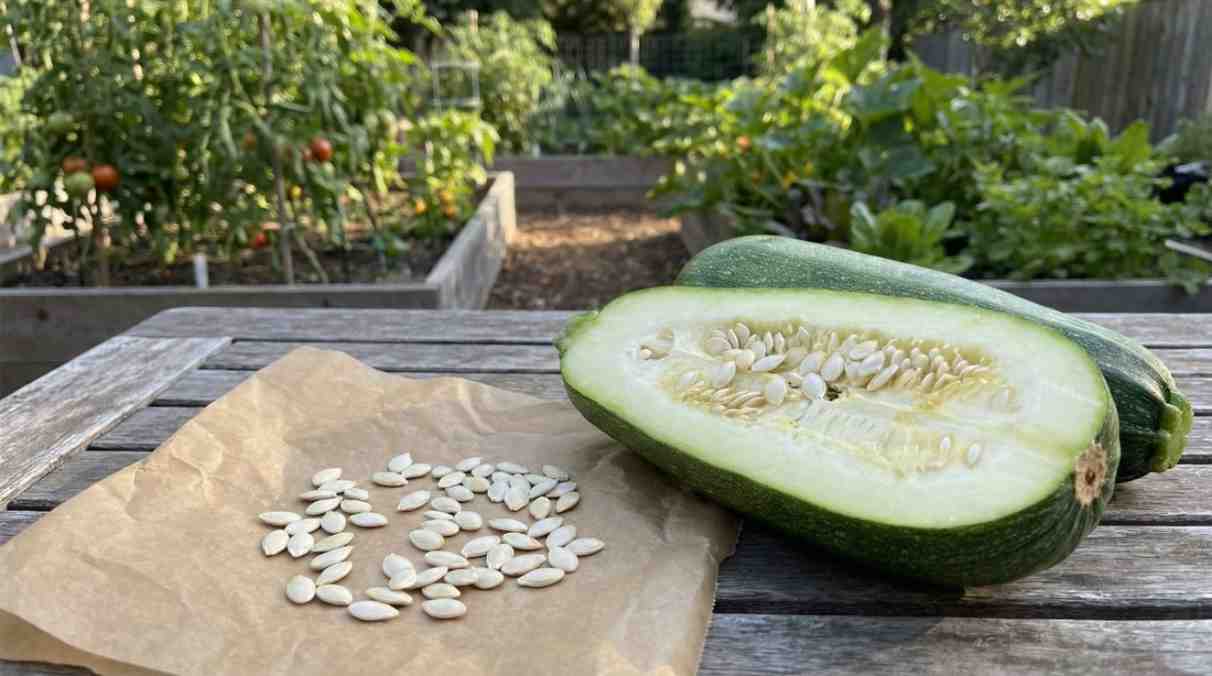
- Cut the zucchini open and scoop out the seeds with pulp.
- Place seeds in a bowl of water; viable seeds sink, pulp floats.
- Rinse thoroughly to remove remaining gel, preventing mold during storage.
Steps for Cleaning Zucchini Seeds:
- Scoop seeds and pulp into a clean bowl.
- Add water and stir gently.
- Remove floating pulp and discard.
- Rinse seeds under running water.
Fermenting Zucchini Seeds
- Fermentation removes gel coating and kills pathogens.
- Place seeds in a jar with water for 1–3 days.
- Stir daily and remove seeds that float; these are usually non-viable.
Fermentation Process
| Step | Action |
|---|---|
| Step 1 | Place seeds in a jar with water |
| Step 2 | Leave at room temperature for 1–3 days |
| Step 3 | Stir daily to separate pulp |
| Step 4 | Remove floating seeds (non-viable) |
Drying Zucchini Seeds
- Spread seeds in a single layer on a paper towel or mesh screen.
- Keep in a cool, airy spot; avoid direct sunlight.
- Fully dried seeds should snap, not bend, to ensure longevity and germination.
Drying Guidelines
| Condition | Result |
|---|---|
| Cool, dry, airy | Maximum lifespan |
| Warm, dry | Moderate germination loss |
| Cool, damp | Mold risk |
| Warm, damp | Rapid spoilage |
Storing Zucchini Seeds
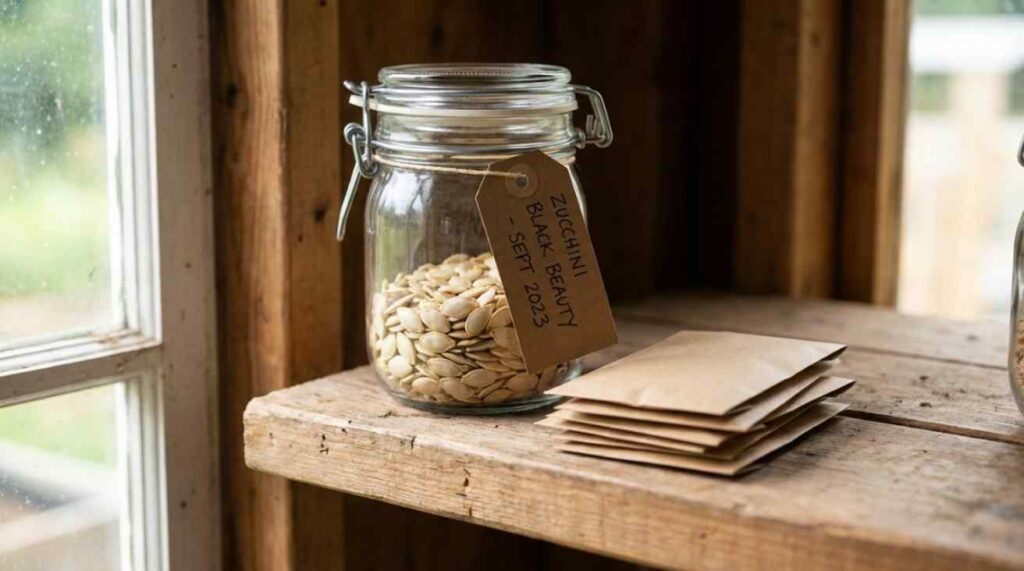
- Use airtight jars, envelopes, or seed packets for storage.
- Keep seeds in a cool, dark, dry place to maintain viability.
- Label with variety and harvest date.
Storage Options
| Storage Method | Suitability |
|---|---|
| Glass jars | Excellent; keeps moisture out |
| Paper envelopes | Good; allows air circulation |
| Plastic bags | Poor; can trap moisture |
Testing Seed Viability
- Perform a germination test before planting.
- Place seeds on a damp paper towel, keep warm, check after 7–10 days.
- A germination rate above 70% is ideal.
Steps for Testing Viability:
- Place 10–20 seeds on a damp paper towel.
- Fold towel and place in a warm area.
- Check for sprouting after 7–10 days.
Common Problems & Troubleshooting
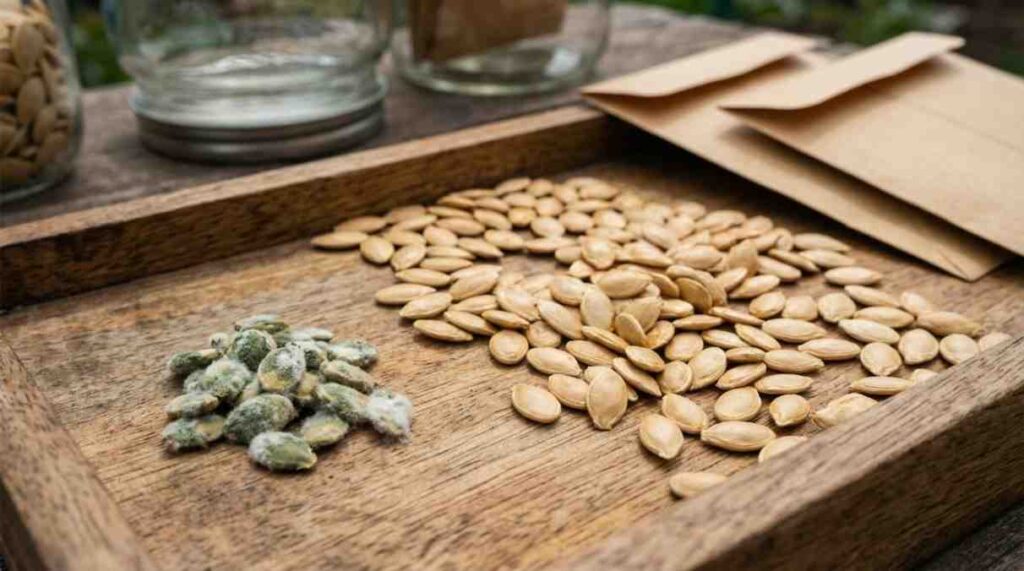
- Mold during drying or storage: ensure seeds are fully dry.
- Seeds not germinating: check age, drying, or fermentation process.
- Cross-pollination: isolate plants to maintain true seed traits.
Troubleshooting Common Issues
| Problem | Solution |
|---|---|
| Mold on seeds | Dry thoroughly, store in cool, dry place |
| Poor germination | Conduct germination test, discard non-viable seeds |
| Cross-pollination | Use mesh bags or hand pollination |
FAQs
1. Can you save zucchini seeds every year?
Yes, if seeds are mature and from open-pollinated varieties.
2. How long do zucchini seeds last?
Dried and stored seeds can last 3–5 years.
3. Why ferment zucchini seeds?
Fermentation removes gelatin coating and kills pathogens, increasing germination.
4. Can hybrid zucchini seeds be saved?
Hybrid seeds may not breed true; open-pollinated seeds are best for saving.
5. How do I test seed viability?
Place seeds on a damp towel for 7–10 days; sprouting indicates viability.
6. How do I prevent cross-pollination?
Use isolation, hand pollination, or mesh bags to keep varieties separate.