Healthy harvests depend on correct storage methods. how to save potatoes for seed using proven steps that prevent rot, sprouting failure, and yield loss.
How to Save Potatoes for Seed
Saving potatoes for planting is a practical skill that directly affects next season’s harvest.
Understanding how to save potatoes for seed helps maintain tuber health, reduce disease risk, and ensure reliable sprouting. Seed potatoes require different handling than potatoes stored for eating.
Correct selection, curing, and storage protect viability until planting time.
Key Facts About Saving Potatoes for Seed
| Factor | Why It Matters |
|---|---|
| Seed potatoes are living tubers | Improper storage reduces sprouting ability |
| Healthy parent plants matter | Diseased plants pass problems to seed |
| Temperature control is critical | Heat triggers early sprouting |
| Moisture exposure causes rot | Dry storage preserves firmness |
What Does “How to Save Potatoes for Seed” Mean
Understanding how to save potatoes for seed means preserving tubers specifically for replanting, not consumption.
Saving seed potatoes involves:
- Selecting disease-free tubers
- Allowing skins to mature fully
- Controlling light, humidity, and temperature
- Preventing premature sprouting
Unlike eating potatoes, seed potatoes must stay alive but dormant.
Incorrect storage damages eyes, weakens sprouts, and reduces yield.
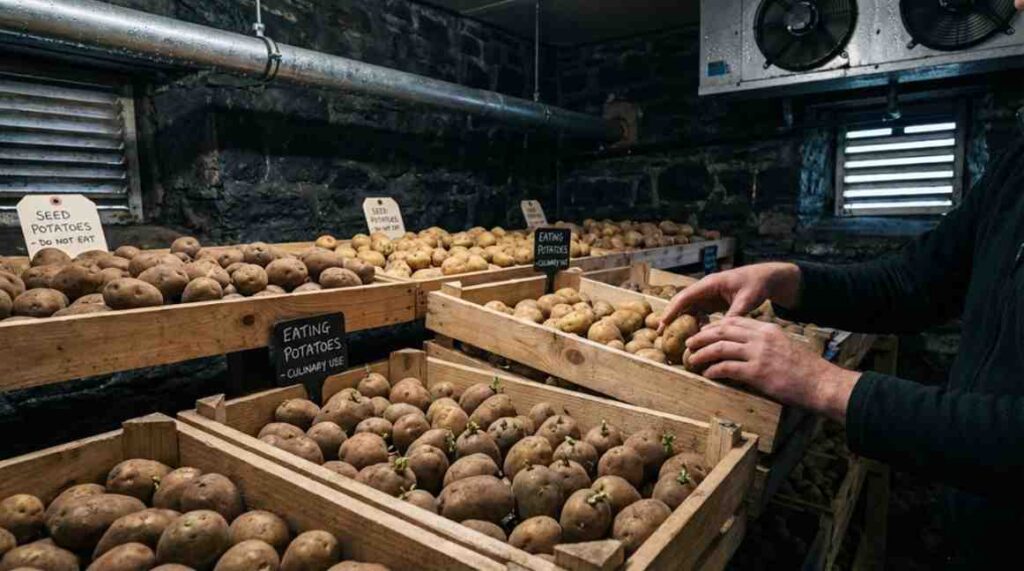
Why Seed Potatoes Fail Without Proper Storage
Seed failure is rarely accidental. It usually results from avoidable handling errors.
Common causes include:
- High humidity leading to rot
- Warm storage causing weak sprouts
- Using damaged or cut tubers
- Poor airflow during curing
Learning how to save potatoes for seed correctly prevents these failures and protects planting success.
Selecting Potatoes for Seed Saving
Seed quality begins in the field.
Choose potatoes that are:
- Free from spots, mold, or soft areas
- Harvested from strong plants
- True to variety
- Medium-sized with visible eyes
Avoid:
- Misshapen tubers
- Potatoes exposed to frost
- Tubers with cuts or bruises
Healthy selection is the foundation of how to save potatoes for seed effectively.
When to Harvest Potatoes for Seed
Timing affects skin strength and storage life.
Harvest seed potatoes when:
- Vines have naturally died back
- Skins resist rubbing
- Tubers are fully developed
Early harvesting increases storage damage risk and shortens dormancy.
Curing Potatoes Before Storage
Curing strengthens skins and seals minor wounds.
Curing conditions:
- Temperature: 55–65°F (13–18°C)
- Duration: 10–14 days
- Location: Dark, ventilated area
Curing is a non-negotiable step in how to save potatoes for seed successfully.
Step-by-Step Process to Save Potatoes for Seed
| Step | Action | Purpose |
|---|---|---|
| 1 | Select healthy tubers | Preserve strong genetics |
| 2 | Dry soil off gently | Prevent moisture retention |
| 3 | Cure in darkness | Strengthen skin |
| 4 | Inspect again | Remove damaged potatoes |
| 5 | Store in cool area | Maintain dormancy |
Ideal Storage Conditions for Seed Potatoes
Storage environment determines success.
Maintain:
- Temperature: 38–45°F (3–7°C)
- Humidity: 85–90%
- Complete darkness
- Good airflow
Avoid refrigerators and sealed plastic containers.
Best Storage Containers for Seed Potatoes
| Container Type | Suitability |
|---|---|
| Wooden crates | Excellent airflow |
| Paper sacks | Good moisture balance |
| Mesh bags | Prevents condensation |
| Plastic bags | Poor |
Container choice directly affects how to save potatoes for seed long-term.
Managing Sprouting During Storage
Sprouting is natural but must be controlled.
To slow sprouting:
- Keep temperatures stable
- Avoid light exposure
- Separate damaged tubers
Excessive sprouting weakens seed energy.
Preventing Disease in Stored Seed Potatoes
Disease spreads quickly in storage.
Reduce risk by:
- Inspecting monthly
- Removing soft or moldy tubers
- Maintaining airflow
Disease prevention protects your effort to master how to save potatoes for seed.

Can Grocery Store Potatoes Be Used as Seed
Grocery potatoes are usually treated to prevent sprouting.
Problems include:
- Chemical sprout inhibitors
- Unknown disease history
- Poor sprout strength
Certified or home-grown potatoes are safer options.
Cutting Seed Potatoes Before Planting
Cutting increases seed quantity but adds risk.
If cutting is necessary:
- Use clean tools
- Leave at least one strong eye
- Allow cut surfaces to dry
Cut seed must be handled carefully to avoid rot.
How Long Seed Potatoes Remain Viable
Storage life depends on conditions.
| Condition | Viability Result |
|---|---|
| Cool + dark | 6–8 months |
| Warm storage | Reduced lifespan |
| Damp storage | Rot risk |
| Light exposure | Weak sprouts |
Common Mistakes When Saving Seed Potatoes
Mistakes that reduce success:
- Storing un-cured potatoes
- Using damaged tubers
- Ignoring temperature control
- Skipping inspections
Avoiding these protects yield and effort.

Yield Benefits of Proper Seed Saving
Correct methods improve:
- Sprout uniformity
- Plant vigor
- Disease resistance
- Harvest consistency
Mastering how to save potatoes for seed improves every growing season.
Storage Comparison for Seed Potatoes
| Storage Area | Result |
|---|---|
| Basement cellar | Stable conditions |
| Garage | Temperature swings |
| Refrigerator | Excess moisture |
| Open shelves | Light damage |
Preparing Stored Potatoes for Planting
Before planting:
- Move to indirect light
- Allow short sprouts to form
- Remove weak tubers
This transition improves field performance.
FAQs
1. How long can seed potatoes be stored before planting?
Seed potatoes usually remain viable for 6–8 months under cool, dark storage.
2. Should seed potatoes be washed before storage?
No. Washing increases moisture and raises rot risk.
3. Can small potatoes be used as seed?
Yes, if they are healthy and have visible eyes.
4. Why do seed potatoes rot in storage?
Rot occurs due to excess moisture, poor airflow, or damaged skins.
5. Is light exposure harmful to seed potatoes?
Yes. Light weakens sprouts and reduces planting strength.