Birds eating lawn seed? how to protect grass seeds from birds using mulch, netting, and seeding methods that prevent loss fast.
How to Protect Grass Seeds from Birds
Freshly seeded lawns often attract unwanted attention from birds. Exposed seeds look like easy food and can thin out new growth. Understanding how to protect grass seeds from birds improves germination rates and lawn density. Simple adjustments in coverage, timing, and technique reduce seed loss quickly.
Seed Protection Methods Overview
| Method | How It Helps | Effectiveness Level |
|---|---|---|
| Rake Seed into Soil | Reduces visibility and improves seed-to-soil contact | High |
| Straw Mulch Layer | Camouflages seed and retains moisture | High |
| Bird Netting | Blocks physical access to lawn seed | Very High |
| Compost Topdressing | Adds light cover and nutrients | Medium–High |
| Seed Blankets | Protects from birds and erosion | Very High |
Why Birds Eat Newly Planted Grass Seed
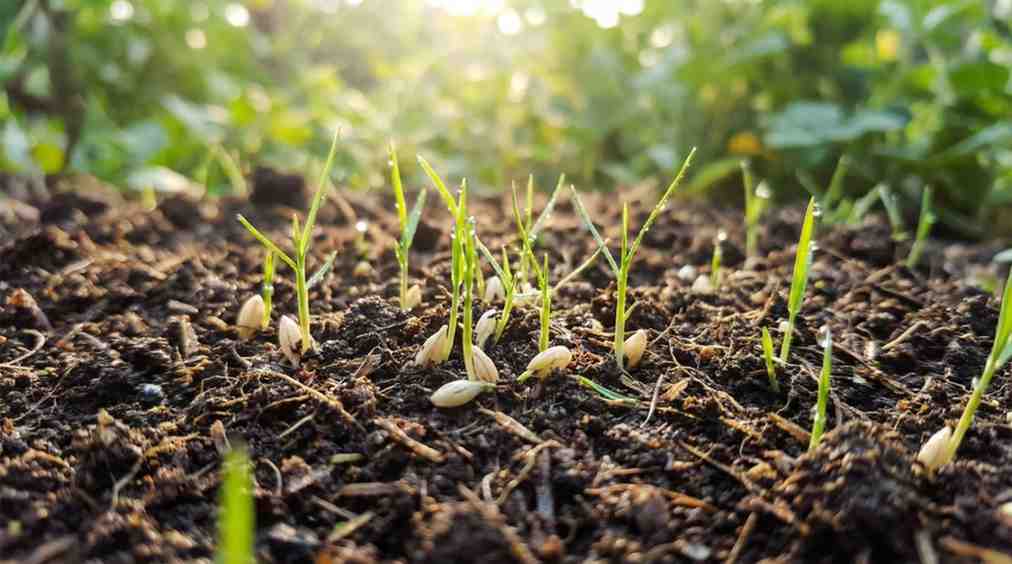
Birds search for easy surface food sources. Fresh lawns provide that.
- Exposed grass seed is highly visible
- Ground-feeding species like sparrows target open soil
- Morning feeding increases seed loss
- Dry soil leaves seed sitting on top
Many homeowners asking about how to protect grass seeds from birds underestimate how much visibility matters.
If seed remains uncovered:
- Germination slows
- Patchy growth develops
- Reseeding becomes necessary
Reducing visibility is the first step in solving birds eating grass seed problems.
Best Time to Seed to Reduce Bird Activity
Timing affects how well how to protect grass seeds from birds strategies work.
- Seed during mild weather with stable soil temperatures
- Avoid extremely dry, windy conditions
- Early fall or spring reduces heavy feeding pressure
- Water immediately after spreading seed
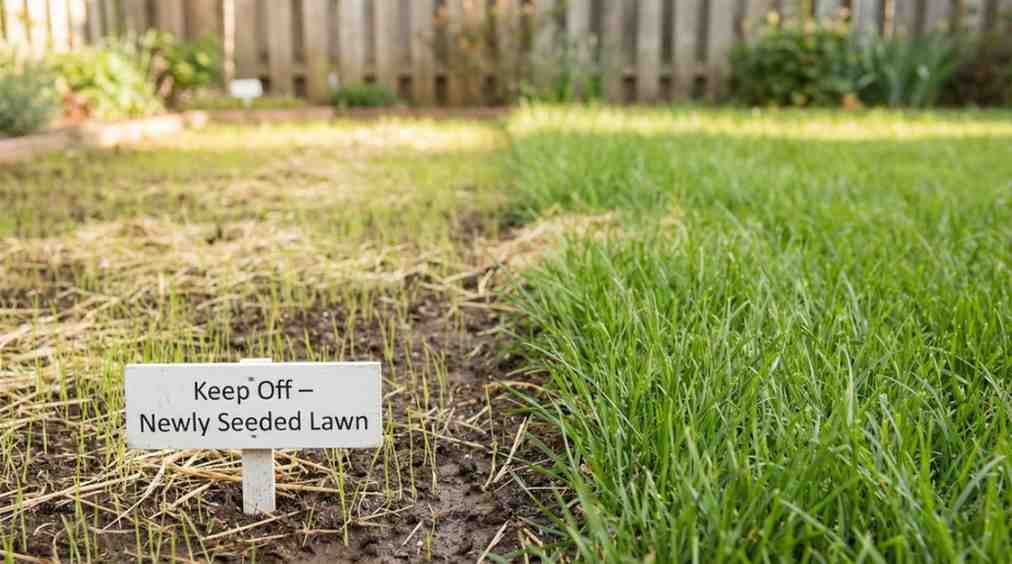
Fast germination shortens the risk window.
The less time seed remains exposed, the less attractive it becomes.
Cover Grass Seed Properly
Proper coverage plays a major role in how to protect grass seeds from birds successfully.
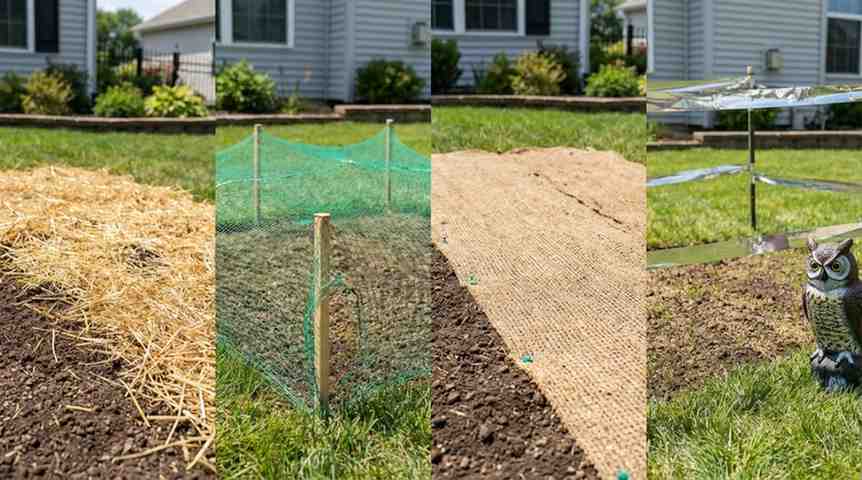
Straw Mulch Application
- Spread a thin, even layer
- Cover about 70–75% of soil surface
- Use certified weed-free straw
Compost Top Dressing
- Apply ¼ inch light compost
- Press gently for contact
- Improves moisture retention
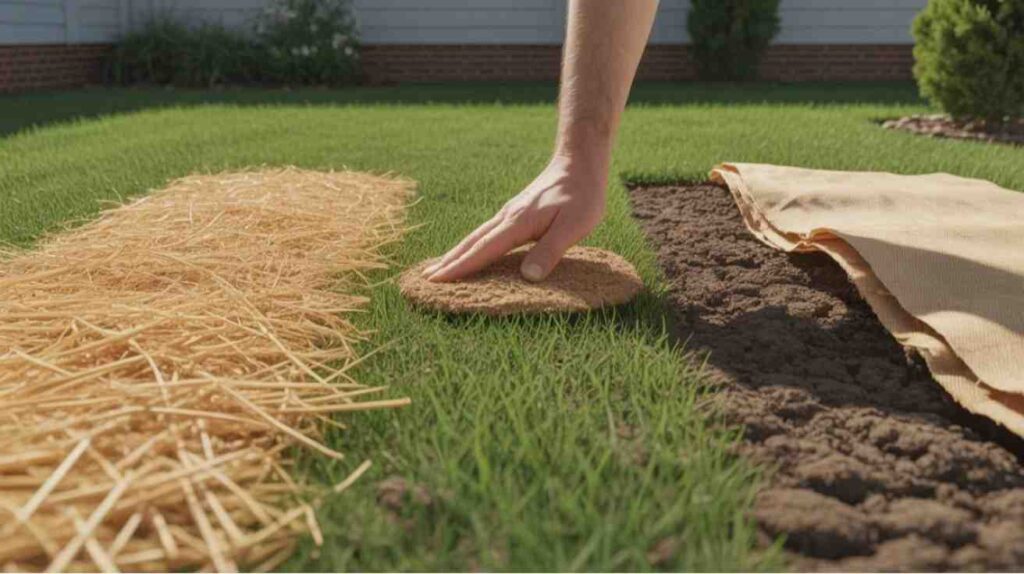
Burlap or Seed Blankets
- Allow air and sunlight
- Prevent birds from reaching seed
- Remove once grass sprouts
Using coverage alone often solves most lawn seed protection issues.
Physical Barriers That Stop Birds
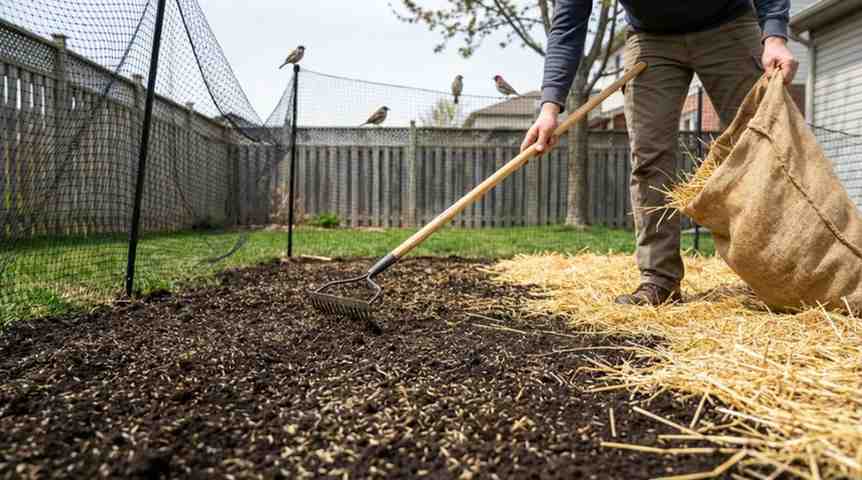
Bird netting provides a reliable solution for how to protect grass seeds from birds in high-traffic areas.
Installation Guidelines
- Stretch netting flat over lawn
- Secure edges tightly
- Keep material elevated slightly
Temporary fencing also reduces access.
Without physical barriers, persistent birds may continue feeding.
Visual and Sound Deterrents
While not always permanent solutions, deterrents support how to protect grass seeds from birds strategies.
- Reflective tape disrupts visibility
- Hanging foil strips create movement
- Predator decoys discourage landing
- Wind chimes introduce sound variation
Rotate placement regularly to maintain effectiveness.
Seeding Techniques That Reduce Exposure
Technique determines whether how to protect grass seeds from birds becomes a long-term problem.
Effective Lawn Seeding Process
- Spread seed evenly
- Rake lightly into topsoil
- Roll lawn to improve contact
- Water gently but thoroughly
Proper seed-to-soil contact speeds germination.
Faster sprouting means less time for birds to interfere.
Common Mistakes That Increase Bird Damage
Avoiding errors strengthens results when addressing how to protect grass seeds from birds.
- Leaving seed exposed
- Overwatering and washing seed upward
- Using too little mulch
- Relying only on scare tactics
Combining methods provides better protection than using one approach alone.
Lawn Protection Comparison
| Strategy | Cost Level | Maintenance Required | Best Use Case |
|---|---|---|---|
| Mulch Covering | Low | Minimal | Small to medium lawns |
| Bird Netting | Moderate | Temporary removal needed | High bird activity zones |
| Seed Mats | Higher | Low | Sloped or erosion-prone areas |
| Visual Deterrents | Low | Frequent repositioning | Supplemental protection |
Integrated Protection Plan
Combining strategies improves success when implementing how to protect grass seeds from birds.
Layered Protection Steps
| Step | Action | Purpose |
|---|---|---|
| 1 | Rake seed into soil | Hide from birds |
| 2 | Apply straw mulch | Add camouflage |
| 3 | Install netting if needed | Block access |
| 4 | Water consistently | Speed germination |
Layered methods significantly reduce patchy growth.
FAQs
1. What is the most effective way to protect grass seeds from birds?
Lightly raking seed into soil and covering it with straw mulch provides strong protection. Adding bird netting increases effectiveness.
2. Does straw stop birds from eating grass seed?
Yes. A thin layer of weed-free straw hides seed from view and helps retain moisture.
3. How long should grass seed be protected from birds?
Protection is usually needed for 7 to 21 days, depending on germination speed and weather conditions.
4. Will birds completely destroy newly planted grass?
Birds rarely destroy an entire lawn, but heavy feeding can thin areas and require reseeding.
5. Can grass seed be protected without netting?
Yes. Compost topdressing, mulch covering, and proper watering reduce exposure without using netting.