Keep bird seed fresh and moth-free using natural methods. These 7 non-toxic tips explain exactly how to prevent moths in bird seed naturally and safely.
How to Prevent Moths in Bird Seed Naturally
Bird seed often becomes a target for pantry or grain moths because it’s rich in natural oils and proteins exactly what these pests feed on. Warm, humid storage creates the perfect environment for moths to lay eggs on seed surfaces, and once the larvae hatch, they feed on the seed, leaving silky webbing and contamination behind.
The way you store, clean, and monitor your bird seed determines whether these pests thrive or disappear. By using simple, chemical-free methods, you can easily learn how to prevent moths in bird seed naturally and keep your bird food fresh, safe, and pest-free all year long.
Natural Prevention Methods at a Glance
| Method | Key Benefit | Best Practice / Notes |
|---|---|---|
| Freeze seed | Kills eggs & larvae | Freeze for 48–72 hours before storing |
| Airtight containers | Blocks pests & moisture | Use heavy-duty plastic or metal bins |
| Cool, dry storage | Reduces insect activity | Keep below ~18 °C (65 °F) in shade |
| Herbal repellents | Natural scent deterrent | Add bay leaf, cedar, cloves or lavender |
| Clean bins & area | Eliminates residues & eggs | Wash with vinegar solution monthly |
| Pheromone traps | Catches male moths | Place near storage, not inside seed |
| Rotate & buy small | Prevents long-term infestation | Use old seed first and avoid bulk storage |
7 Natural Ways to Keep Moths Out of Bird Seed
Use a combination of these proven methods to keep your bird seed fresh and pest-free.
1. Freeze Bird Seed Before Storage
- Seal the seed in plastic bags and freeze for 48–72 hours.
- Kills hidden moth eggs and larvae without chemicals.
- After freezing, move seed directly to containers to avoid condensation.
This quick step forms the first line of defense in preventing moth infestations.
2. Store in Airtight, Chew-Proof Containers
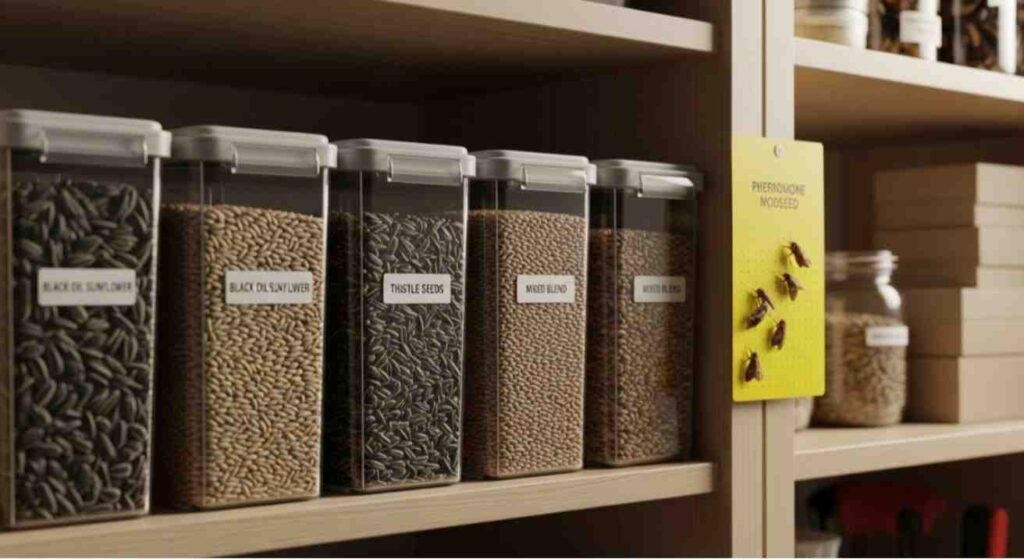
- Use metal or thick plastic bins with locking lids.
- Avoid thin bags or loose tops larvae can crawl through tiny gaps.
- Keep lids sealed after every use to maintain a dry, pest-free environment.
Airtight storage is essential for anyone learning how to prevent moths in bird seed naturally.

3. Keep Seed in a Cool, Dry, Dark Place
- Temperature under 18 °C (65 °F) deters insect activity.
- Low humidity and dark storage slow breeding cycles.
- Avoid attics, garages, or sunny windowsills.
Cool, dry conditions make your bird seed far less inviting to pantry moths.
4. Add Natural Herbal Repellents
- Place bay leaves, cloves, cedar chips, or lavender sachets around containers.
- These herbs act as non-toxic moth repellents.
- Replace sachets monthly for lasting fragrance.
Herbal deterrents provide a bird-safe, chemical-free solution to ongoing pest pressure.

5. Clean Containers and Storage Areas Regularly
- Empty and vacuum containers every few weeks.
- Wash with 1 part bleach to 9 parts water or vinegar solution.
- Dry thoroughly before adding new seed.
Cleaning breaks the moth life cycle by removing eggs, larvae, and food residues.
6. Use Pheromone Traps Nearby ( Not Inside Seed )
- Place traps close to storage areas, not within seed bins.
- They capture male moths, disrupting breeding.
- Check traps weekly and replace as needed.
This natural monitoring tool complements other methods without contaminating food.
7. Buy Smaller Batches and Rotate Stock
- Purchase only what you’ll use in 4–6 weeks.
- Mark containers with purchase dates.
- Apply the first-in, first-out method to use older seed first.
Frequent rotation prevents long-term buildup where moths can breed unnoticed.
What to Do If Moths Already Infest Your Seed
- Isolate any infested seed right away.
- Freeze for 72 hours if contamination seems light.
- Discard heavily infested batches don’t risk reuse.
- Deep-clean storage areas before refilling bins.
Once cleaned, reapply all seven prevention steps to keep the infestation from returning.

Extra Storage and Handling Advice
- Keep containers off the floor store on shelves or pallets.
- Avoid mixing old and new seed.
- Inspect seed monthly for webbing, larvae, or unusual odor.
- Separate bird seed from other grains like rice or flour to avoid cross-contamination.
Consistent, mindful storage is the key to long-term moth prevention.
FAQs
Q 1: Does freezing bird seed really kill moth eggs?
A: Yes. Freezing sealed seed for 48–72 hours kills moth eggs and larvae effectively.
Q 2: Are herbal repellents safe for birds?
A: Yes. Bay leaves, cloves, cedar, and lavender are all safe when kept outside feeders.
Q 3: How often should I clean the containers?
A: Monthly, or immediately if you see webbing or moisture inside.
Q 4: Can I use mothballs near bird seed?
A: No. Mothballs contain toxic chemicals harmful to birds and should never be used.
Q 5: Will pheromone traps solve the issue alone?
A: Not entirely. They reduce moth numbers but must be combined with storage and cleaning steps for full control.