Rich homemade flavour starts here — follow these simple steps on how to make grape jelly from grapes with seeds for smooth, seed-free, and long-lasting jelly.
How to Make Grape Jelly from Grapes with Seeds:
Ever wondered how to make grape jelly from grapes with seeds without fuss or fancy tools? You’re in the right place.
This simple method transforms seeded grapes into a perfectly smooth, flavorful jelly with a deep, rich taste.
With the right process, seeded grapes become your best friend — their skins and seeds naturally help the jelly set beautifully.
Let’s start by gathering what you’ll need before turning those grapes into glossy, shelf-stable jelly you’ll be proud to share.
Ingredients Table
| Ingredient | Amount / Details |
|---|---|
| Seeded grapes (Concord or wild) | 4–5 lbs (makes about 4 cups juice) |
| Sugar | 4 cups for balanced sweetness |
| Lemon juice | 2 tablespoons for natural acidity |
| Pectin (optional) | 1 packet for guaranteed firmness |
| Water | ½ cup to simmer grapes easily |
Seeded grapes bring their own natural pectin, creating a gel-like texture naturally when properly cooked.
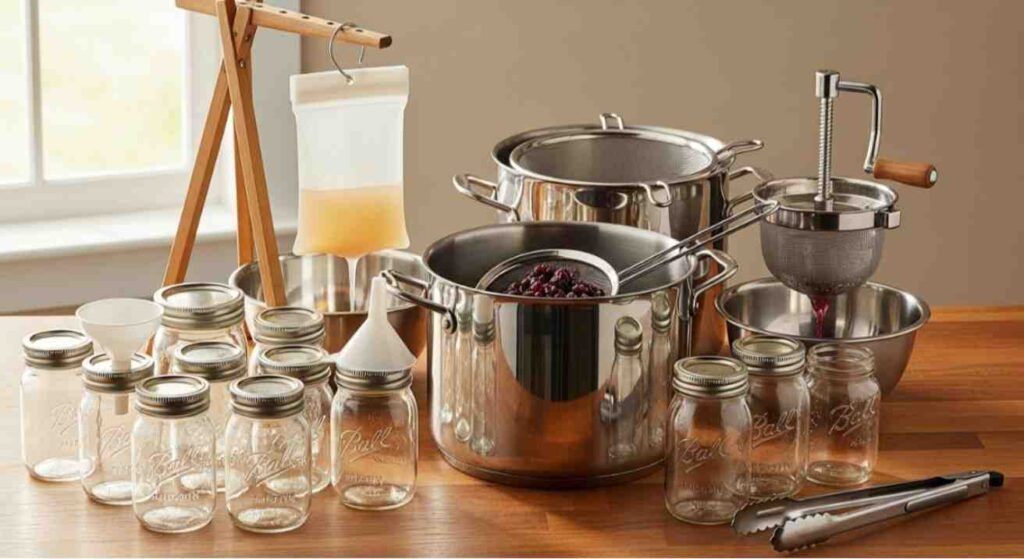
Equipment Table
| Equipment | Purpose / Use |
|---|---|
| Large pot | For simmering grapes evenly |
| Food mill or strainer | To separate skins and seeds |
| Jelly bag or cheesecloth | For smooth juice extraction |
| Canning jars with lids | For airtight storage |
| Tongs and funnel | For clean, easy jar handling |
Proper tools simplify how to make grape jelly from grapes with seeds, ensuring smooth, lump-free jelly.
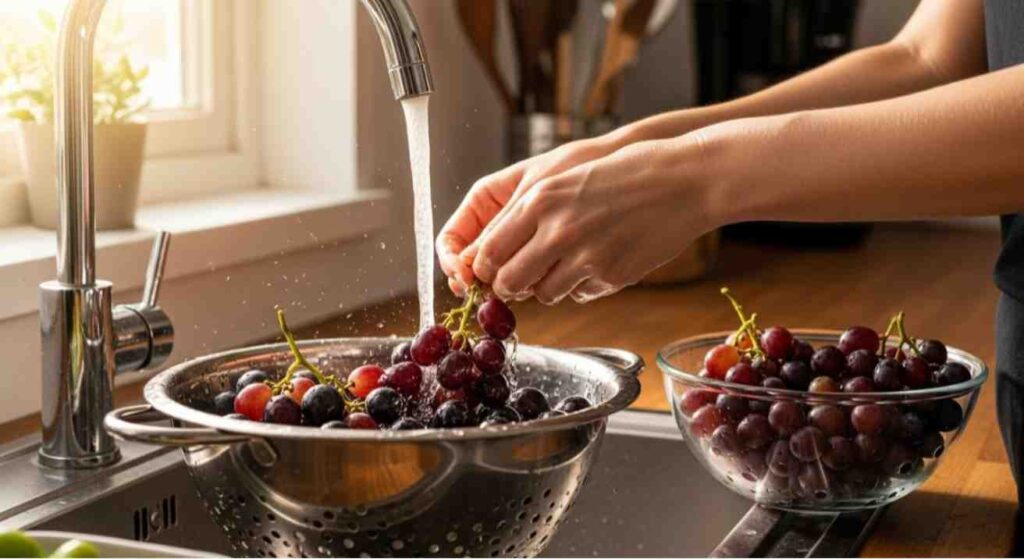
Step 1 – Wash and Prepare Grapes
- Remove all stems, leaves, and spoiled grapes before starting.
- Rinse thoroughly to remove dirt and dust.
- Mix ripe and slightly underripe grapes to balance flavor and natural pectin.
- Preparing grapes carefully ensures clear, flavorful jelly.
- Every step in how to make grape jelly from grapes with seeds depends on clean, fresh fruit for the best texture and taste.
Step 2 – Cook and Crush Grapes
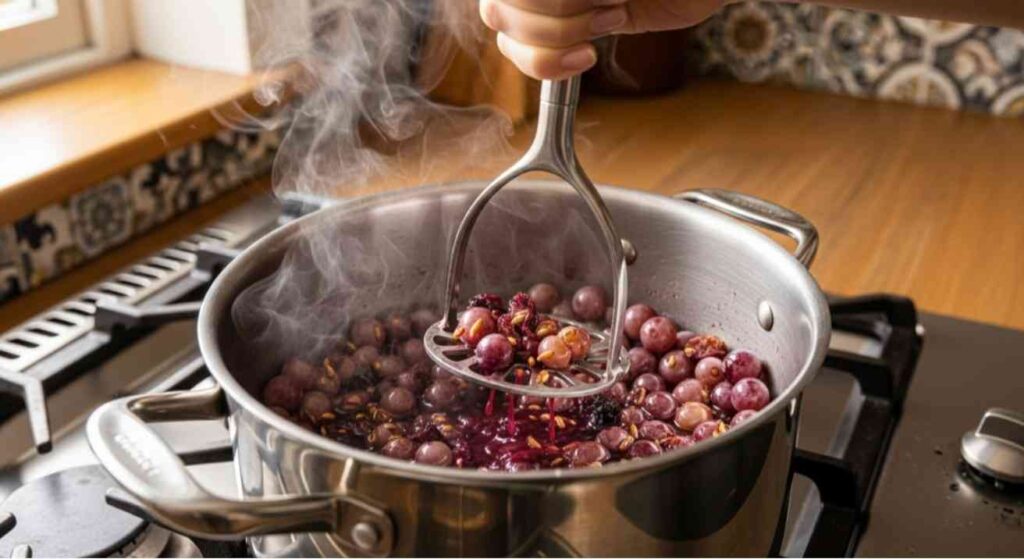
- Add grapes to a large pot with ½ cup water.
- Simmer 10–15 minutes, stirring occasionally until skins soften.
- Crush gently using a potato masher or food mill to release juice.
- Heating grapes helps extract pectin from skins and seeds, creating the base for your jelly.
- Don’t boil too long; just enough to soften and release the natural juices.
This step is where how to make grape jelly from grapes with seeds truly begins — turning solid fruit into flavourful juice.
Step 3 – Remove Seeds and Skins
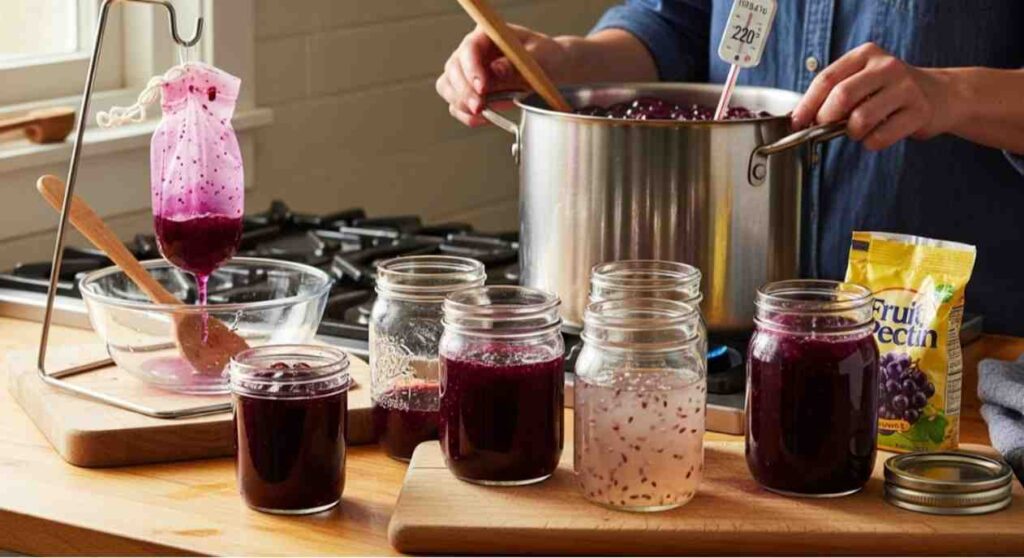
- Pour the cooked grapes into a jelly bag or fine strainer.
- Let juice drip naturally — pressing too hard can cloud your jelly.
- For larger batches, use a food mill to remove skins and seeds efficiently.
- This process separates the rich juice from the pulp.
- Removing seeds is the heart of how to make grape jelly from grapes with seeds, ensuring a smooth, seed-free spread.
Step 4 – Cook the Jelly Mixture (Pectin or No Pectin)
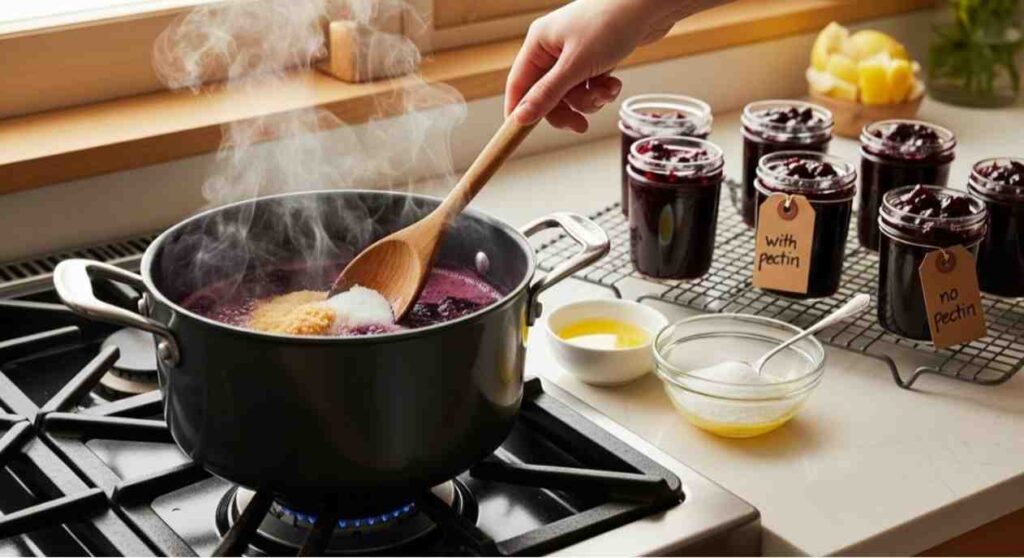
With Pectin (Reliable Set)
- Measure 4 cups of strained grape juice into a pot.
- Add pectin and bring to a rolling boil.
- Stir in sugar quickly and continue boiling for 1 minute.
- This method guarantees firmness while maintaining flavour.
- Perfect for those new to making grape jelly from seeded grapes.
Without Pectin (Natural Method)
- Combine grape juice, sugar, and lemon juice in a large pan.
- Simmer slowly for 20–25 minutes until the mixture thickens.
- The natural pectin in grape skins and seeds will help it set.
- Skim off foam and check consistency on a cool plate.
- This classic approach keeps your jelly pure and naturally thick.
No matter which route you take, this is the most rewarding part of how to make grape jelly from grapes with seeds — watching juice transform into smooth jelly.
Step 5 – Test for Set
- Place a small drop of jelly on a chilled plate.
- After one minute, press gently — if it wrinkles, it’s ready.
- Or use a candy thermometer (220°F / 104°C) for accuracy.
- If the jelly stays runny, simmer for a few more minutes.
- Checking the set ensures your effort in how to make grape jelly from grapes with seeds gives consistent, high-quality results.
Step 6 – Fill, Seal, and Process the Jars
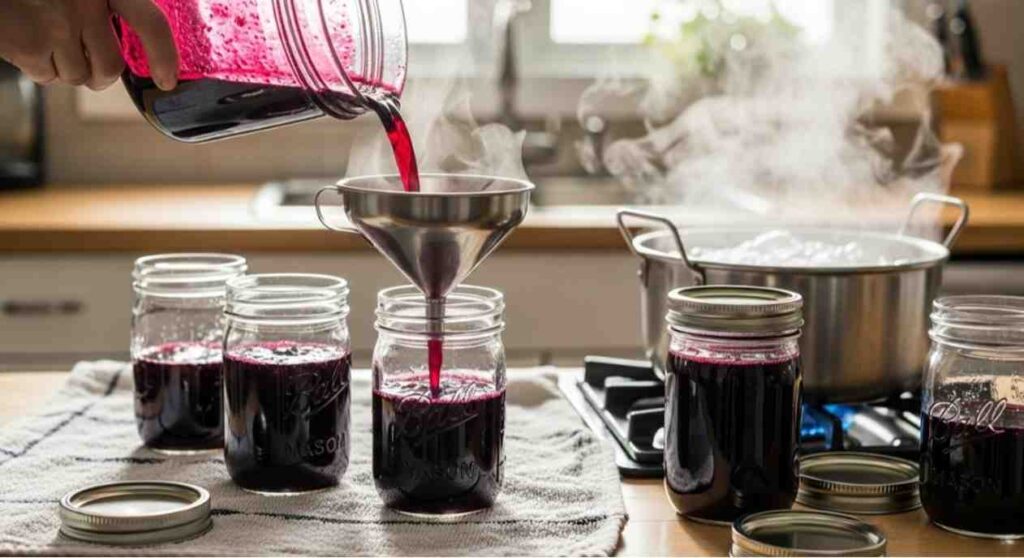
- Pour hot jelly into sterilized canning jars, leaving ¼ inch headspace.
- Wipe rims clean and secure lids tightly.
- Process jars in a boiling water bath for 5–10 minutes to seal.
- Remove carefully and let them cool on a towel until sealed.
- When you hear that satisfying “pop,” you’ll know your grape jelly from seeded grapes is safely preserved.
- Store sealed jars in a cool, dark cabinet for up to 12 months.
This method keeps your jelly fresh, flavorful, and safe for long-term storage.
Step 7 – Troubleshooting and Easy Fixes
Each fix ensures your grape jelly made from seeded grapes turns out perfect every time.
Jelly too thin? Boil again briefly or add more pectin.
Too thick? Add a tablespoon of hot water and stir slowly.
Cloudy jelly? Strain again with a jelly bag or fine mesh.
No set? It may be undercooked — heat again to 220°F.
FAQs
Q 1: Can I use grapes with seeds for jelly?
Absolutely! Grapes with seeds contain natural pectin, which helps the jelly set better. Just cook and strain them — no need to deseed first.
Q 2: What type of grapes works best for this recipe?
Concord or wild seeded grapes are perfect for making jelly because they’re rich in flavour and natural pectin.
Q 3: Do I need to add pectin when using seeded grapes?
Not always. Seeded grapes often provide enough pectin naturally, but adding commercial pectin ensures a firmer, faster set.
Q 4: How long can homemade grape jelly last?
When properly sealed in sterilized jars, homemade grape jelly can last up to 12 months in a cool, dark place.
Q 5: Why strain the jelly mixture instead of pressing it?
Straining gently keeps the jelly clear and smooth — pressing too hard can make it cloudy or gritty.
Q 6: Can I make grape jelly without a canning setup?
Yes! Simply store it in the refrigerator for up to three weeks, but for long-term storage, use the boiling-water canning method.