Knowing how to identify a female seed helps ensure bigger yields, stronger plants, and saves time by spotting female seeds early and avoiding male ones.
How to Identify a Female Seed
Knowing how to identify a female seed is essential for every grower who wants a productive garden. Learning how to identify a female seed early helps ensure that you plant only the ones capable of producing flowers, buds, or fruits, while male seeds waste time and space. By understanding how to identify a female seed before planting, you can achieve stronger plants, better yields, and a more efficient growing process overall.
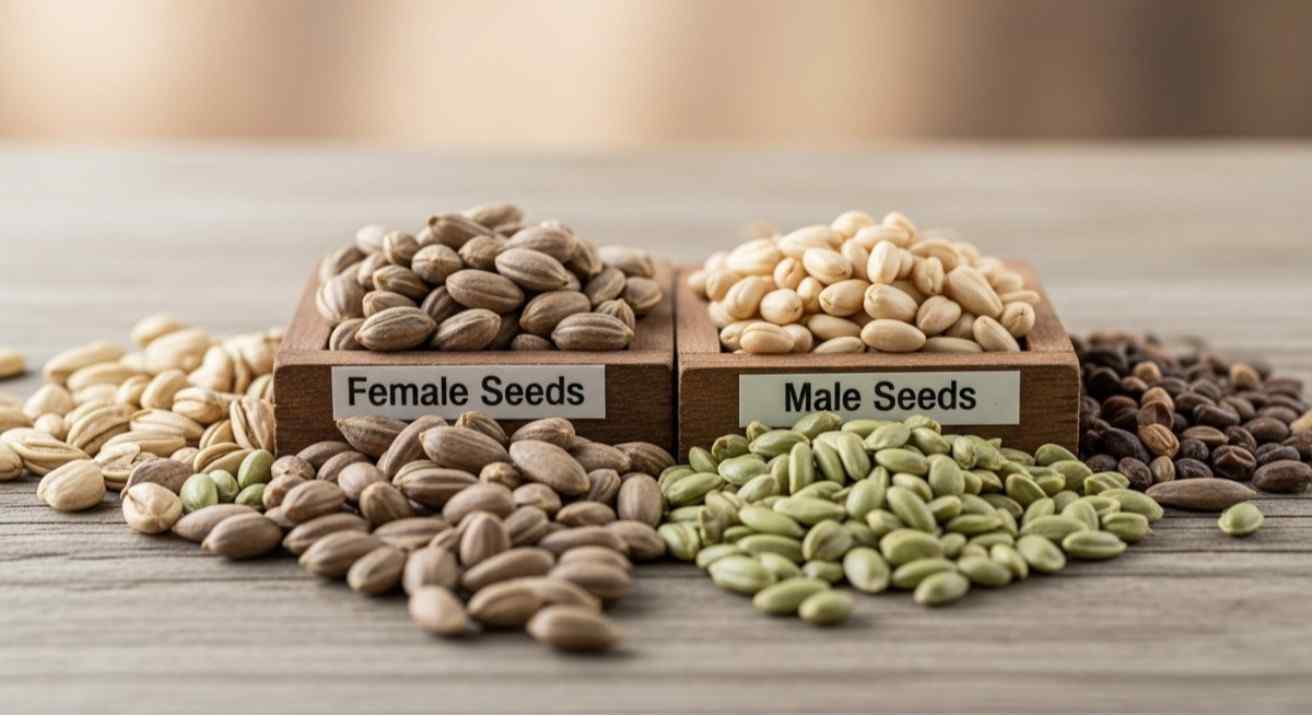
Physical Differences Between Male and Female Seeds
Below are common physical traits growers look for when spotting female vs male seeds.
| Feature | Female Seeds | Male Seeds |
|---|---|---|
| Color & Texture | Dark brown or gray with tiger-like stripes | Light or pale brown, often plain |
| Shape | Round and smooth surface | Pointed or uneven shape |
| Shell Strength | Thicker and harder shell | Thinner, breaks easily |
| Size | Slightly larger and heavier | Smaller and lighter |
| Surface Shine | Glossy or waxy look | Dull and rough surface |
While these clues can help, appearance alone isn’t fully accurate scientific methods are more reliable.
Reliable Ways to Identify a Female Seed Before Planting
Here are the most dependable ways to identify female seeds before you grow them.
| Method | Description | Reliability |
|---|---|---|
| Visual Inspection | Check size, shape, and colour pattern | Moderate |
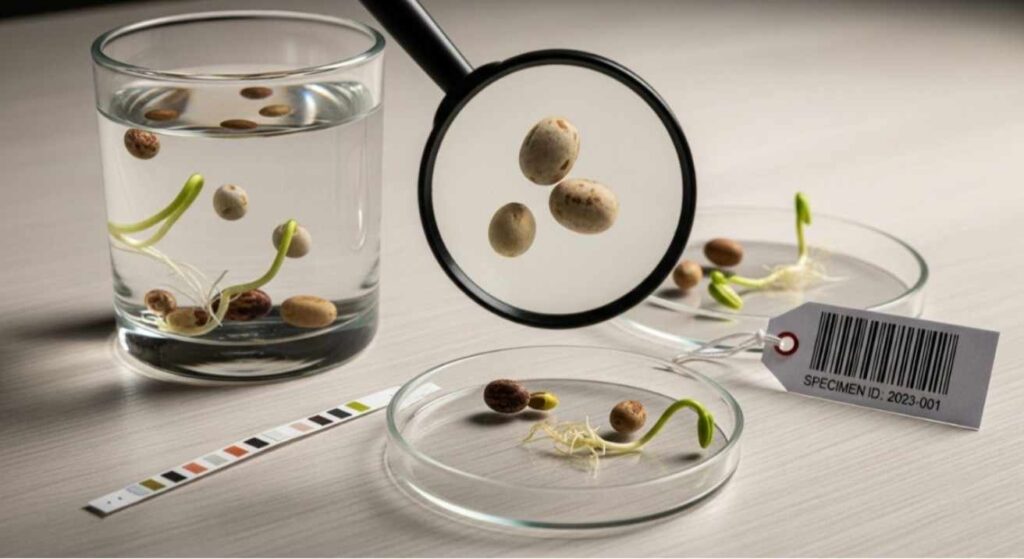
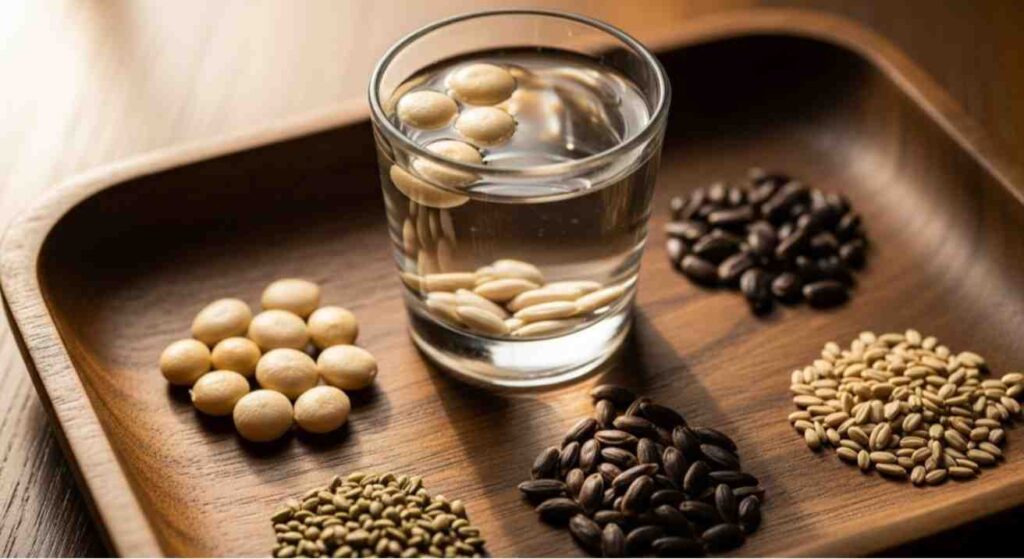
| Floating Test | Place seeds in water; female seeds usually sink | 70% accurate |
| Germination Test | Grow a few seeds and observe pre-flowering traits | 95% accurate |
| Genetic or DNA Test | Tests XX (female) chromosomes for confirmation | 99% accurate |
Combining two or more methods increases accuracy and helps ensure your plants are female before full growth begins.
Can You Tell a Female Seed by Appearance?
- Many growers try to guess gender based on seed colour or shape, but this method alone isn’t dependable.
- No visible trait guarantees 100% accuracy when identifying a female seed.
- True identification happens once the plant starts pre-flowering, showing white pistils at the nodes.
- Still, most healthy female seeds look darker, rounder, and firmer, while weak or underdeveloped ones appear pale and cracked.
Understanding appearance helps guide selection, but testing confirms results.
Best Time to Identify Female Plants
- The ideal stage is during the pre-flowering phase, usually 3–6 weeks after germination.
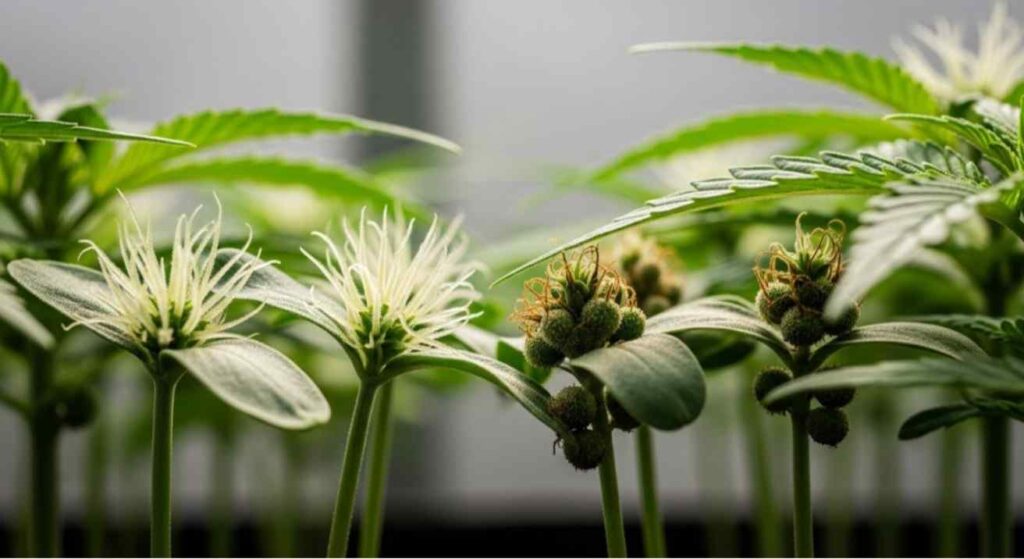
- Female plants form tiny white hairs (pistils) at the joints or nodes.
- Male plants show small round pollen sacs that hang downward.
- Removing male plants early prevents pollination and keeps female plants seed-free for better bud development.
Healthy growth conditions and good lighting make early identification easier and more accurate.
Common Myths About Female Seeds
Myth 1: All dark seeds are female
Dark color means maturity, not gender.
Myth 2: Cracked seeds are always male
Cracks usually come from dryness or mishandling, not the seed’s sex.
Myth 3: Large seeds are female, small ones are male
Size depends on genetics and plant variety, not gender.
Myth 4: Floating seeds are always male
Seed density varies, so the float test should be used as a guide, not proof.
Why Choosing Female Seeds Is Important
- Increases yield female plants produce flowers, fruits, or buds.
- Saves time and resources no effort wasted on non-productive male plants.
- Prevents accidental pollination keeps your harvest clean and seed-free.
- Ensures consistent harvests female plants provide stable and predictable results.
Choosing the right seeds at the start ensures stronger plants and higher-quality harvests every time.
FAQs
Q 1: What are the main signs of a female seed?
Female seeds are usually darker, rounder, and harder, sometimes with a glossy surface.
Q 2: Can you identify a female seed without growing it?
Yes, through genetic testing or float testing, but appearance alone is not completely reliable.
Q 3: Why should male plants be removed early?
Male plants release pollen that can fertilize females, lowering bud quality and overall yield.
Q 4: Are feminized seeds always female?
Yes, feminized seeds are designed to produce only female plants, offering guaranteed productivity.
Q 5: Does environment affect plant gender?
While genetics decide gender, stress, light, and temperature can sometimes cause hermaphroditic traits in female plants.