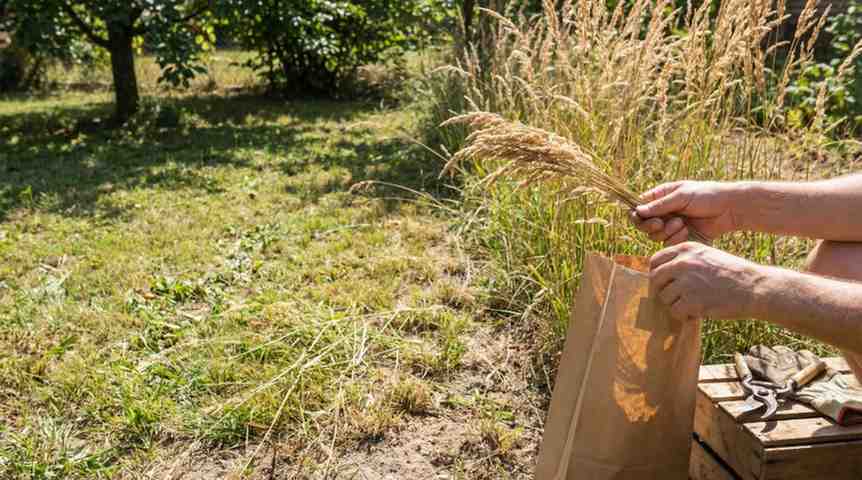
Harvest mature seed heads at the right time; how to harvest grass seed correctly ensures clean, viable seed for replanting and storage.
How to Harvest Grass Seed
Harvesting your own seed reduces cost and preserves grass quality. Timing and drying determine seed viability. how to harvest grass seed depends on maturity, dry weather, and careful handling. Correct collection improves germination rate and storage life.
Step-by-Step: How to Harvest Grass Seed
| Step | Action | Purpose |
|---|---|---|
| 1 | Allow grass to reach full flowering stage | Ensures seeds are fully mature |
| 2 | Wait until seed heads turn golden brown | Confirms ripening time |
| 3 | Choose a dry, sunny day | Prevents moisture damage |
| 4 | Cut seed heads with clean shears | Protects seed structure |
| 5 | Place heads in paper bags | Supports air drying process |
| 6 | Air dry for 5–10 days | Reduces moisture content |
| 7 | Thresh and clean seeds before storage | Removes chaff and debris |
Dry conditions and mature seed heads determine success when deciding how to harvest grass seed.
When to Harvest Grass Seed for Maximum Viability
Knowing how to harvest grass seed starts with correct timing.
- Seed heads must shift from green to tan or golden brown.
- Stems should feel dry and brittle.
- Seeds should release easily when rubbed.
- Natural seed drop may begin.
Harvest during:
- Late summer for many cool-season grasses.
- Early fall in moderate climates.
- Late spring for some warm-season varieties.
Avoid:
- Morning dew.
- Rainy or humid days.
- Cutting too early in the grass flowering stage.
Grass seed maturity determines germination rate.
Signs Grass Seed Is Ready to Harvest
- Fully mature seed heads.
- Seed shattering stage begins.
- Golden brown seed spikes.
- Low moisture content.
- Dry and crisp stems.
If seeds remain green, delay harvesting. Premature collection lowers seed viability.
Understanding these signals simplifies how to harvest grass seed effectively.
Tools Required to Harvest Grass Seed
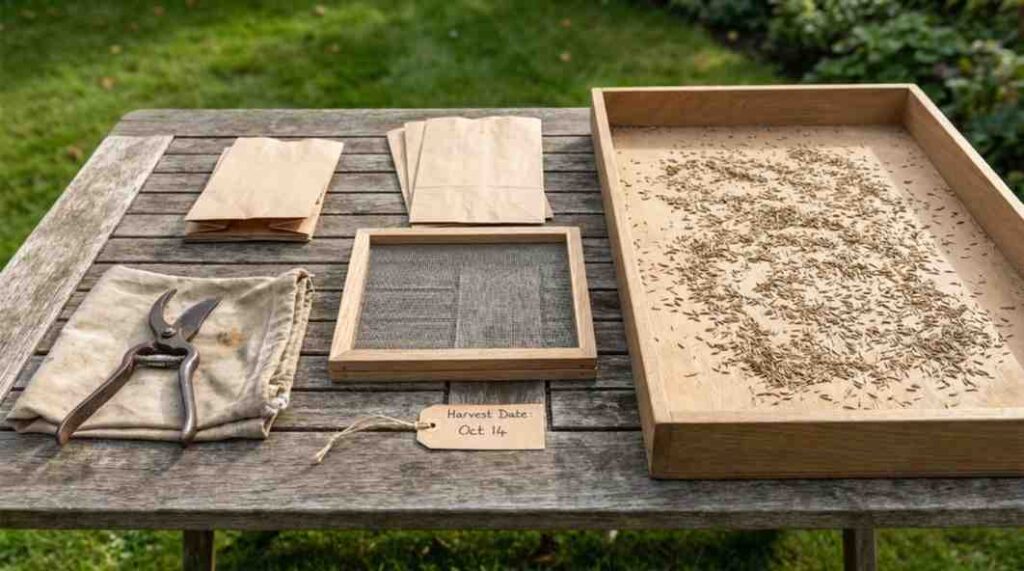
- Garden shears or scissors.
- Cloth sacks or paper bags.
- Mesh screen for cleaning.
- Large tray for drying.
- Labels for harvest date.
Using breathable containers supports the grass seed drying process.
How to Harvest Grass Seed by Hand
Learning how to harvest grass seed by hand is practical for lawns and small plots.
- Allow grass to grow without mowing.
- Cut mature seed heads.
- Shake gently into container.
- Rub seed heads between hands.
- Separate seeds from debris.
Harvesting grass seed by hand protects seed structure and improves yield.
Grass Seed Drying Process
| Condition | Correct Practice | Risk if Ignored |
|---|---|---|
| Location | Shaded, ventilated area | Mold growth |
| Surface | Thin layer spread | Uneven drying |
| Humidity | Low moisture air | Seed rot |
| Duration | 5–10 days average | Reduced viability |
Air drying seeds properly is essential when learning how to harvest grass seed.
Seeds must feel hard and dry before storage.
Cleaning Grass Seed After Harvest
Cleaning improves storage life.
- Remove plant debris.
- Thresh grass seed gently.
- Use mesh screen for chaff removal.
- Separate light debris from heavier seed.
Proper cleaning increases seed germination rate.
How to Store Harvested Grass Seed
| Storage Factor | Recommended Condition |
|---|---|
| Temperature | Cool and stable |
| Light Exposure | Dark location |
| Container | Airtight after drying |
| Labeling | Include harvest date |
Shelf life of grass seed depends on dryness and temperature control. Correct storage completes the process of how to harvest grass seed.
Harvesting Grass Seed from Different Grass Types
Cool-season grass:
- Harvest late summer or early fall.
- Soil and climate influence maturity.
Warm-season grass:
- Harvest late spring or early summer.
- Requires higher heat during seed development.
Native grass seed harvest timing may vary by region.
Climate impact on seed maturity affects when to harvest grass seed successfully.
Common Mistakes When Learning How to Harvest Grass Seed
- Harvesting before seeds turn brown.
- Collecting during humid weather.
- Storing seeds without full drying.
- Using plastic bags during drying.
- Ignoring seed viability testing.
Each mistake lowers seed preservation quality.
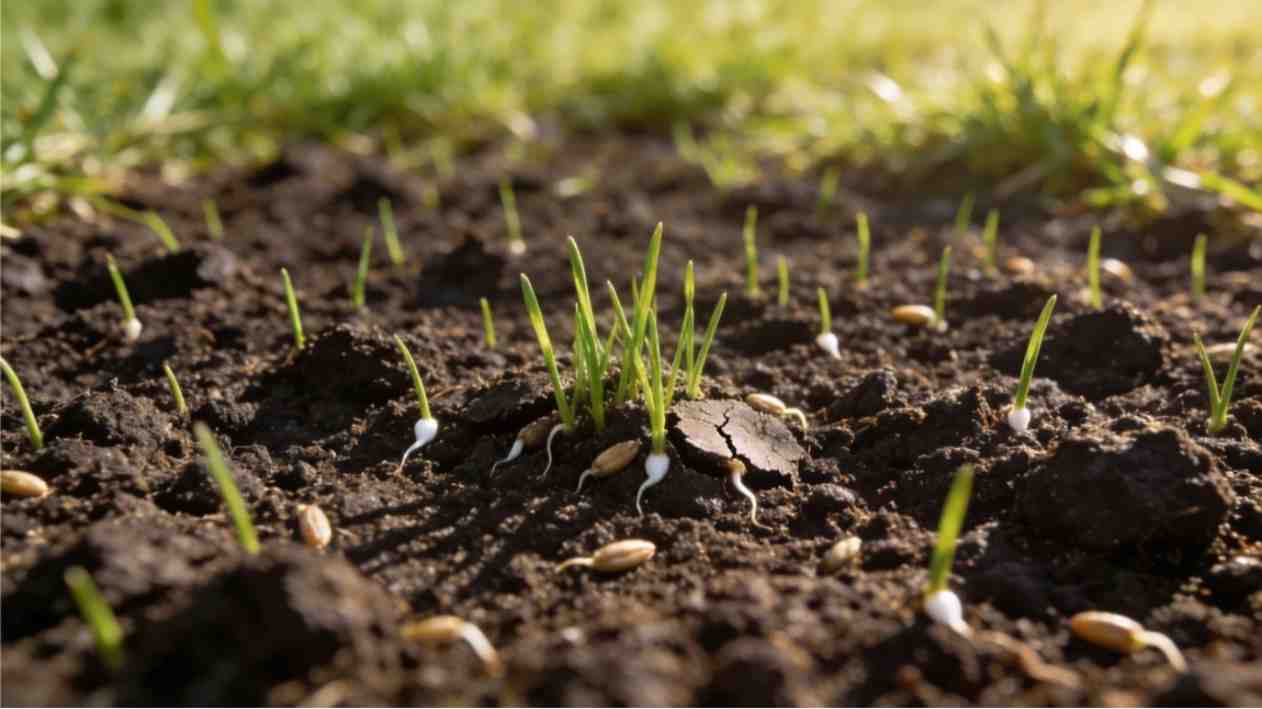
Testing Seed Viability Before Replanting
- Place seeds on damp paper towel.
- Keep in warm area.
- Check sprouting in 7–14 days.
- Count germinated seeds.
Testing ensures harvested grass seed will grow properly.
Yield Expectations
Grass seed yield depends on:
- Grass species.
- Climate.
- Plant density.
- Timing accuracy.
Healthy lawns produce higher seed yield when harvested at peak ripeness window.
Before Storage Verification
| Check | Ready? |
|---|---|
| Seeds fully dry | Yes |
| Debris removed | Yes |
| No mold odor | Yes |
| Stored airtight | Yes |
| Labeled correctly | Yes |
Complete these checks before finishing how to harvest grass seed.
FAQs
1. When should grass seed be harvested?
Harvest when seed heads turn brown and release seeds easily.
2. Can I harvest grass seed from my lawn?
Yes, if grass is allowed to flower and reach full maturity.
3. How long should harvested grass seed dry?
Air dry for 5–10 days in a shaded, ventilated area.
4. Does harvested grass seed remain viable?
Yes, if collected at maturity and stored correctly.
5. What is the biggest mistake in how to harvest grass seed?
Harvesting too early before seeds fully mature.