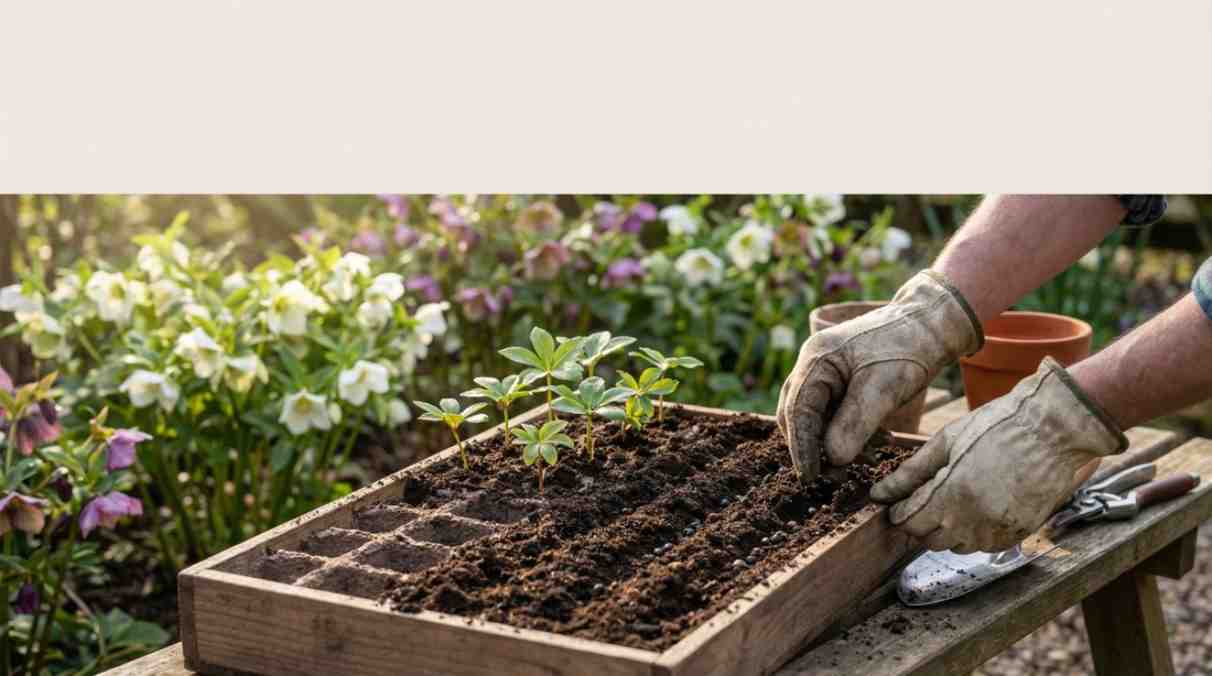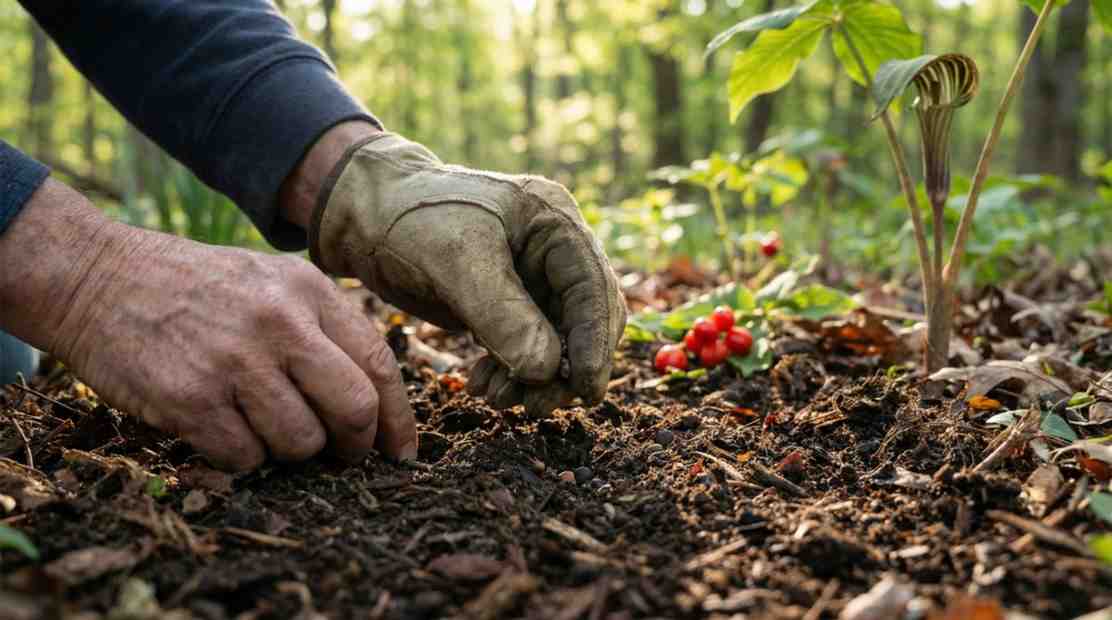
How to grow jack in the pulpit from seed requires cold stratification, moist soil, and patience for healthy woodland germination.
How to Grow Jack in the Pulpit from Seed
Growing this woodland perennial from seed takes time, not tricks. The plant follows a natural dormancy cycle that cannot be rushed. If you understand moisture, shade, and cold stratification, success becomes predictable. This guide explains exactly how to grow jack in the pulpit from seed with clear, practical steps.
Step-by-Step Overview of How to Grow Jack in the Pulpit from Seed
| Stage | What to Do | Key Details | Why It Matters |
|---|---|---|---|
| Seed Collection | Harvest ripe berries | Bright red berries in late summer | Immature seeds will not germinate |
| Cleaning Seeds | Remove pulp, rinse well | Wear gloves | Pulp delays germination |
| Cold Stratification | Store moist & cold 60–90 days | 33–40°F (0–4°C) | Breaks seed dormancy |
| Planting Depth | Sow ¼–½ inch deep | Moist, humus-rich soil | Prevents drying or rot |
| Germination | Wait until spring | Slow, natural sprouting | First-year growth is minimal |
| Long-Term Growth | Maintain shade & moisture | 3–5 years to flower | Corm needs time to mature |
What Is Jack in the Pulpit (Arisaema triphyllum)?
- Botanical name: Arisaema triphyllum
- Native woodland perennial
- Thrives in shade garden conditions
- Produces a hooded flower and later clusters of red berries
- Grows from an underground corm
This plant follows a slow growth cycle. In natural forests, seeds fall in late summer and remain dormant through winter. That dormancy is essential when learning how to grow jack in the pulpit from seed successfully.
Unlike fast annuals, this species focuses first on root and corm development. Flowering often appears years later.
When to Harvest Jack in the Pulpit Seeds
- Harvest in late summer to early fall
- Berries must be fully red and soft
- Cut the seed cluster carefully
- Remove pulp under running water
- Air dry briefly before stratification
Signs Seeds Are Ready
- Bright scarlet berries
- Slight softness when pressed
- Mature woodland plants nearby
Immature berries reduce germination rates. Clean seeds perform better during cold stratification.
Cold Stratification Process
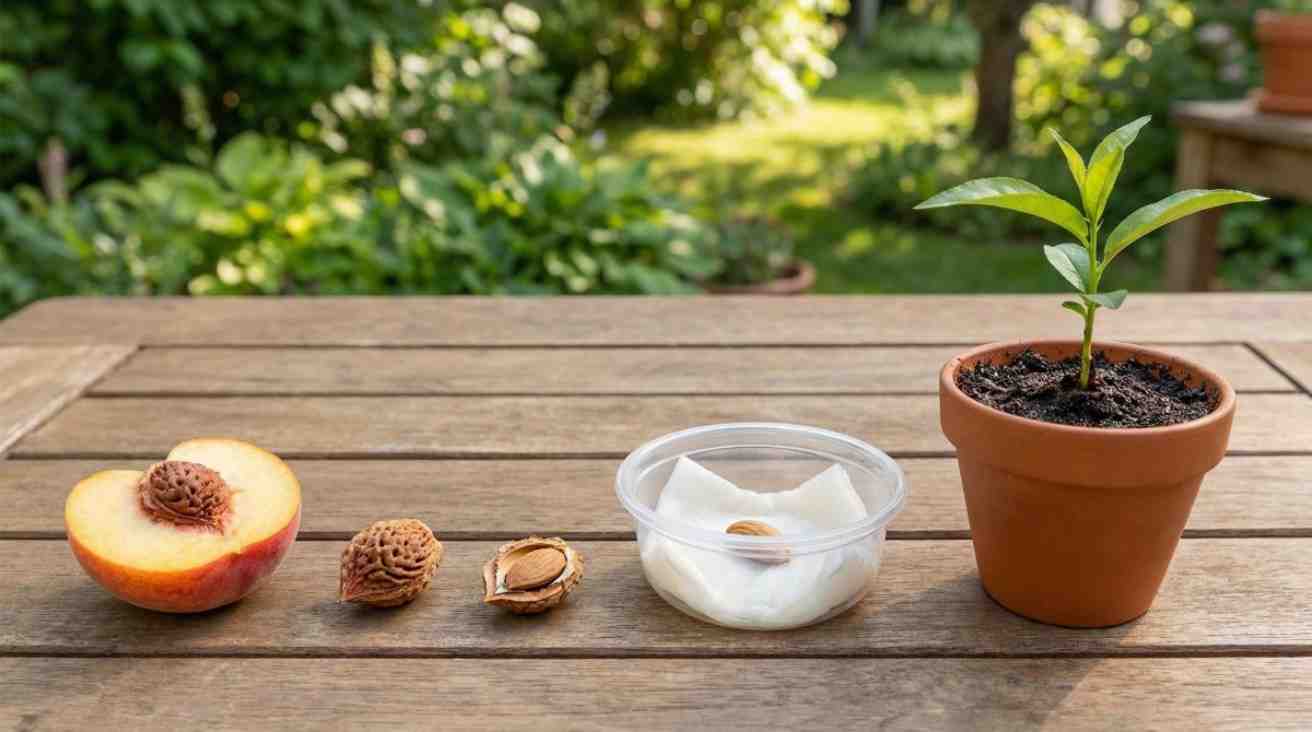
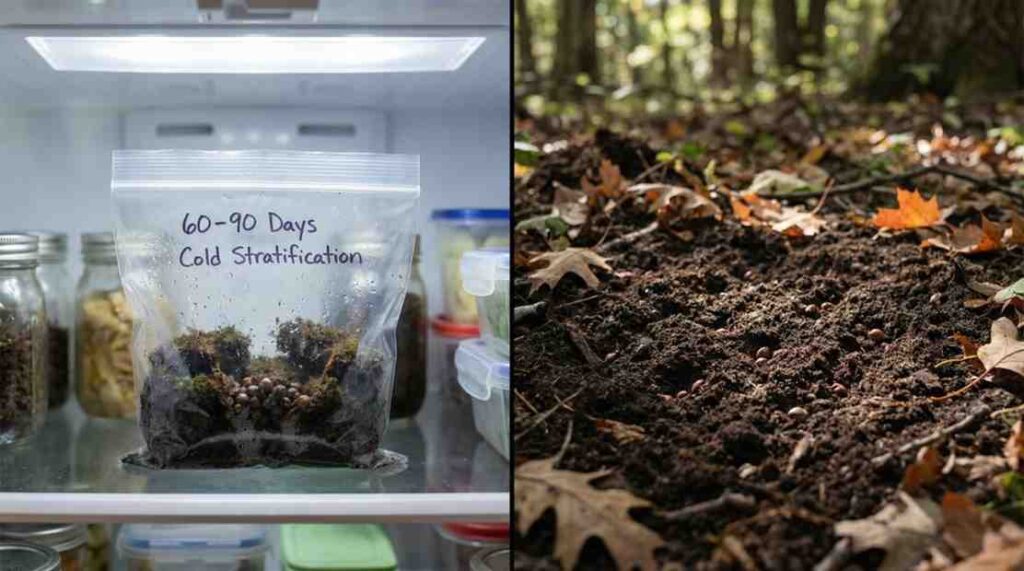
Jack in the pulpit seeds require cold stratification to break dormancy.
Indoor Method
- Mix seeds with moist peat or sand
- Place in sealed bag
- Refrigerate for 60–90 days
- Keep medium slightly moist
Outdoor Method
- Sow seeds in fall
- Allow natural winter exposure
- Protect from heavy erosion
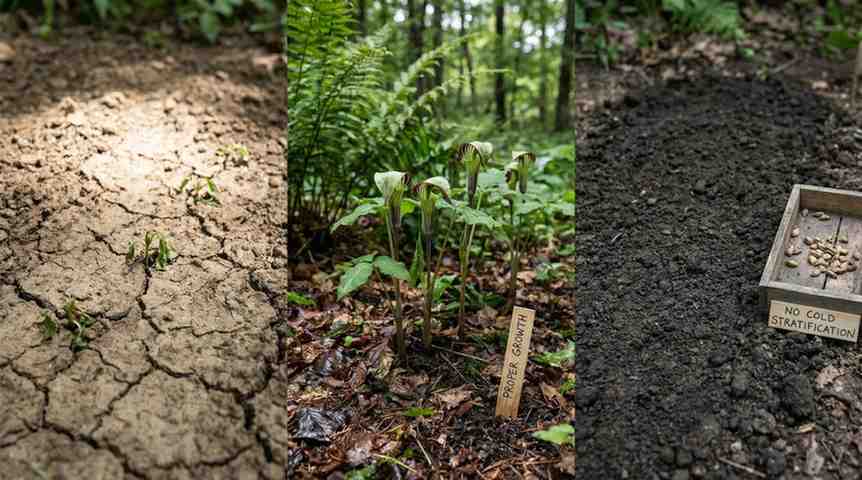
Without this step, jack in the pulpit seed germination will likely fail.
Soil Requirements
| Factor | Ideal Condition | Impact on Growth |
|---|---|---|
| Soil Type | Rich, humus-heavy woodland soil | Supports corm development |
| Drainage | Moist but well-drained | Prevents seed rot |
| pH Level | Slightly acidic to neutral | Improves nutrient uptake |
| Light | Partial to full shade | Mimics forest habitat |
Healthy soil is central to understanding how to grow jack in the pulpit from seed correctly.
Planting Instructions
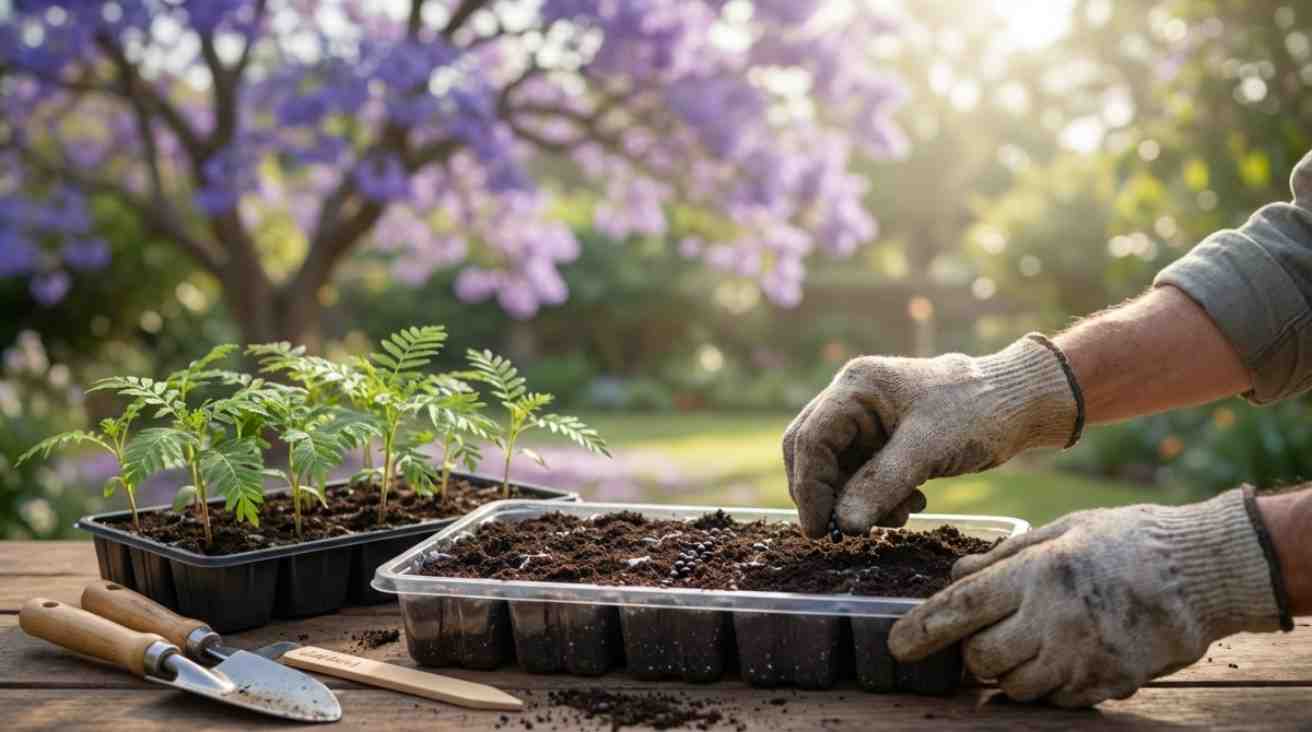
- Sow seeds ¼–½ inch deep
- Space 2–3 inches apart
- Keep soil evenly moist
- Avoid direct afternoon sun
Germination Timeline
- Sprouting occurs in spring
- First year produces a small leaf
- Corm enlarges underground
- Flowers appear after 3–5 years
Patience is necessary when practicing how to grow jack in the pulpit from seed.
Watering and Moisture Control
| Stage | Moisture Level | Risk if Incorrect |
|---|---|---|
| Newly Sown | Consistently moist | Dry soil stops germination |
| Seedling | Light but steady moisture | Overwatering causes rot |
| Established | Moderate moisture | Drought reduces vigor |
Moist woodland conditions should always be maintained.
Common Mistakes When Growing from Seed
- Skipping cold stratification
- Planting too deep
- Allowing soil to dry out
- Exposing seedlings to strong sun
- Expecting first-year flowers
Many failures occur because growers misunderstand how to grow jack in the pulpit from seed and attempt to rush the natural cycle.
Growth Stages
| Year | Visible Growth | Underground Development |
|---|---|---|
| Year 1 | Small leaf only | Corm formation begins |
| Year 2 | Larger foliage | Corm expansion |
| Year 3–4 | Strong leaves | Mature root system |
| Year 3–5 | First flower | Stable perennial cycle |
The plant invests heavily below soil before producing flowers.
Light and Shade Conditions
- Grows best in partial to deep shade
- Avoid harsh midday sun
- Woodland canopy conditions are ideal
- Mulch helps regulate soil moisture
Proper light conditions improve survival rates when applying how to grow jack in the pulpit from seed techniques.
Transplanting Young Plants
- Move plants in early spring
- Keep root ball intact
- Replant at original soil depth
- Water immediately after transplant
Minimal disturbance protects the developing corm.
Seed Propagation vs Division
- Seed propagation is slower
- Division produces faster flowering
- Seeds offer genetic variation
- Division maintains parent traits
Both methods work, but this guide focuses on how to grow jack in the pulpit from seed for long-term woodland naturalization.
FAQs
1. How long does it take to grow jack in the pulpit from seed?
It usually takes 3–5 years for flowering. Early growth focuses on underground corm development.
2. Do jack in the pulpit seeds need cold stratification?
Yes. A 60–90 day cold period is required to break dormancy and trigger spring germination.
3. Can I plant jack in the pulpit seeds directly outdoors?
Yes. Fall sowing allows natural winter stratification if soil remains moist and shaded.
4. Why are my jack in the pulpit seeds not germinating?
Common causes include skipping cold treatment, dry soil, or planting seeds too deep.
5. What soil is best for jack in the pulpit seed planting?
Moist, humus-rich, well-drained woodland soil with partial shade works best.