

The safest way to remove seed ticks from dogs is gentle extraction, medicated baths, and prevention steps. Learn how to get rid of seed ticks on dogs easily.
How to Get Rid of Seed Ticks on Dogs
If you’ve noticed tiny dark dots crawling on your dog’s fur after a walk, you’re likely dealing with seed ticks the larval stage of ticks. These baby ticks on dogs can cause severe itching, irritation, and even spread dangerous diseases.
Knowing how to get rid of seed ticks on dogs keeps your pet healthy, comfortable, and free from long-term harm.
Understanding Seed Ticks on Dogs
Seed ticks are the larval stage of ticks, smaller than a grain of sand and often found in tall grass, bushes, or wooded areas. They attach in clusters, feed on blood, and multiply quickly if not removed.
Spotting and removing them early prevents severe infestations and protects your dog’s skin and health.
| Stage | What Happens | Risk Level |
|---|---|---|
| Seed (Larvae) | Newly hatched six-legged ticks attach to hosts | Moderate irritation |
| Nymph | Develops after first blood meal | Can transmit diseases |
| Adult | Fully developed tick capable of laying eggs | High infection risk |
Early detection and quick removal are essential to stop infestation and prevent diseases from spreading.
How to Identify Seed Ticks on Dogs
Spotting seed ticks can be challenging they are barely visible to the naked eye. Look closely in areas where your dog’s fur is thinner, especially after outdoor activities.
| Common Locations | Signs to Look For | What to Do |
|---|---|---|
| Ears and Neck | Tiny black or brown clusters | Use a fine-tooth tick comb gently |
| Paws and Toes | Red bumps or constant scratching | Inspect between toes carefully |
| Belly and Armpits | Small moving dots | Apply gentle tick shampoo |
Seed ticks usually appear in large groups of hundreds, unlike adult ticks that attach one by one.
1. Gentle Extraction with Fine Tweezers
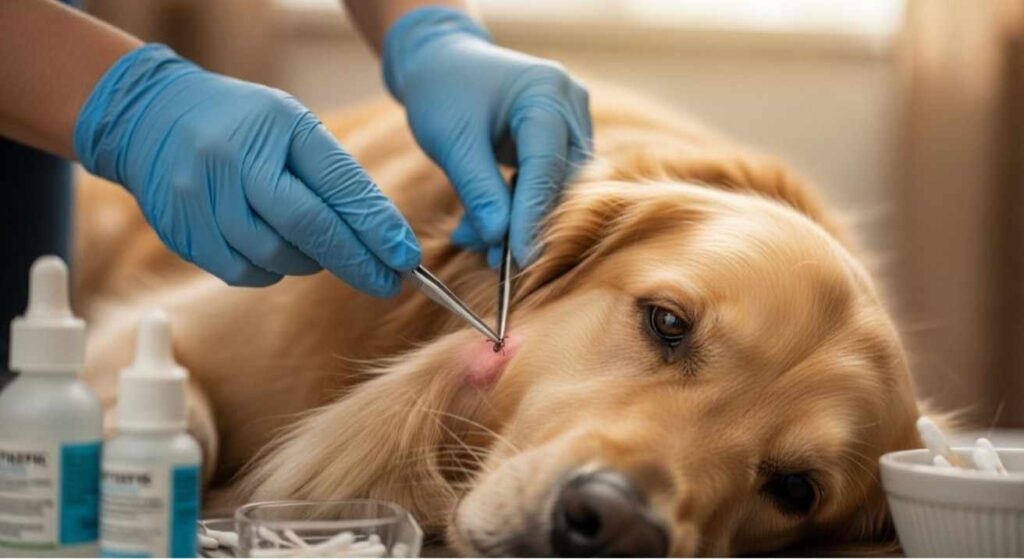
The safest first step to get rid of seed ticks on dogs is manual removal. Avoid crushing or scratching the skin.
Use fine-tipped tweezers and remove each tick gently to minimize skin irritation.
Steps:
- Part your dog’s fur to clearly see the infested area.
- Grip the seed tick’s head — not the body — using tweezers.
- Pull straight out slowly, without twisting or jerking.
- Dispose of the tick by dipping it in rubbing alcohol.
- Clean the bite area using antiseptic solution.
Monitor your dog for redness, swelling, or unusual behavior.
If your pet shows signs of infection, fatigue, or fever, contact your vet immediately.
Why it works: Gentle extraction ensures the tick’s mouthparts are completely removed, reducing inflammation and preventing infection.
2. Medicated or Tick-Control Baths
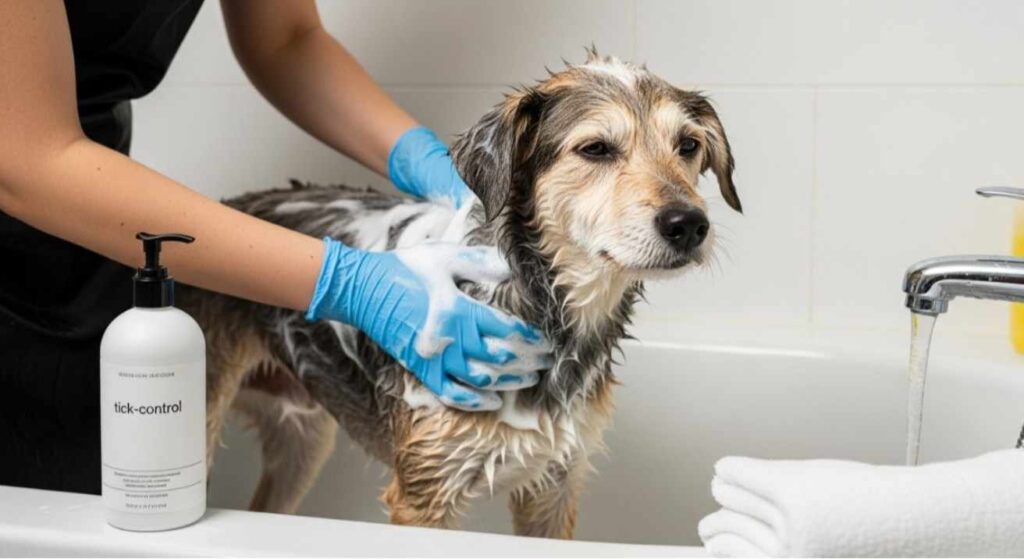
After removal, the next step in how to get rid of seed ticks on dogs is giving a medicated or tick-control bath using vet-approved tick shampoos or dips.
This helps kill remaining larvae and soothes irritated skin.
Steps:
- Wet your dog completely with lukewarm water.
- Apply tick-control shampoo, focusing on ears, legs, and belly.
- Massage the lather for 5–10 minutes before rinsing thoroughly.
- Dry your dog with a clean towel and check for remaining ticks using a comb.
For severe infestations, repeat the bath after 7–10 days.
You can also use tick sprays or dips that target both adult and seed tick larvae.
Important: Always use products approved by veterinarians. Avoid using cat-specific tick products or strong chemicals on puppies they can cause toxicity or skin burns.
A clean, medicated bath is one of the most effective ways to eliminate seed ticks safely.
3. Treating Your Dog’s Environment
Even after removing ticks from your dog, your home and yard can still harbor seed ticks.
These larvae fall off your pet and hide in carpets, furniture, and grass.
Learning how to get rid of seed ticks on dogs also means cleaning their environment thoroughly.
How to clean effectively:
- Wash all bedding, blankets, and collars in hot water to kill larvae and eggs.
- Vacuum furniture, carpets, and corners where ticks might hide.
- Use tick sprays or natural tick repellents around furniture and dog areas.
- Treat your yard using pet-safe repellents or diatomaceous earth.
- Trim your lawn and remove leaves or debris near outdoor areas.
Breaking the tick life cycle is the key to stopping re-infestation.
Consistency in cleaning both your pet and your home ensures long-term protection.

4. Prevent Future Tick Infestations
Once your dog is tick-free, focus on preventing future infestations.
Regular prevention ensures you never have to worry about how to get rid of seed ticks on dogs again.
Prevention steps:
- Apply monthly tick preventatives, such as topical treatments or tick collars.
- Use vet-recommended tick repellents before walks or hikes.
- Check your dog’s fur after each outdoor trip, especially in summer and spring.
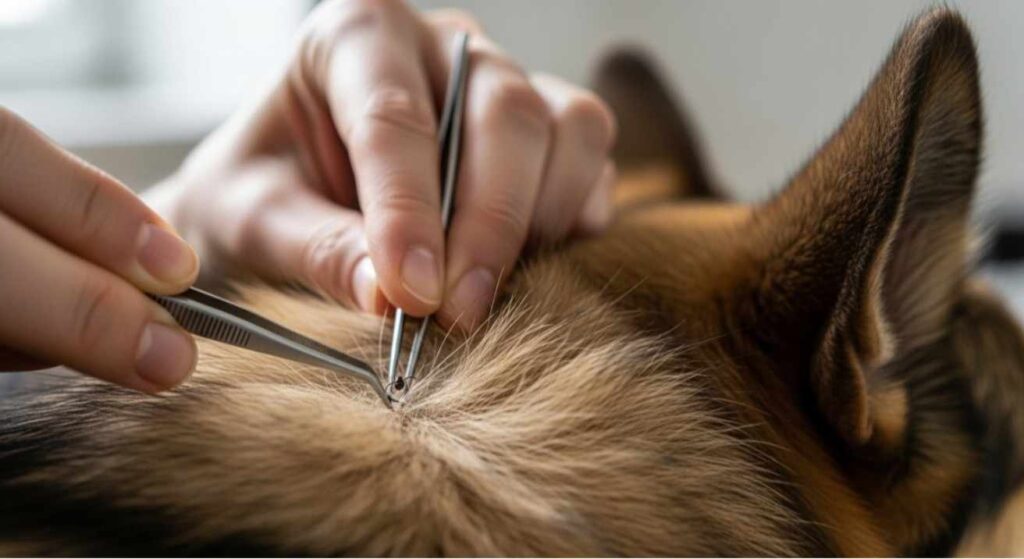
- Groom weekly using a fine-tooth comb.
- Avoid tall grass or dense bushes, especially after rainfall.
Regular tick checks and preventive treatments are the most reliable ways to keep seed ticks away for good.
5. When to See a Veterinarian
If your dog’s symptoms worsen after removing ticks, it’s time for professional help.
Seek veterinary attention immediately if your pet shows:
- Excessive scratching or redness
- Lethargy or loss of appetite
- Swelling or open sores
- Fever or signs of fatigue
A veterinarian may prescribe oral or topical tick medications that kill seed ticks instantly and protect your dog from future infestations.
They might also recommend blood tests to detect tick-borne diseases like Lyme disease or Ehrlichiosis.
Early vet care prevents serious infections and helps your dog recover faster.

FAQs
What kills seed ticks instantly on dogs?
Vet-approved tick shampoos, sprays, or dips containing pyrethrin or permethrin kill seed ticks safely and quickly.
Can seed ticks harm dogs seriously?
Yes. Seed ticks can cause anemia, skin infections, and transmit diseases if not removed promptly.
Are seed ticks visible to the human eye?
Barely. They are smaller than a poppy seed, often visible only as tiny black clusters or moving specks on the skin.
Do seed ticks spread to humans?
Rarely. They prefer dogs and other animals, but can bite humans with close contact.
How long do seed ticks stay on dogs?
Seed ticks can stay attached for several days while feeding. Once full, they drop off to develop into nymphs.


