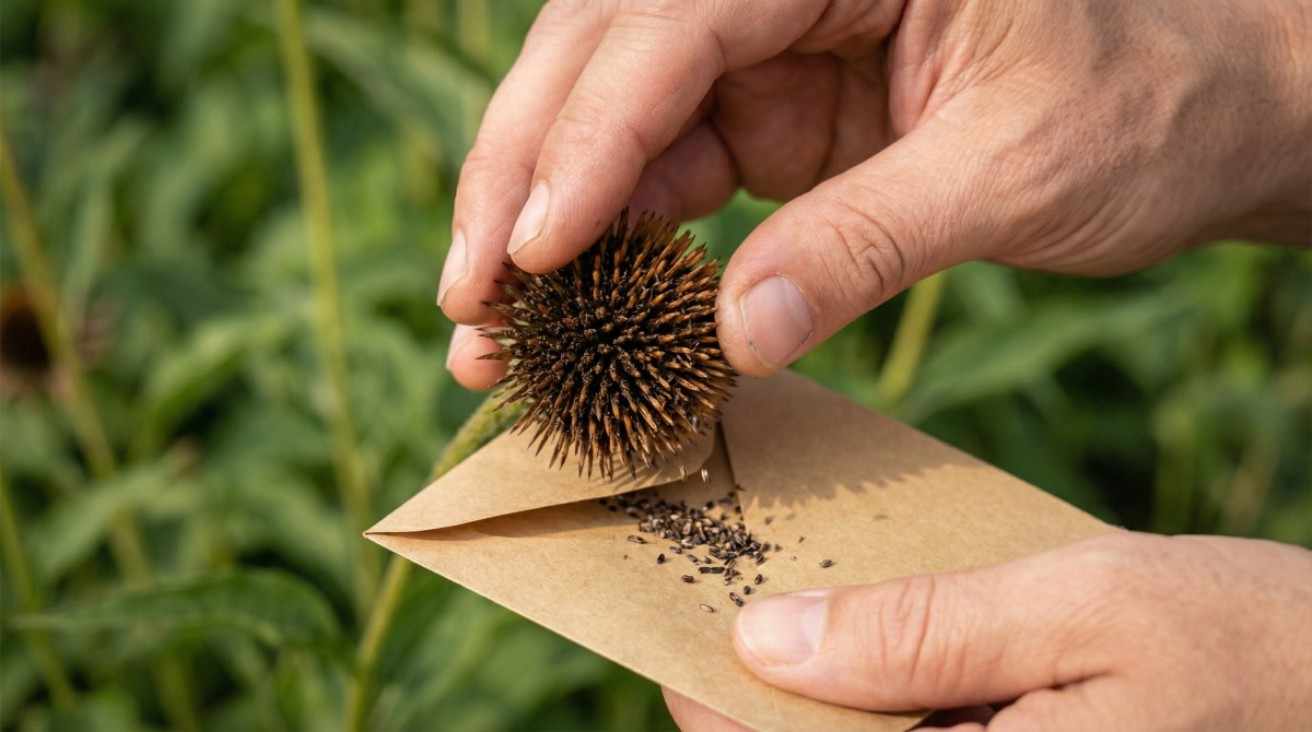
Healthy plants produce viable seeds when timing and handling are correct. How to collect seeds from echinacea depends on maturity, drying, and proper storage.
How to Collect Seeds From Echinacea
Collecting seeds from echinacea allows gardeners to preserve strong plants without depending on commercial seed packets. How to collect seeds from echinacea becomes reliable when seed heads mature fully and are handled correctly. Home-collected seeds maintain local adaptation and consistent growth. Correct harvesting, drying, and storage protect long-term viability and planting success.
Quick Overview of Echinacea Seed Collection
| Stage | What Happens | Why It Matters |
|---|---|---|
| Flower fades | Petals dry and fall | Signals seed formation |
| Seed head dries | Turns dark brown | Seeds reach maturity |
| Seeds loosen | Separate easily | Correct harvest window |
| Drying phase | Moisture removed | Prevents mold |
| Storage | Cool and dry | Maintains viability |
Correct timing forms the foundation of how to collect seeds from echinacea successfully.
Why Learning How to Collect Seeds From Echinacea Matters
Saving echinacea seeds offers control over plant quality and cost. Gardeners who understand how to collect seeds from echinacea reduce reliance on store-bought seeds and maintain plants adapted to local soil and climate.
- Saved echinacea seeds adjust naturally to local growing conditions
- Seed selection strengthens plants over time
- Open-pollinated echinacea grows true to type
- Fresh seeds retain higher germination potential
Commercial seeds may sit in storage for extended periods. Home-saved echinacea seeds are harvested at full maturity, preserving natural vitality.
Types of Echinacea That Produce Viable Seeds
Not all echinacea varieties produce seeds with the same reliability.
Common Echinacea Types
| Echinacea Type | Seed Reliability | Growth Result |
|---|---|---|
| Echinacea purpurea | High | True to parent |
| Open-pollinated varieties | Moderate | Mostly stable |
| Hybrid echinacea | Low | Unpredictable traits |
Hybrid echinacea plants may produce seeds, but results vary.
When Echinacea Seeds Are Ready for Harvest
Correct timing determines seed quality.
Signs of Mature Seed Heads
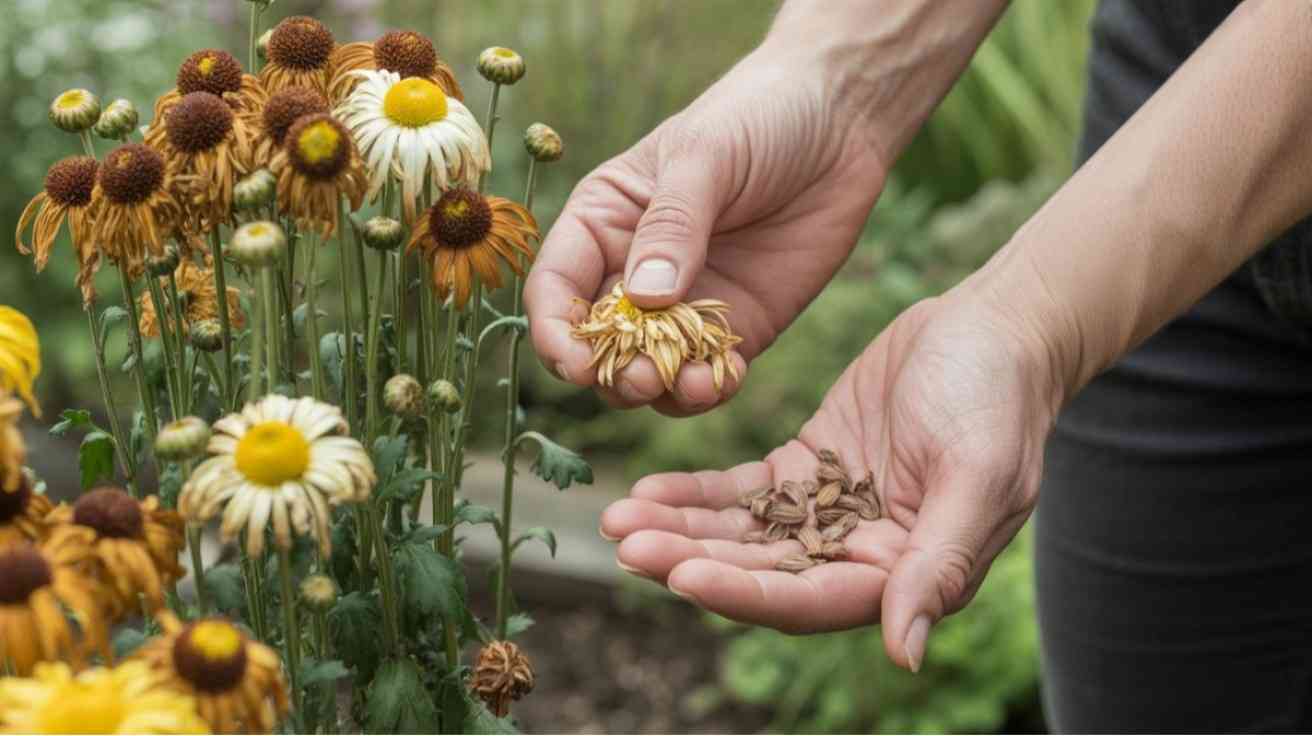
- Flower petals completely dry
- Seed cone turns dark brown
- Seeds loosen when touched
- No green tissue remains
Harvesting too early results in weak or immature seeds.
Tools Needed to Collect Seeds From Echinacea
No specialized equipment is required.
Required Tools
- Sharp scissors or pruners
- Paper bags or envelopes
- Shallow tray or bowl
- Pen and labels
Optional Tools
- Fine mesh strainer
- Clean cloth
| Tool | Purpose |
|---|---|
| Paper bags | Prevent moisture buildup |
| Tray | Catch loose seeds |
| Labels | Avoid variety mix-ups |
Plastic containers trap humidity and should be avoided.
Step-by-Step: How to Collect Seeds From Echinacea
Step 1: Identify Fully Mature Seed Heads
- Dry
- Brown
- Firm texture
Step 2: Cut the Seed Heads
- Cut below the cone
- Handle gently
Step 3: Place in Paper Bags
- Prevent seed loss
- Allow airflow
Step 4: Dry Naturally
- Store in shaded, dry space
- Avoid direct sunlight
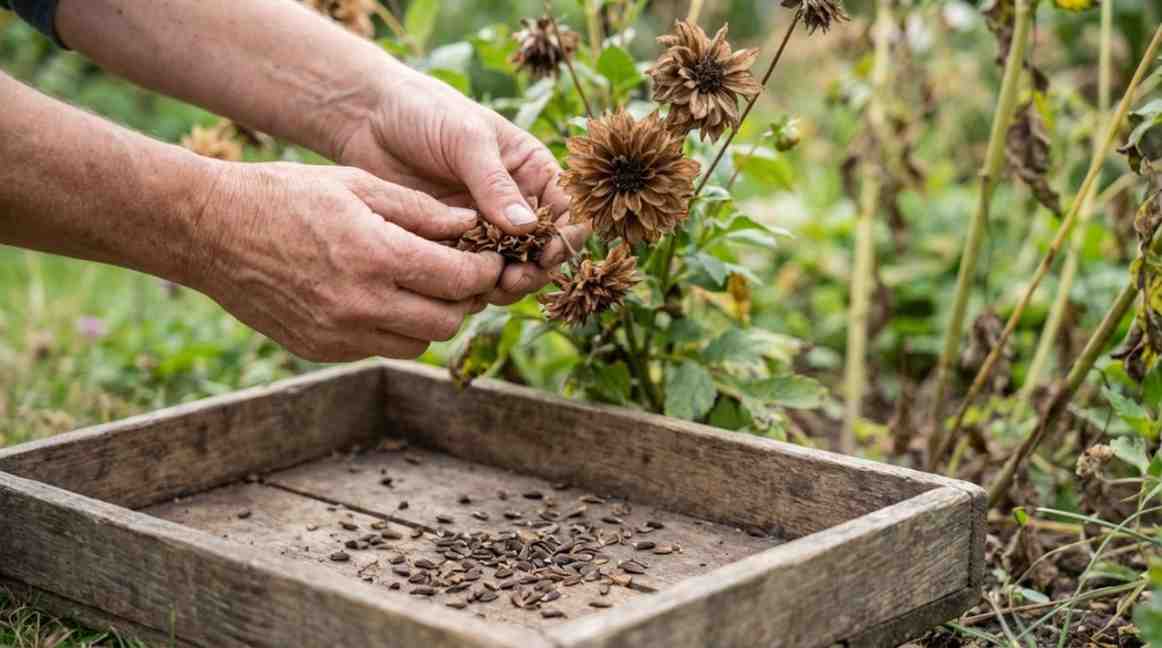
Step 5: Release Seeds
- Rub cones gently
- Seeds fall freely
Step 6: Remove Debris
- Use light airflow
- Separate chaff
Step 7: Inspect Seeds
- Discard damaged seeds
- Keep firm, dark seeds
Step 8: Label Clearly
- Plant name
- Harvest date
Step 9: Prepare for Storage
- Ensure seeds are fully dry
- Store only clean seeds
Each step protects long-term seed strength.
Common Mistakes When Collecting Echinacea Seeds
Avoid these errors when learning how to collect seeds from echinacea:
- Harvesting green seed heads
- Skipping drying time
- Using plastic containers
- Storing seeds while warm
Each mistake reduces germination success.
Echinacea Seeds vs Purchased Seeds
| Method | Reliability | Cost |
|---|---|---|
| Saved seeds | Moderate–High | Low |
| Purchased seeds | Moderate | High |
Saved seeds maintain local adaptation, while commercial seeds may lose vigor due to long storage.
How to Store Echinacea Seeds Safely
Storage conditions affect long-term success.
Best Storage Methods
| Storage Method | Suitability |
|---|---|
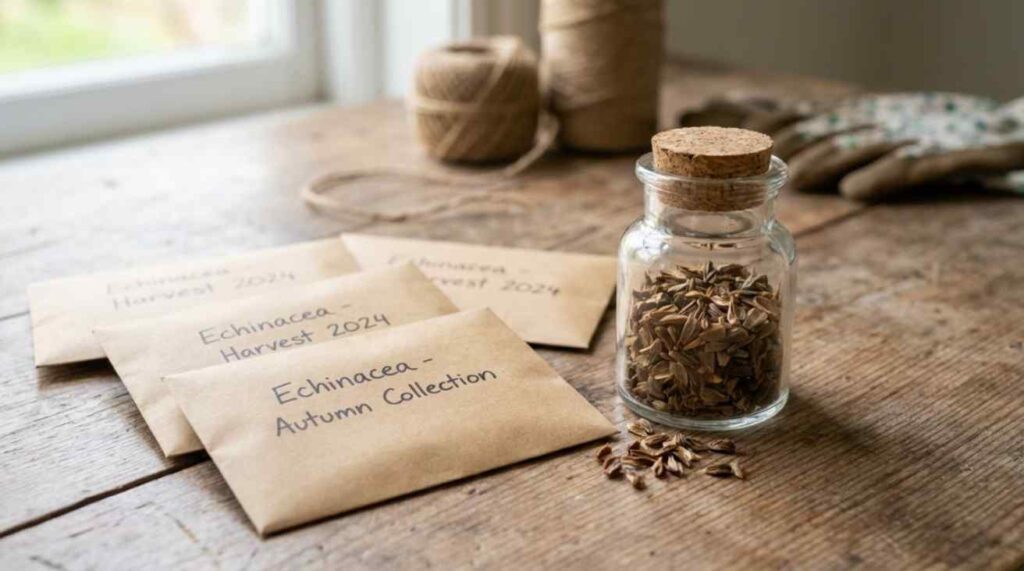
| Paper envelopes | Excellent |
| Glass jars (dry) | Good |
| Plastic bags | Poor |
Seeds kept dry and cool maintain planting potential across multiple seasons.
Seed Viability and Germination Factors
Several factors influence success:
- Harvest timing
- Drying quality
- Storage conditions
Home-collected echinacea seeds often sprout more reliably than commercial seeds stored for long periods.
FAQs
1. Can echinacea seeds be collected from hybrid plants?
Hybrid echinacea may produce seeds, but traits are unpredictable.
2. Should echinacea seeds be washed before storage?
Dry seed saving works better than washing.
3. How many seed heads should be collected per plant?
Collecting from multiple mature cones improves selection.
4. Can damaged seed heads produce viable seeds?
Only fully developed, intact seed heads produce usable seeds.
5. How long do echinacea seeds remain usable?
Properly dried and stored seeds maintain planting potential across several seasons.