

Seedlings need strong roots before fertilizing. Learn the optimal timing to protect growth and avoid burn. How long to wait to fertilize after seeding explained.
How Long to Wait to Fertilize After Seeding
Fertilizing at the wrong time can undo all your seeding effort. New seedlings are delicate and react quickly to excess nutrients. Understanding how long to wait to fertilize after seeding helps roots establish safely. Correct timing improves germination, growth consistency, and overall plant health.
This guide explains exact waiting periods, mistakes to avoid, and safe fertilizing schedules.
Seedling Growth Stages and Nutrient Sensitivity
| Seedling Stage | What Happens in Soil | Fertilizer Risk |
|---|---|---|
| Germination | Seed absorbs moisture | Very high |
| Early sprout | Roots begin forming | High |
| 1–2 inch growth | Root system stabilizes | Moderate |
| Active growth | Nutrient uptake improves | Low |
| Established | Strong roots | Safe |
Early fertilization disrupts root formation and causes burn.
What Happens If You Fertilize Too Early
Applying fertilizer immediately after seeding often causes more harm than good.
- Young roots cannot process concentrated nutrients
- Nitrogen salts pull moisture away from seedlings
- Root tips dry out before strengthening
Common Damage Signs
- Yellow or brown leaf edges
- Uneven germination
- Weak or collapsed sprouts
Seedlings require time to form a functional root network.
Fertilizer should only be applied once roots can absorb nutrients safely.
This is why understanding how long to wait to fertilize after seeding prevents irreversible damage.
How Long to Wait to Fertilize After Seeding for Cool-Season Grasses
Cool-season grasses grow best in moderate temperatures.
- Kentucky bluegrass
- Fescue
- Perennial ryegrass
Recommended Waiting Period
- 4 to 6 weeks after germination
- Seedlings should reach 1–2 inches in height
- Roots must resist gentle pulling
Why This Timing Works
- Root system becomes dense
- Nutrient uptake improves
- Risk of fertilizer burn drops
Applying fertilizer before this stage slows establishment and weakens plants.
How Long to Wait to Fertilize After Seeding for Warm-Season Grasses
Warm-season grasses establish faster under heat.
- Bermuda
- Zoysia
- St. Augustine
Recommended Waiting Period
- 3 to 4 weeks after germination
- Visible lateral growth
- Soil temperature consistently warm
Growth Indicators
- Bright green color
- Upright leaf posture
- Uniform spread
Warm-season grasses respond quickly once roots stabilize.
Starter Fertilizer Timing vs Follow-Up Fertilizer
Starter fertilizer is often misunderstood.
- It is not the same as regular fertilizer
- Used at seeding, not after germination
Key Differences
| Fertilizer Type | When Applied | Purpose |
|---|---|---|
| Starter fertilizer | At seeding | Root development |
| Regular fertilizer | Weeks later | Leaf and shoot growth |
| High nitrogen feed | After establishment | Rapid growth |
| Slow-release fertilizer | After maturity | Long-term nutrition |
| Weed & feed | Never on seedlings | Weed control |
Starter fertilizer supports roots without overwhelming seedlings.
Safe Fertilizing Steps After Seeding
Following a controlled process prevents errors.
Step-by-Step Application
- Confirm seedlings are 1–2 inches tall
- Check soil is moist, not saturated
- Use a balanced fertilizer formula
- Apply lightly and evenly
- Water gently after application
Skipping any step increases stress on seedlings.
Mid-Season Fertilization Reference Table
| Condition | Fertilizer Action | Risk Level |
|---|---|---|
| Seed just planted | No fertilizer | High |
| Sprouts emerging | Avoid feeding | High |
| 1–2 inch growth | Light feeding | Moderate |
| Active growth | Normal feeding | Low |
| Established lawn | Routine schedule | Very low |
Correct timing ensures nutrients are absorbed efficiently.
Common Mistakes After Seeding
Many failures occur due to timing errors.
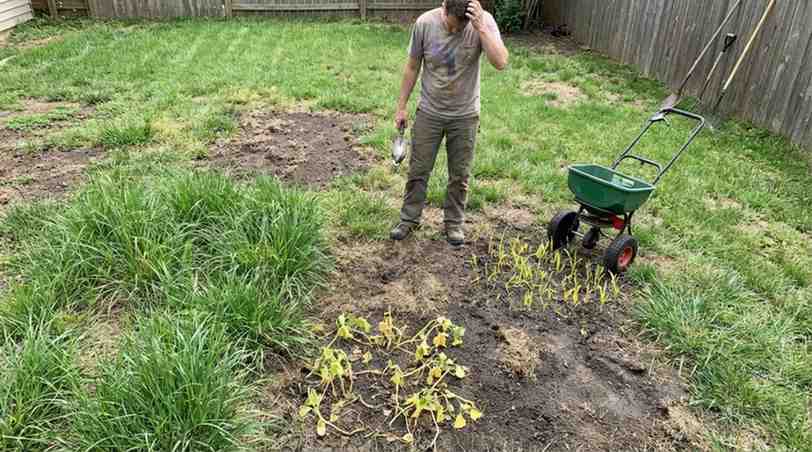
- Fertilizing immediately after seeding
- Using weed-and-feed products
- Applying heavy nitrogen doses
- Ignoring soil moisture
- Reapplying fertilizer too frequently
Each mistake increases stress and reduces survival rates.
Environmental Factors That Affect Fertilizing Time
Several conditions change waiting periods.
Key Influences
- Soil temperature
- Rainfall frequency
- Shade exposure
- Soil type
- Grass variety
Cold or compacted soil delays nutrient absorption.
Pre-Fertilization Checklist
Use this checklist before applying fertilizer:
- Seedlings taller than 1 inch
- Roots firmly anchored
- Even growth across area
- No yellow or burned tips
- Soil slightly moist
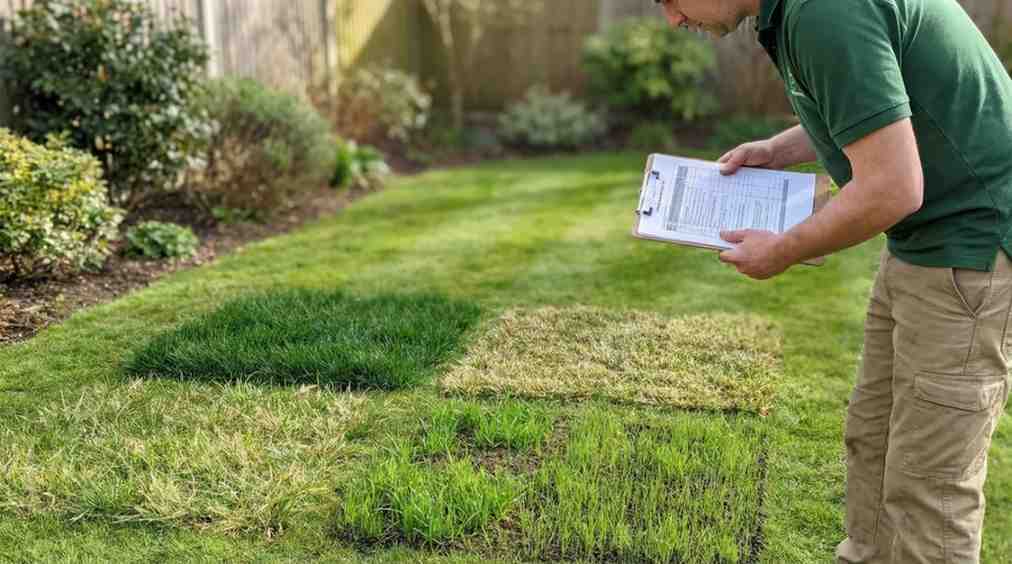
Meeting all conditions improves success.
Fertilization Timing Summary Table
| Grass Type | Wait Time | Fertilizer Type |
|---|---|---|
| Cool-season | 4–6 weeks | Balanced |
| Warm-season | 3–4 weeks | Balanced |
| Overseeding | 4 weeks | Light feed |
| Patch repair | 3 weeks | Starter only |
| New lawn | After establishment | Slow-release |
FAQs
1. How long to wait to fertilize after seeding a lawn?
Wait until seedlings reach 1–2 inches tall and roots are stable, usually 3–6 weeks.
2. Can fertilizing too early kill seedlings?
Yes, early fertilization can burn roots and stop growth.
3. Is starter fertilizer safe at seeding?
Yes, starter fertilizer is designed for root development at planting time.
4. Does soil type change fertilizing time?
Heavy or compact soil may require longer waiting periods.
5. Should fertilizer be reapplied soon after first feeding?
No, allow several weeks between applications to avoid nutrient overload.


