Ripe watermelon allows easy seed collection through cleaning, drying, and storage, clearly explaining how to get watermelon seeds for reliable future planting.
How to Get Watermelon Seeds
Watermelon seeds are easy to collect when the fruit reaches full maturity. Correct timing and careful handling directly affect seed quality and germination success. Understanding how to get watermelon seeds properly helps preserve strong genetics for future crops. Selecting the right fruit, cleaning, drying, and storing seeds correctly ensures they remain viable. These simple, step-by-step methods make seed collection efficient and reliable, even for beginners.
How to Get Watermelon Seeds from a Ripe Fruit
Getting seeds starts with choosing the right watermelon.
Key indicators of a ripe watermelon
- Deep hollow sound when tapped
- Creamy yellow ground spot
- Even shape without soft areas
- Sweet aroma near the stem
Only ripe fruit produces fully developed seeds suitable for reuse.
Seed Extraction Methods Overview
| Method | Fruit Condition | Seed Quality | Difficulty Level |
|---|---|---|---|
| Hand separation | Fully ripe | High | Easy |
| Water rinse method | Very ripe | High | Easy |
| Fermentation method | Overripe | Very High | Medium |
| Dry scraping | Semi-ripe | Moderate | Easy |
Manual Method: How to Get Watermelon Seeds by Hand
This is the simplest approach.
Steps
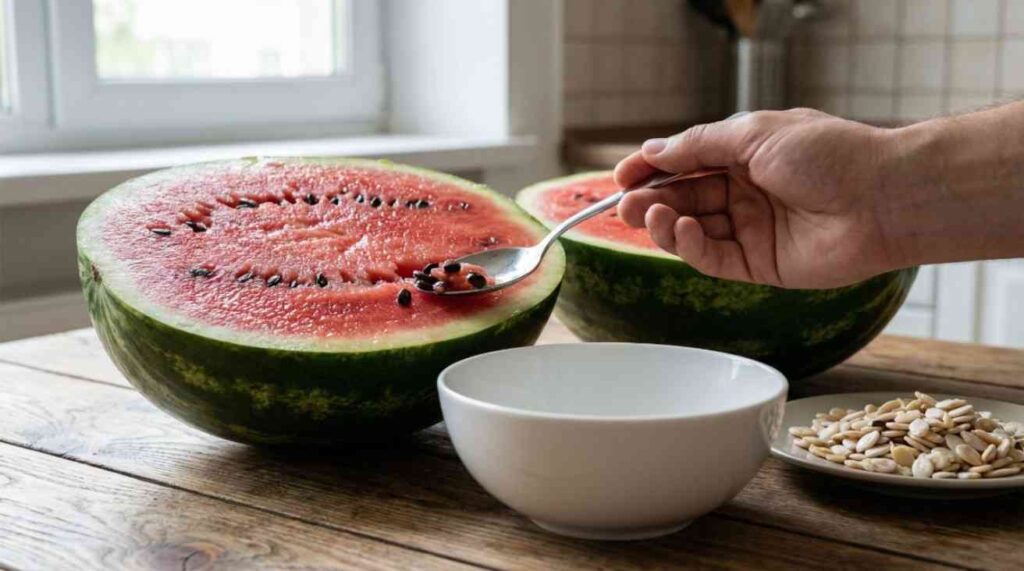
- Cut watermelon into halves
- Scoop pulp into a bowl
- Remove black or dark brown seeds
- Discard white or soft seeds
Why this works
- Mature seeds separate easily
- Minimal damage to seed coat
- Best for small batches
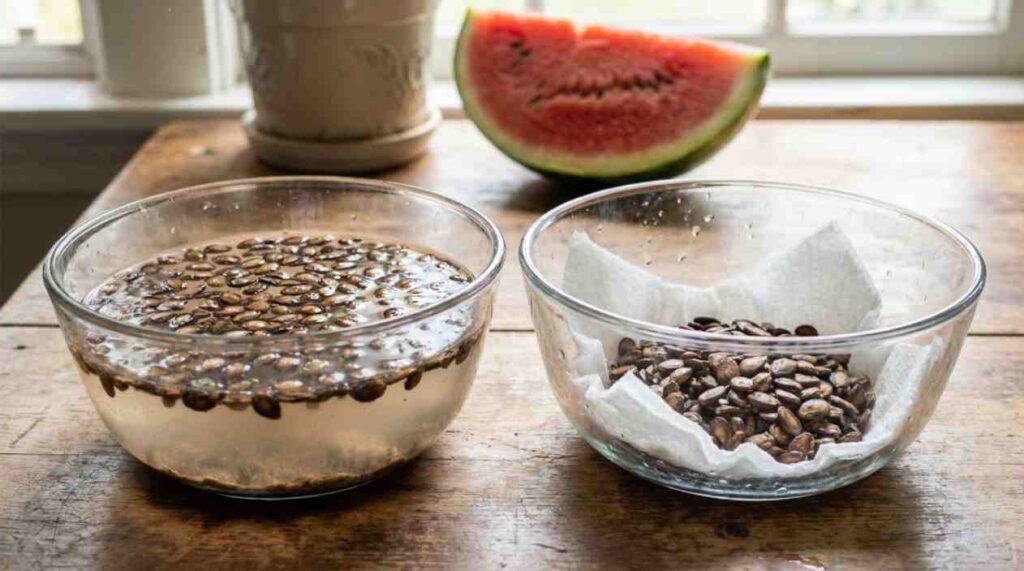
Water Rinse Method for Cleaner Seeds
This method removes pulp quickly.
Process
- Place pulp in a large bowl
- Add clean water
- Stir gently
- Floating debris separates
- Sinked seeds are collected
Benefits
- Reduces sugar residue
- Improves drying efficiency
- Prevents mold formation
Fermentation Method for Stronger Seeds
Fermentation mimics natural decomposition.
Steps
- Place pulp and seeds in a container
- Add minimal water
- Leave uncovered for 24–48 hours
- Rinse seeds thoroughly
Why fermentation helps
- Removes gel coating
- Increases long-term viability
- Reduces seed-borne pathogens
Fermentation vs Non-Fermentation
| Aspect | Fermented Seeds | Non-Fermented Seeds |
|---|---|---|
| Cleanliness | Very high | Moderate |
| Shelf life | Longer | Shorter |
| Disease resistance | Improved | Standard |
| Time required | More | Less |
Drying Seeds Correctly After Extraction
Drying determines storage success.
Correct drying method
- Spread seeds in a single layer
- Use paper towel or mesh tray
- Air-dry for 7–10 days
- Avoid direct sunlight
Signs seeds are fully dry
- Hard texture
- No surface moisture
- Snaps cleanly when bent
How to Get Watermelon Seeds Without Reducing Germination
Improper handling damages embryos.
Avoid
- Oven drying
- Hair dryers
- High heat exposure
- Storing wet seeds
Use
- Natural airflow
- Room temperature drying
- Breathable containers
Drying Errors vs Correct Practices
| Mistake | Effect on Seeds | Correct Practice |
|---|---|---|
| Heat drying | Embryo damage | Air drying |
| Thick layers | Mold risk | Single-layer spread |
| Sun exposure | Reduced viability | Shade drying |
How to Store Watermelon Seeds Long Term
Storage controls future success.
Storage steps
- Use paper envelopes or glass jars
- Add silica gel or dry rice
- Label date and variety
- Store in cool, dark location
Ideal conditions
- Low humidity
- Stable temperature
- No direct light
Seed Viability Timeline
- 1 year: High germination
- 2–3 years: Moderate germination
- 4+ years: Declining success
Proper storage extends lifespan.
Common Mistakes When Collecting Watermelon Seeds
Mistake 1: Using unripe fruit
- Seeds remain immature
- Poor germination rates
Mistake 2: Skipping cleaning
- Sugar residue causes mold
- Short storage life
Mistake 3: Storing damp seeds
- Rot development
- Complete seed failure
Mistake 4: Heat exposure
- Kills internal embryo
- Seeds appear normal but fail
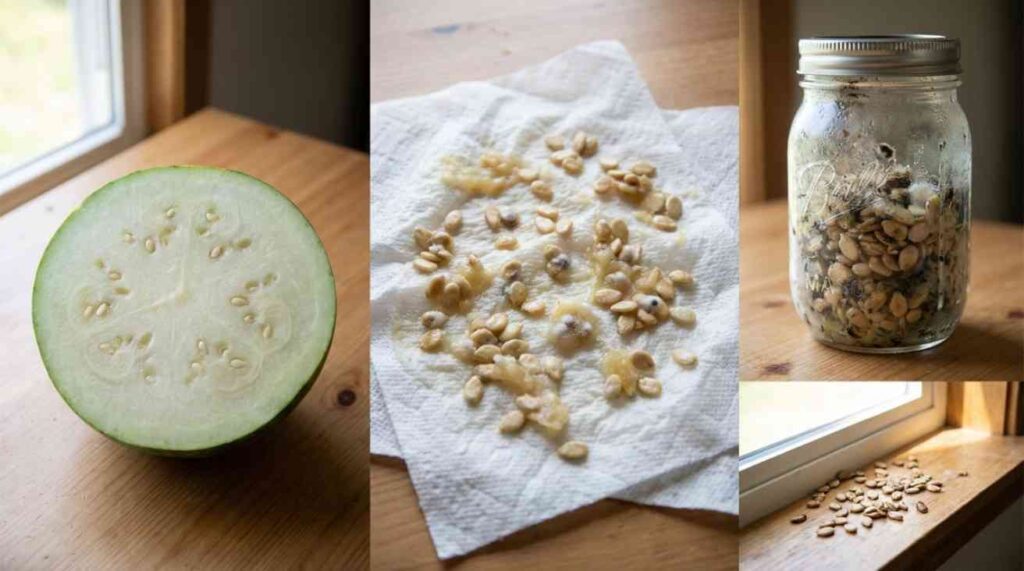
How to Get Watermelon Seeds from Seedless Varieties
Seedless watermelons differ genetically.
Key facts
- Seeds are undeveloped
- Cannot germinate
- Used only for consumption
Best option
- Choose open-pollinated or heirloom varieties
- Avoid hybrid seedless fruit
Choosing the Best Watermelon for Seed Saving
Preferred varieties
- Open-pollinated types
- Non-hybrid cultivars
- Locally adapted strains
Why variety matters
- Stable genetics
- Predictable growth
- Reusable seed cycles
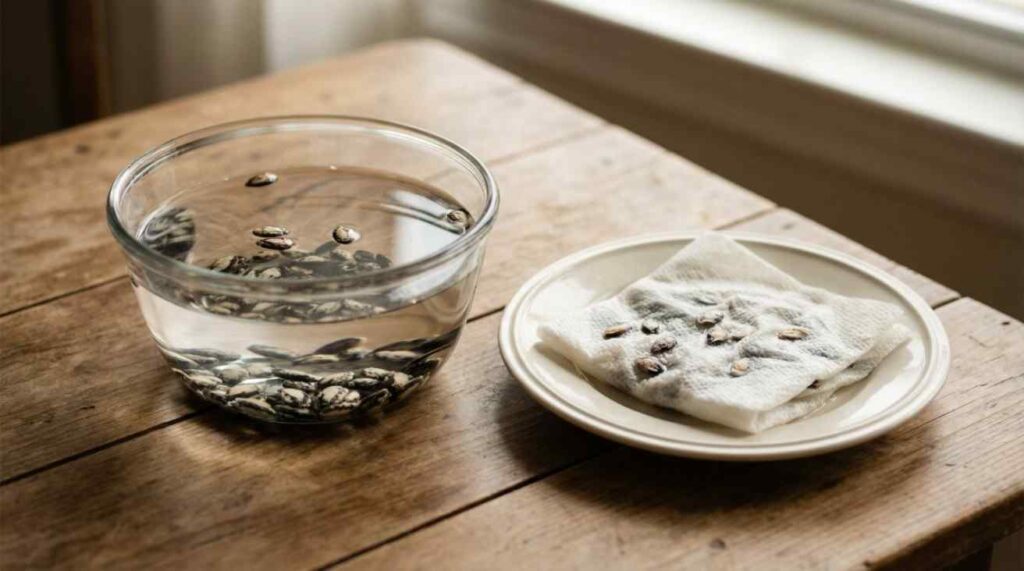
How to Test Watermelon Seeds Before Planting
Water test
- Place seeds in water
- Sink = viable
- Float = discard
Paper towel test
- Wrap seeds in moist towel
- Keep warm
- Check sprouting in 7–10 days
FAQs
1. Can seeds from store-bought watermelon grow?
Yes, if the watermelon is not seedless and fully ripe.
2. How many seeds can one watermelon produce?
A single watermelon can contain 200–500 viable seeds.
3. Do watermelon seeds need fermentation?
Fermentation is optional but improves cleanliness and storage life.
4. Can I plant seeds immediately after extraction?
Yes, but drying improves handling and consistency.
5. How long do dried watermelon seeds last?
When stored correctly, seeds remain viable for 2–3 years.
6. Why are some watermelon seeds white and soft?
White or soft seeds are immature and usually do not germinate successfully.