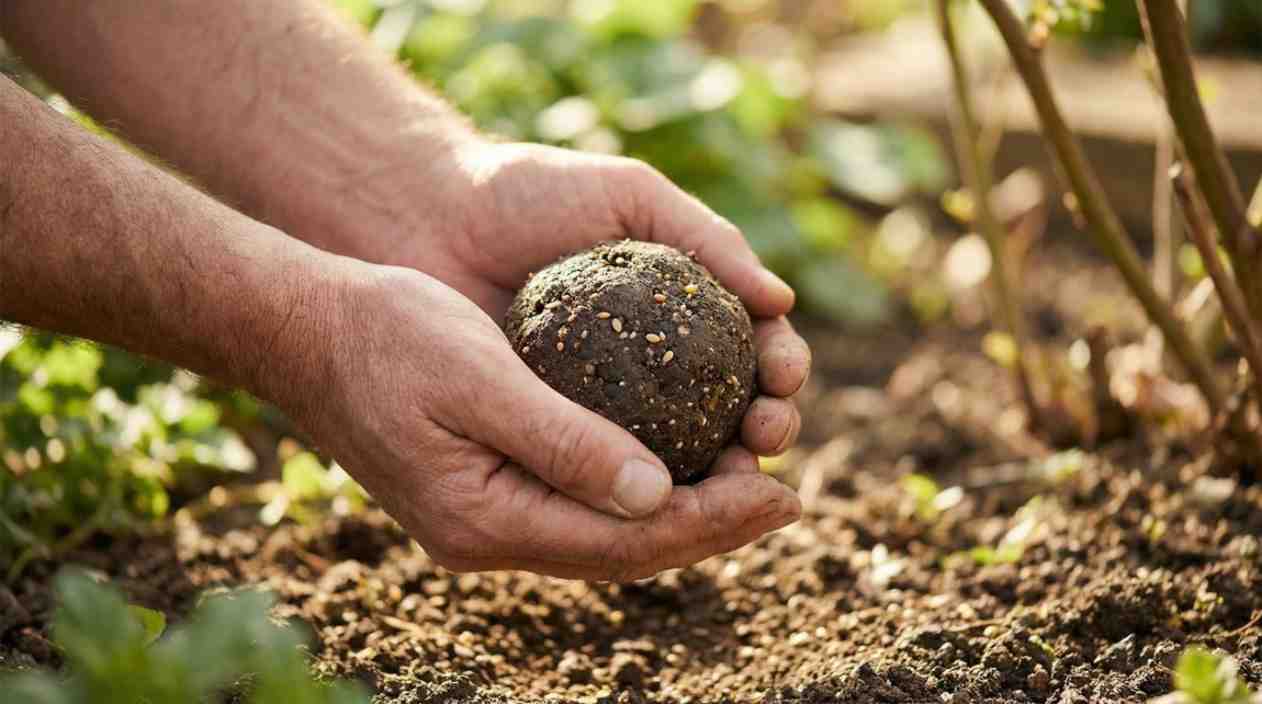
A balanced soil blend improves germination and root growth; How to Make Seed Starter Mix explains ingredients, ratios, mistakes, and results clearly.
How to Make Seed Starter Mix
Starting seeds successfully depends on soil quality more than most gardeners realize. Heavy or nutrient-rich soil can slow germination and damage young roots. This guide explains how to make seed starter mix that supports healthy seedlings from day one. Each step focuses on balance, simplicity, and results rather than complicated techniques.
Seed Starter Mix Overview and Purpose
Seed starter mix is a lightweight growing medium created specifically for germinating seeds. It differs from garden soil and potting soil in both structure and function.
Key purposes include:
- Allowing fast and even seed germination
- Supporting early root development
- Preventing fungal diseases
- Maintaining proper moisture without waterlogging
Unlike regular soil, a seed starting medium contains no large particles, making it easier for fragile roots to grow.
Why Regular Garden Soil Fails for Seed Starting
Garden soil may appear rich, but it creates problems during germination.
Main issues include:
- Poor drainage
- High risk of disease
- Compacted texture
- Uneven moisture retention
Seeds require oxygen as much as water. Dense soil blocks airflow, increasing the risk of damping-off and uneven sprouting.
Seed Starter Mix vs Garden Soil
| Feature | Seed Starter Mix | Garden Soil |
|---|---|---|
| Texture | Light and fine | Heavy and compact |
| Drainage | Controlled and even | Often poor |
| Disease risk | Low | High |
| Root growth | Fast and uniform | Restricted |
Ingredients Required to Make Seed Starter Mix
Understanding each ingredient helps control performance and consistency.
Primary Ingredients
- Coco peat or peat moss
- Holds moisture evenly
- Prevents rapid drying
- Perlite
- Improves drainage
- Increases air circulation
- Vermiculite
- Maintains moisture balance
- Supports root expansion
Optional Additions
- Worm castings (small amount only)
- Fine compost (fully mature)
These should be minimal to avoid excess nutrients.
How Each Ingredient Supports Seed Growth
| Material Used | Main Function | Seedling Impact |
|---|---|---|
| Coco coir | Maintains balanced moisture | Helps seeds sprout evenly |
| Perlite | Improves airflow and drainage | Reduces rot and water stress |
| Vermiculite | Regulates moisture levels | Supports steady root formation |
How to Make Seed Starter Mix: Step-by-Step Method
This section explains how to make seed starter mix correctly using a proven ratio.
Standard Mixing Ratio
- 1 part coco peat
- 1 part perlite
- 1 part vermiculite
Preparation Steps
- Measure all ingredients accurately
- Combine dry materials thoroughly
- Lightly moisten the mix until damp, not wet
- Break clumps for uniform texture
The mix should feel soft, airy, and crumble easily when pressed.
Moisture Control During Mixing
Proper moisture determines success.
Correct moisture level means:
- Mix holds shape briefly when squeezed
- No water drips out
- Surface feels cool, not soggy
Overwatering reduces oxygen and slows germination.
Peat-Free and Organic Variations
Many gardeners prefer sustainable alternatives.
Peat-Free Seed Starter Mix
- Replace peat moss with coco coir
- Maintain the same ratio
- Performance remains consistent
Organic Seed Starter Mix
- Add 5–10% worm castings
- Avoid chemical fertilizers
- Monitor moisture carefully
These versions support eco-conscious gardening without affecting germination.
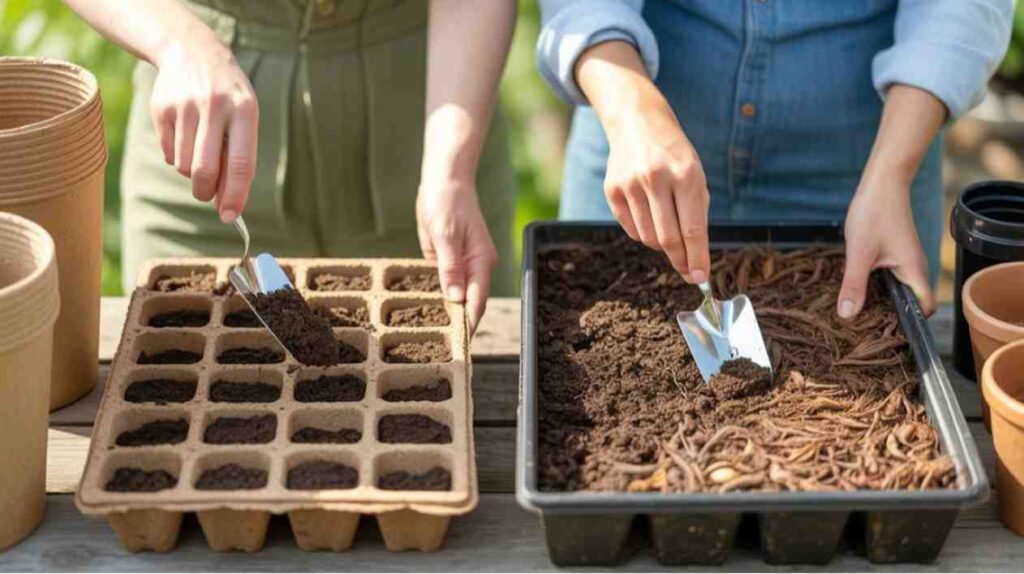
How to Use Seed Starter Mix Correctly
After learning how to make seed starter mix, proper usage matters equally.
Usage steps include:
- Fill seed trays loosely
- Avoid compressing the mix
- Sow seeds at correct depth
- Mist gently or bottom-water
Light contact between seed and soil improves sprouting consistency.
Watering Practices for Seedlings
Watering mistakes undo good soil preparation.
Correct approach:
- Use gentle misting
- Keep surface evenly moist
- Avoid standing water
Seed starter mix already holds moisture; excess watering causes root stress.
Light and Temperature Requirements
Soil alone cannot compensate for poor environment.
Ideal conditions include:
- Stable warmth
- Indirect light initially
- Gradual exposure after sprouting
Consistent conditions improve root establishment.
Common Mistakes When Making Seed Starter Mix
Errors often occur due to assumptions.
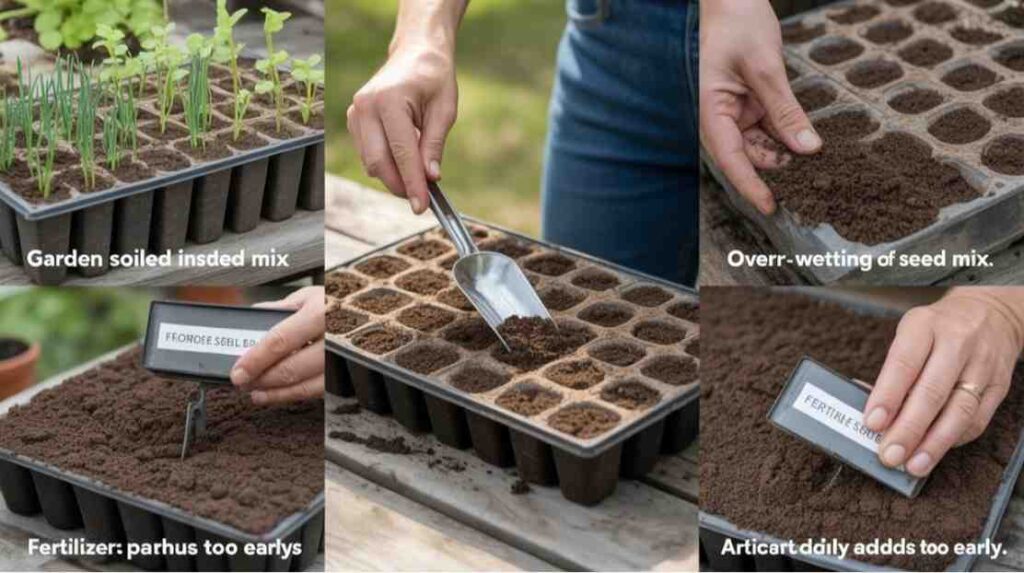
Most frequent mistakes:
- Using garden soil
- Adding fertilizer too early
- Over-wetting the mix
- Compacting trays
Each issue disrupts oxygen flow and moisture balance.
Nutrient Expectations in Seed Starter Mix
Seed starter mix is intentionally low in nutrients.
Reasons include:
- Seeds contain stored energy
- Early feeding causes weak growth
- Roots develop better without excess salts
Fertilization should begin only after true leaves appear.
Storage of Homemade Seed Starter Mix
Leftover mix stays usable if stored correctly.
Storage guidelines:
- Keep dry
- Use sealed containers
- Avoid humid areas
Proper storage maintains structure and performance.
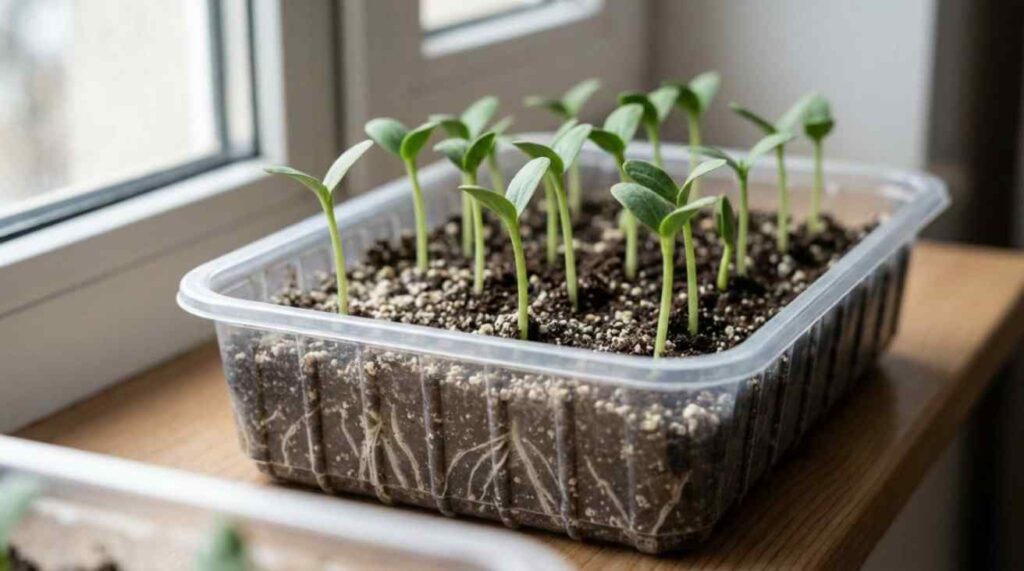
Signs of a Well-Made Seed Starter Mix
A successful mix shows clear results.
Indicators include:
- Even germination
- Upright seedlings
- White, healthy roots
- No surface mold
These signs confirm correct balance.
FAQs
1. Can garden soil replace seed starter mix?
No. Garden soil is too dense and restricts airflow, which increases the risk of disease during seed germination.
2. Is fertilizer necessary in seed starter mix?
No. Seeds contain enough stored nutrients to support early growth, and adding fertilizer too soon can harm young seedlings.
3. How long does homemade seed starter mix last?
When stored in a dry, sealed container, homemade seed starter mix remains effective for several months.
4. Is coco peat better than peat moss?
Both perform well for seed starting. Coco peat is a more sustainable alternative and provides similar moisture retention.
5. Why is my seed starter mix drying too fast?
This usually happens when vermiculite levels are too low or airflow is too high, causing moisture to evaporate quickly.