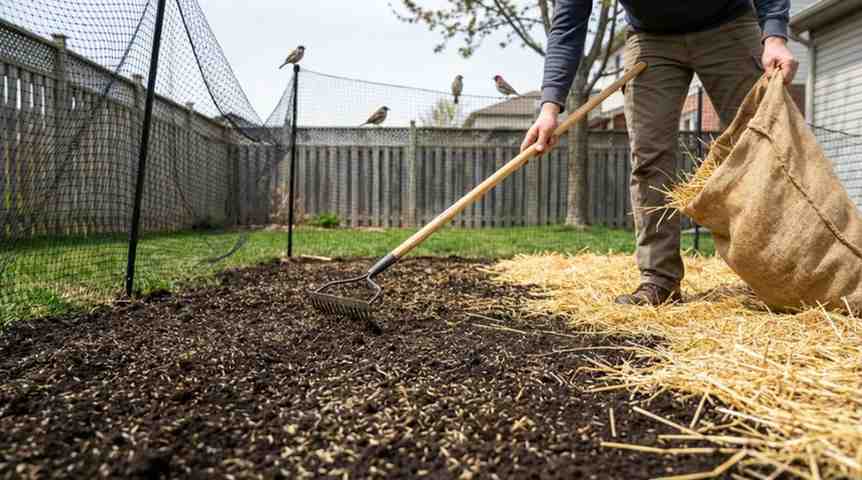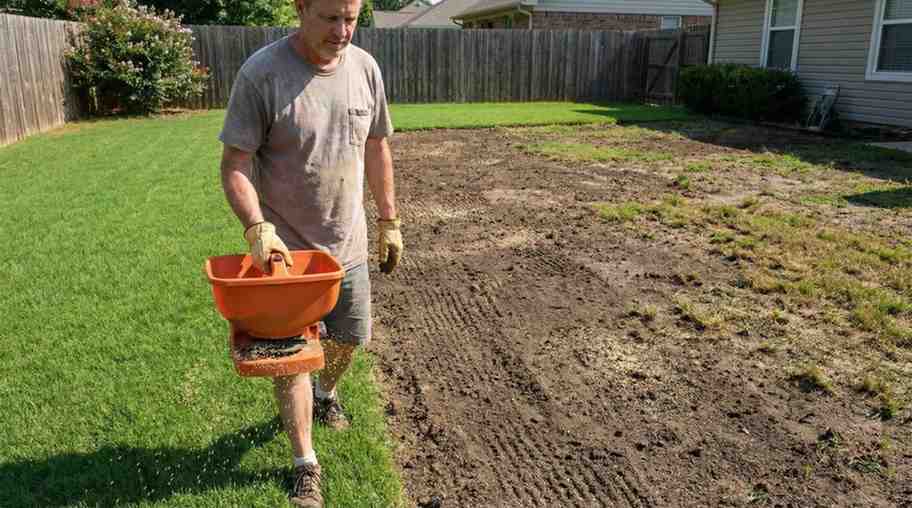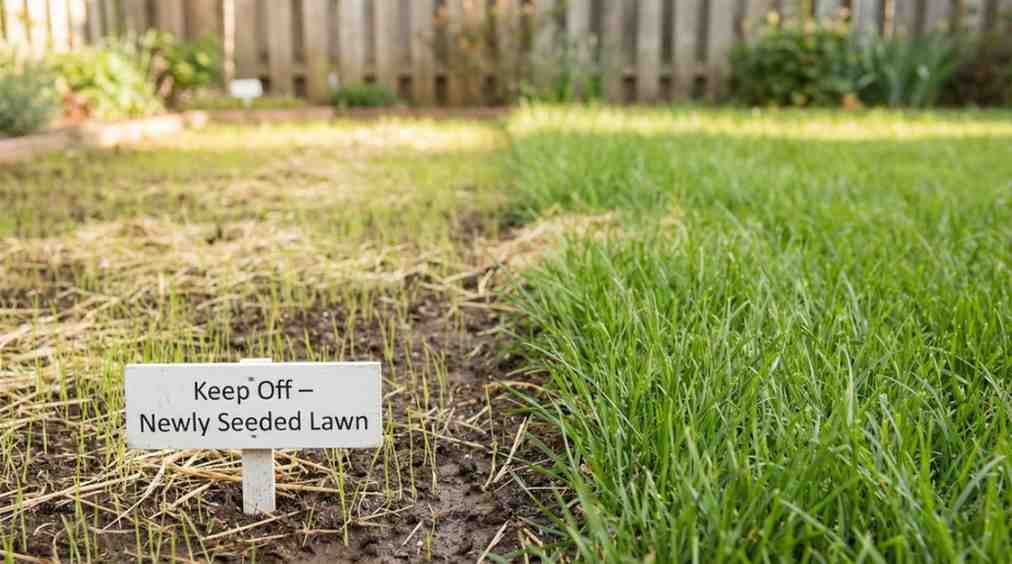
Avoid damage to your new grass by knowing how long to stay off lawn after seeding, with timelines for cool and warm-season grasses.
How Long to Stay Off Lawn After Seeding
New grass looks strong once it turns green, but it is still fragile underneath. Many lawns fail because people misjudge how long to stay off lawn after seeding. Foot traffic at the wrong time slows rooting and creates thin patches. Clear timing and visible signs make the difference between success and damage.
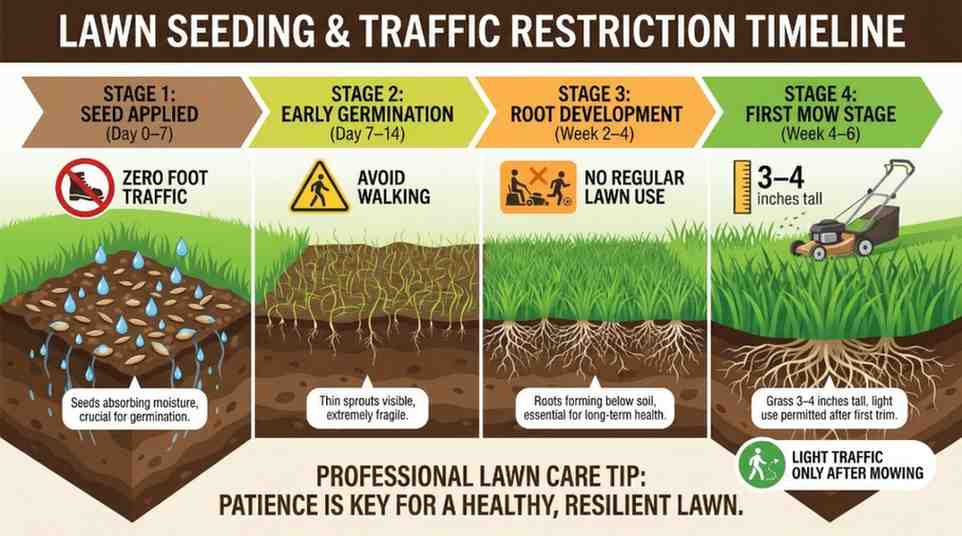
Seeding Timeline & Traffic Restriction
| Stage | Time Frame | Grass Condition | Traffic Rule |
|---|---|---|---|
| Seed Applied | Day 0–7 | Seeds absorbing moisture | Zero foot traffic |
| Early Germination | Day 7–14 | Thin sprouts visible | Avoid all walking on new grass |
| Root Development | Week 2–4 | Roots forming below soil | No regular lawn use |
| First Mow Stage | Week 4–6 | Grass 3–4 inches tall | Light traffic only after mowing |
How long to stay off lawn after seeding is typically 2–4 weeks minimum.
Heavy use should wait until the first mowing is complete.
How Long to Stay Off Lawn After Seeding? Clear Answer
Most homeowners ask how long to stay off lawn after seeding because early growth can be misleading.
- Grass seed germination period: 7–21 days
- Lawn root development stage: continues for weeks
- Safe mowing height: 3–4 inches
- Full lawn establishment time: 6–8 weeks
Sprouts do not mean strength.
Walking too early compacts soil and disrupts root anchoring.
If you overseeded an existing yard, how long to stay off lawn after seeding may be slightly shorter, but traffic should still be limited for at least 2–3 weeks.
What Happens If You Walk on New Grass Too Soon
New grass is extremely delicate.
- Soil compaction reduces oxygen
- Seed displacement creates bare spots
- Roots bend before anchoring
- Uneven turf develops
Avoid foot traffic on new lawn during the first month.
Even light pressure can delay lawn establishment.
Damage often appears weeks later as thinning areas.
Grass Growth Stages That Determine Safety
Understanding grass seed growth stages helps answer how long to stay off lawn after seeding.
1. Germination Phase
- Soil temperature matters
- Consistent moisture required
- No walking allowed
2. Root Formation Phase
- Roots deepen gradually
- Surface still unstable
- Lawn still vulnerable
3. Strengthening Phase
- Grass thickens
- Blades reach mowing height
- Light use becomes possible
Grass seedlings are strong enough for light traffic only after mowing once.
Traffic Guidelines by Lawn Type
| Grass Type | Germination Time | Minimum Stay-Off Period | Full Use |
|---|---|---|---|
| Ryegrass | 5–10 days | 2–3 weeks | 5–6 weeks |
| Fescue | 7–14 days | 3–4 weeks | 6–8 weeks |
| Kentucky Bluegrass | 14–21 days | 4 weeks | 8+ weeks |
| Warm-Season Grasses | 10–21 days | 3–4 weeks | 6–8 weeks |
How long to stay off lawn after seeding depends on grass variety.
Cool-season grasses often require longer patience.
Signs It Is Safe to Walk on Grass After Seeding
Before allowing traffic, check these signs:
- Grass height is at least 3 inches
- Roots resist gentle pulling
- Soil surface feels firm
- First mow completed
If any of these are missing, delay access.
How long to stay off lawn after seeding is determined by root strength, not just green color.
Pets, Kids, and Lawn Protection
Foot traffic from pets and children causes concentrated pressure.
- Use temporary barriers
- Redirect play areas
- Avoid repetitive paths
- Prevent digging
If pets must cross, rotate entry points.
Heavy activity resets progress.
Watering and Establishment
| Week | Watering Frequency | Root Condition | Traffic Rule |
|---|---|---|---|
| Week 1 | 2–3 light waterings daily | Seeds swelling | No walking |
| Week 2 | 1–2 light waterings daily | Shallow roots | Stay off lawn |
| Week 3–4 | Deeper, less frequent | Roots expanding | Minimal traffic |
| Week 5+ | Normal schedule | Established | Gradual return to use |
Watering schedule after seeding directly affects how long to stay off lawn after seeding.
Overwatering softens soil and increases damage risk.
When Is It Safe to Mow After Seeding
Mowing signals strength.
- Grass must reach 3–4 inches
- Use sharp blades
- Avoid tight turns
- Mow when lawn is dry
After mowing once, light walking becomes safer.
Heavy gatherings should still wait several more weeks.
Factors That Affect How Long to Stay Off Lawn After Seeding
Several variables influence timing:
- Soil temperature
- Grass seed type
- Sun exposure
- Rain intensity
- Soil preparation quality
- Overseeding vs new lawn
If rain compacts soil, extend waiting time.
If growth is uneven, delay traffic.
How long to stay off lawn after seeding varies, but rushing always increases risk.

Traffic Readiness Comparison
| Condition | Ready for Traffic? |
|---|---|
| Sprouts visible | No |
| 2 inches tall | No |
| 3–4 inches tall, unmowed | No |
| 3–4 inches tall, mowed once | Light traffic |
| Dense and rooted | Normal use |
Use root resistance as the final check.
FAQs
1. How long should I stay off new grass seed?
Stay off for at least 2–4 weeks, and wait until after the first mow for light traffic.
2. Can you walk on grass seed after planting?
No. Walking too early shifts seeds and compacts soil.
3. What happens if you walk on grass seed too early?
It can cause thinning, uneven growth, and weak root systems.
4. How long does it take for grass seed to root?
Initial roots form within 2–3 weeks, but full establishment takes 6–8 weeks.
5. When is grass strong enough for regular use?
After mowing once and when roots resist gentle pulling.