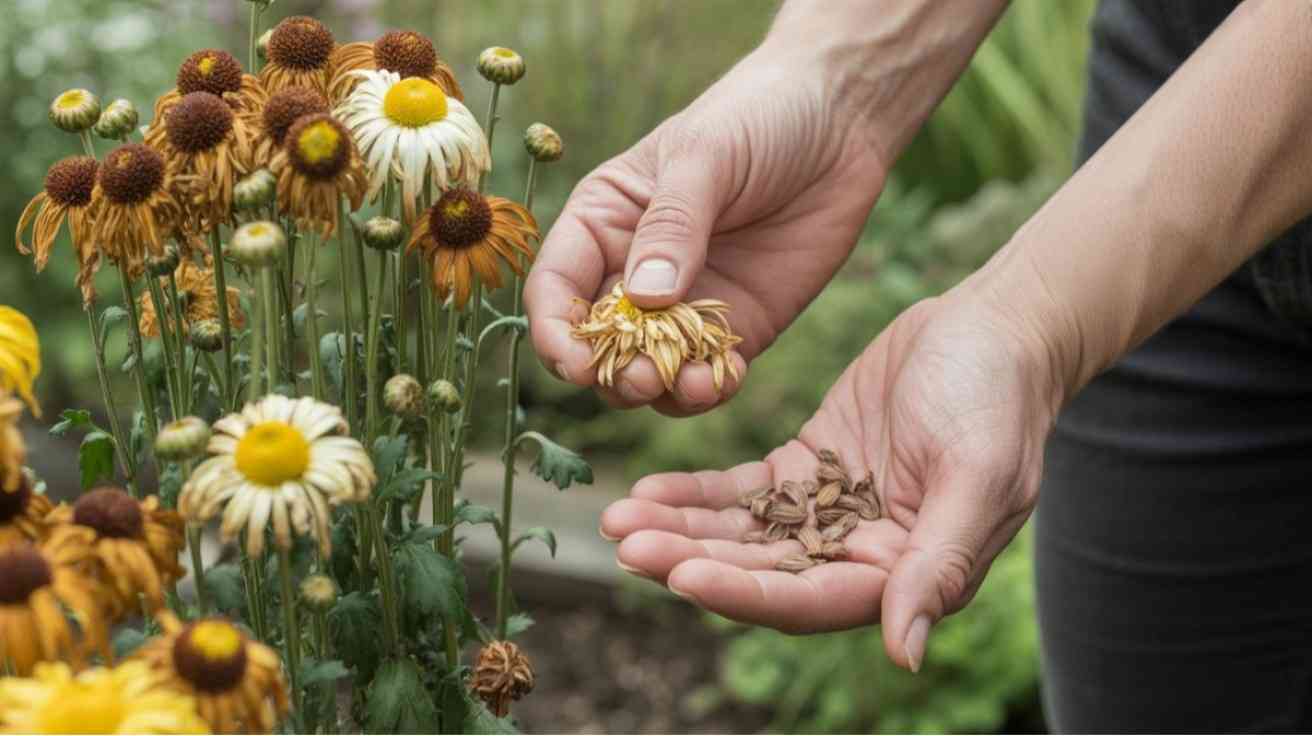
Proper harvesting and handling improve seed success. This guide explains how to collect corn seeds correctly, dry them fully, and store them safely.
How to Collect Corn Seeds
Collecting seeds from corn requires more than pulling kernels from a cob. Understanding how to collect corn seeds correctly helps preserve strong genetics, improve germination, and avoid storage failure. Many gardeners lose viable seeds because corn is harvested too early or dried incorrectly. Seed quality depends on maturity, drying conditions, and careful handling. When seeds are collected at the right stage and processed correctly, they remain productive for multiple seasons. This guide explains the full corn seed collection process using practical, field-tested methods that protect seed viability and reduce common mistakes.
Corn Seed Collection Overview
Key Factors That Affect Seed Quality
| Factor | Correct Practice |
|---|---|
| Plant maturity | Harvest fully dried corn cobs |
| Kernel condition | Hard, fully developed seeds |
| Drying method | Slow air drying only |
| Storage environment | Cool, dry, dark location |
Understanding the Basics of How to Collect Corn Seeds
Collecting corn seeds successfully starts with understanding how corn reproduces.
- Corn is wind-pollinated
- Cross-pollination affects seed traits
- Seed quality depends on healthy parent plants
- Open-pollinated corn produces stable seeds
- Corn seeds are living embryos that react quickly to moisture and temperature changes.
Learning how to collect corn seeds correctly starts with understanding pollination behavior.
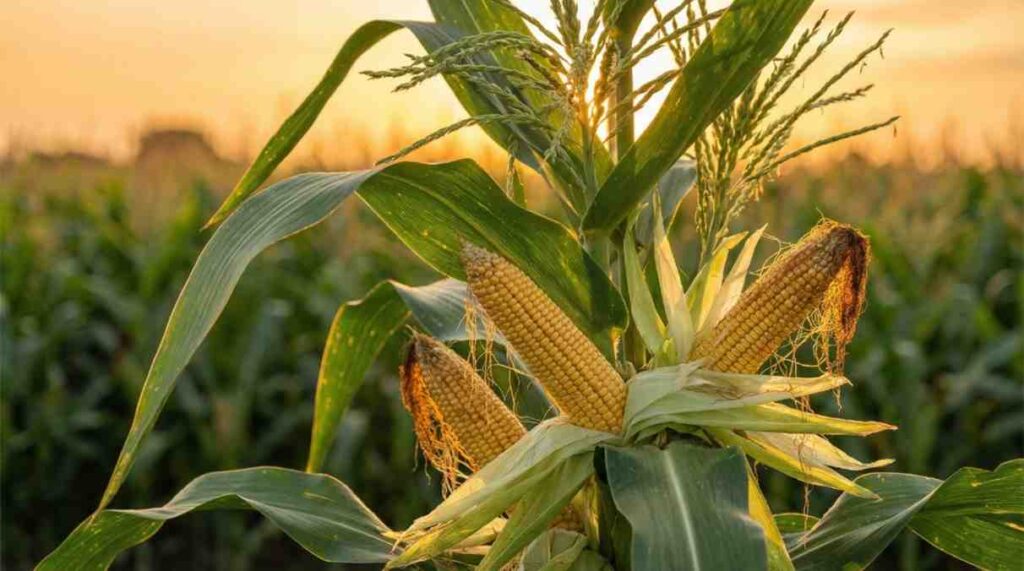
Choosing the Right Corn Plants for Seed Collection
Seed quality begins in the field.
- Select vigorous plants
- Avoid weak or diseased stalks
- Choose plants with well-filled ears
- Maintain spacing to reduce cross-pollination
- Selecting strong stalks improves both kernel size and seed germination rate.
Strong parent plants lead to higher corn seed viability.
Best Time to Collect Corn Seeds
Timing determines success.
- Husks should be brown and dry
- Kernels must be hard and glossy
- Corn must pass the eating stage
- Seeds should resist denting with pressure
Early harvesting is a common cause of seed failure.
How to Harvest Corn for Seeds
Harvesting requires care.
- Cut ears with clean tools
- Leave husks intact initially
- Avoid damaging kernels
- Keep ears dry during transport
Corn harvested properly dries more evenly.
How to Remove Corn Seeds from the Cob
Shelling should protect kernel structure.
- Allow ears to dry further after harvest
- Twist kernels off by hand
- Avoid crushing or cracking seeds
- Separate damaged kernels
Only intact kernels should be kept for storage.
Cleaning Corn Seeds After Collection
Cleaning prepares seeds for drying.
- Remove broken kernels
- Discard discolored seeds
- Eliminate debris and chaff
- Sort by size and firmness
Clean seeds dry more consistently.
Drying Corn Seeds Properly
Drying determines storage life.
- Spread seeds in a single layer
- Use mesh screens or paper surfaces
- Maintain room-temperature airflow
- Avoid sunlight and heat
Seeds must dry slowly to prevent embryo damage.
Corn Seed Drying Time Comparison
Drying Duration by Environment
| Environment | Drying Time |
|---|---|
| Low humidity | 7–10 days |
| Moderate humidity | 10–14 days |
| High humidity | 14–18 days |
How to Test Corn Seed Dryness and Viability
Testing prevents storage loss.
- Fully dry kernels feel rock hard
- No flexibility when pressed
- Conduct a simple germination test
- Discard non-sprouting seeds
Dryness must be complete before storage.
Storing Corn Seeds After Collection
Storage protects seed longevity.
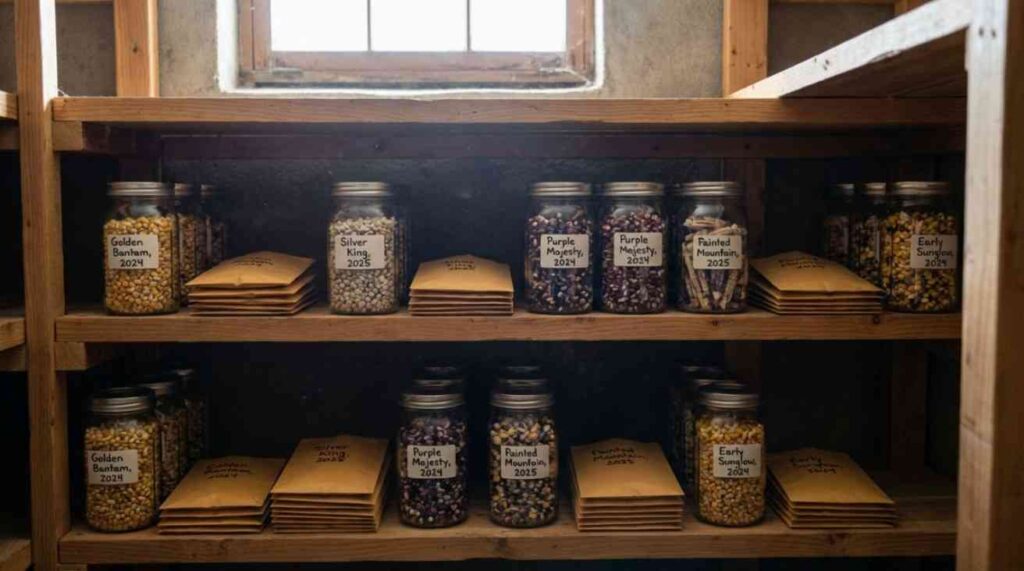
- Use glass jars or paper envelopes
- Keep in cool, dark, dry conditions
- Label with variety and year
- Avoid moisture exposure
Proper storage extends seed lifespan.
Corn Seed Storage Comparison
Storage Options and Results
| Storage Method | Outcome |
|---|---|
| Glass jars | Excellent moisture control |
| Paper envelopes | Good airflow |
| Plastic bags | High mold risk |
Common Problems When Collecting Corn Seeds
Problems usually result from timing or moisture.
- Cross-pollination alters traits
- Moisture causes mold growth
- Poor drying lowers germination
- Improper storage leads to spoilage
Correct handling prevents these issues.
FAQs
1. How long should corn dry before seeds are collected?
Corn should dry on the plant until husks are fully brown and kernels are hard.
2. Can seeds be collected from hybrid corn?
Hybrid seeds can be collected but may not produce plants identical to the parent.
3. How many corn plants are needed for seed saving?
Growing 20–25 plants reduces cross-pollination effects.
4. How long do collected corn seeds remain viable?
Properly dried and stored seeds last three to five years.
5. What is the most common mistake in learning how to collect corn seeds?
Harvesting corn before full maturity is the leading cause of failure.